Languages
Monday, November 9, 2026



News and Views from the Global South

Ecobreves – GUATEMALA:: More Royalties from Mining
The Guatemalan Congress aims to increase from one to 10 percent the royalties that more than 400 mines of precious minerals must pay the government.
U.S. Companies See Practical Benefits in Carbon Emissions Market
Dozens of U.S. corporations are already trading emissions credits, even though the Bush administration has rejected the Kyoto Protocol on Climate Change. The international treaty, designed to curb emissions of greenhouse gases like carbon dioxide, enters into force Feb. 16, 2005.Ecobreves – ARGENTINA: Activists Demand Cleaner Air
On the eve of the 10th Conference of Parties to the Convention on Climate Change, Dec. 6-17 in the Argentine capital, hundreds of the country's environmental groups demanded that the government take concrete steps towards curbing greenhouse gas emissions.Who Killed the Swans?
Ecologists argue that a cellulose factory caused the mass die-off of black-necked swans (Cygnus melancoryphus) in southern Chile. But the accused respond that the activists lack proof.Ecobreves – COLOMBIA: Devastating Rains
Heavy rains falling in Colombia since September have claimed the lives of some 30 people and left more than 250,000 homeless, according to reports presented by local emergency committees.Ecobreves – PERU: Decentralizing Environmental Programs
The Metropolitan Municipal Council of Lima will ask Congress to decentralize environmental protection programs that are currently handled by the Ministry of Production.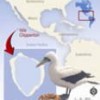
Expedition Pursues Secrets of Clipperton Island
French scientists are slated to arrive in early December on the tiny atoll located 1,300 km southwest of the Mexican resort of Acapulco. Their findings could help the world to understand climate phenomena like El Niño, the research team's chief Jean-Louis Etienne told Tierramérica.
Business and Biodiversity – Risk of 'Greenwash'?
Corporations returned to the center of debate at the third World Conservation Congress, which ended Nov. 25 in Bangkok. Skeptics say partnerships between environmental groups and transnational corporations only serve to ''greenwash'' the sullied image of some companies, reports Tierramérica from Thailand.Ecobreves – BRAZIL: Behind Soybeans Comes Transgenic Cotton
Brazil is experiencing new transgenic confusion. Environmentalists and the Environment Ministry challenge the National Biosecurity Technical Commission's decision to authorize sales of cottonseed that contains no more than one percent genetically modified seeds.Ecobreves – CUBA: Hotel Applauded for Protecting Ozone Layer
The Cuban Ministry of Science, Technology and Environment created a prize for institutions that work to protect the Earth's atmospheric ozone layer, and the first went to the Hotel Meliá Cayo Santa María, in the central province of Villa Clara.Ecobreves – VENEZUELA: A Proposal for Crocodile Trade
Commercial exploitation of the Orinoco crocodile (Crocodylus intermedius), an endangered species native to Venezuela and Colombia, could help prevent its extinction, says the Venezuelan Foundation of Sciences Development (FUDECI).Ecobreves – REGIONAL: Environment Finds Way into Church Liturgy
The Latin American Council of Churches, CLAI, an umbrella of religious organizations representing 10 million people in Latin America and the Caribbean, has incorporated environmental issues into its liturgies.Ecobreves – PERU: Opportunity in Kyoto Protocol
Peru's Center for Efficient Technology is proposing that the districts of the capital stop burning garbage or burying it in sanitary landfills, and instead treat the waste using techniques that do not emit methane, a gas that contributes to global warming.Is Latin America Really a Carbon Market Pioneer?
Latin America could help reduce carbon dioxide emissions by up to 55 million tons through the sale of carbon credits. But this strategy doesn't convince the critics, who ask if the region would foment clean and renewable energy sources or would merely sell cheap carbon credits to the highest bidder from the industrialized North.Ecobreves – ARGENTINA: Legal Reform on Shad
Argentine environmentalists are fighting the changes approved Nov. 12 on a fishing law passed in 2003, with the consensus of local residents and fisherfolk, for the sustainable exploitation of the Paraná River's fish resources.
One Park, Three Countries
The creation of the Great Limpopo Transfrontier Park, one of the world's largest nature preserves, involves South Africa, Mozambique and Zimbabwe. It is hoped that the park will eliminate the need to cull the elephant population to prevent overcrowding in concentrated areas.Ecobreves – GUATEMALA: Bamboo Instead of Coffee
The Guatemalan authorities have approved a project for large-scale cultivation of bamboo, with support from the government of Taiwan, deputy agriculture minister Ramiro Pérez told Tierramérica.Global Food Prices a Warning Beacon
Rising food prices may be the first economic indicator of the global environmental crisis, said experts gathered for a U.N.-sponsored seminar in the Mexican city of Monterrey. The final declaration of the meeting, the Monterrey Initiative, urges governments around the globe to promote sustainable farming practices.Ecobreves – COLOMBIA: Government Pushes Ecotourism
The number of visitors to Colombia's national parks this year quadrupled the number reported in 2002, Environment Minister Sandra Suárez said Nov. 16 as she launched the National Policy to Develop Ecotourism.Indians' Genetic Material Sold on Internet
Genetic material from members of the Karitiana and Suruí indigenous communities in Brazil can be purchased for 85 dollars through the Internet. The Brazilian government is demanding an end to what it says are ''illegal sales'' conducted by the U.S.-based Coriell Institute, which holds the world's largest collection of human cell cultures.
Andean Nations Clash with Washington on Patents
Free trade treaty negotiators from Colombia, Ecuador and Peru reject the U.S. proposal for patenting plant and animal species. The matter will be taken up during the sixth round of talks, slated to take place Nov. 29-Dec. 4 in the southwestern U.S. city of Tucson.« Previous Page — Next Page »





Tierramérica is the main communications platform on sustainable development and the environment in Latin America and the Caribbean. It is produced by IPS Noticias, the agency’s Spanish-language service, which created it jointly with the United Nations Development Programme (UNDP) and the United Nations Environment Programme (UNEP), with later support from the World Bank. The weekly editions of Tierramérica are published in Spanish, Portuguese and English and are picked up and printed by dozens of media outlets in the region. Follow us on Facebook and Twitter.

From the Frontline of Environment
Supported by

Tierramérica en Español

Terramérica em Portuguese

