Languages
Friday, October 23, 2026



News and Views from the Global South

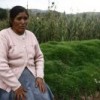
PERU: Rural Wisdom Against Climate Change
"The toads have disappeared from the countryside because of climate change, and now there is nothing to control the insects. Now we have to use chemicals to fight pests, and that is killing the soil," says worried Peruvian farmer Julián Pilco.Ecobreves – BRAZIL: A Natural Way for Preserving Meats
Grape seeds and skins, already known for their antioxidant properties, can be used as a natural preservative for fresh meats in cold storage, researchers at the University of São Paulo have shown.Ecobreves – VENEZUELA: No More Pitbulls
A law enacted at the beginning of this year orders that all pitbull dogs (crosses of several types of bull terriers) must be eliminated in Venezuela by 2015. In the meantime, these dogs must be kept strictly kenneled.Ecobreves – HONDURAS: Food Distributed to Drought Victims
The most vulnerable regions of seven of the 18 departments of Honduras, hit by drought resulting from the El Niño climate phenomenon, this month are receiving the first round of food aid coordinated by national and international emergency agencies.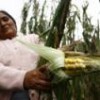
Rural Wisdom Against Climate Change in Peru
The proposal to take into account the ancestral knowledge of rural communities in Peru has become key in designing strategies for confronting climate change.Ecobreves – CHILE: Swan Death Investigation Extended
The investigation into the 2004 deaths of hundreds of black-necked swans in the Carlos Anwandter Nature Sanctuary, 800 km south of the Chilean capital, will wrap up in June.
Water a Matter of National Security in Chile
The constitutional declaration of water as a public good could put Chile on the same level as Uruguay and Ecuador as Latin American leaders in defending this essential resource.
CLIMATE CHANGE: Wanted – Methane-Free Livestock
At first glance, the Riswick farm is just another modern agricultural facility: in the middle of broad cultivated fields stand recently built barns, similar to so many other farms across Europe.Ecobreves – ARGENTINA: Complaints Against Dakar Rally
An environmental group from the central Argentine province of Córdoba has charged that no environmental impact studies were conducted for the 2010 Dakar Rally under way in Argentina and neighboring Chile.Ecobreves – BRAZIL: Making Use of E-Waste
The University of São Paulo has begun to recycle electronic waste, creating a center, known as CEDIR, which has started in-house with the university's own obsolete devices of information technology.Ecobreves – MEXICO: Poultry Farmers Promote Certification
Poultry farmers in the Mexico City area want to organize under a system that allows them to certify their production, following models that exist for sectors like corn and sugarcane farmers.
Wanted: Methane-Free Livestock
Studies of cattle metabolism and diet seek to reduce gas emissions from the meat industry, another villain in the climate change drama.
CLIMATE CHANGE: Doors Opening for Carbon Tax
With the chance for a global climate change treaty on hold, a tax on greenhouse gases could be an effective alternative for discouraging the activities that create emissions, say economists and environmentalists.Ecobreves – HONDURAS: 2010 Without Water in 5 Departments
The drought caused by the climate phenomenon known as El Niño will hit five of Honduras's 18 departments hard in 2010, and at least 50,000 families are likely to face food problems, according to a government source.
Doors Opening for Carbon Tax
The disappointing results of the Copenhagen climate summit could give a push to taxes on emissions of carbon dioxide, something many economists have been calling for and some governments have already adopted.Ecobreves – BRAZIL: Punishment Lifted for Illegal Loggers
The Brazilian government has put a three-year suspension on punishments for illegal logging issued up to Dec. 10, leading environmental activists to charge that the government is reversing the stance it took at the United Nations climate change conference held earlier this month in Copenhagen.Ecobreves – CUBA: New Planetarium in Old Havana
A planetarium that will contribute to research and promotion of astronomy in Cuba was inaugurated this month in Old Havana.Ecobreves – VENEZUELA: Drought Means Christmas in the Dark
The drought in the area of the southeastern Caroní River, the result of the phenomenon known as El Niño, is casting a shadow in all populated areas of Venezuela, as the government ordered restrictions on public lighting.Ecobreves – CHILE: Replacing Polluting Trucks
About 150 new trucks will be given to cargo transport microbusinesses in several Chilean cities as part of a government program to remove polluting vehicles from circulation.
No Real Deal, and No Exit
Coral reefs are dying, glaciers are melting and rising sea levels threaten the homes of millions. The effects of climate change will continue and there is little room for optimism as the Copenhagen summit has come came to an end with disappointing results.
Climate Change: Scientific Fact, Not a Political Issue
It might take a story of huge cataclysm, like the one told by Komatu Sakyo in his 1973 novel "Japan Sinks", to convince the world to reach an accord that will steer it away from the suicidal path of global warming.« Previous Page — Next Page »





Tierramérica is the main communications platform on sustainable development and the environment in Latin America and the Caribbean. It is produced by IPS Noticias, the agency’s Spanish-language service, which created it jointly with the United Nations Development Programme (UNDP) and the United Nations Environment Programme (UNEP), with later support from the World Bank. The weekly editions of Tierramérica are published in Spanish, Portuguese and English and are picked up and printed by dozens of media outlets in the region. Follow us on Facebook and Twitter.

From the Frontline of Environment
Supported by

Tierramérica en Español

Terramérica em Portuguese

