Languages
Friday, November 6, 2026



News and Views from the Global South


Anti-Hurricane Green Map
Using a Green Map -- a portrait of an area’s cultural, social and ecological resources -- a Cuban municipality was able to rebuild a hurricane-ravaged school on its own.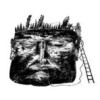
Toward an Environmental Rationality
The conflict between economy and ecology and that impossible goal that is “sustainable development” give rise to concern over the feasibility of an alternative economy, writes Mexican environmental researcher Enrique Leff in this exclusive column for Tierramérica.Ecobreves – CHILE: Certified Organic Crops on the Rise
During the 2007-2008 season, 30,443 hectares were certified as organic in Chile, according to a report by the governmental Office for Agricultural Studies and Policies (ODEPA).Ecobreves – BRAZIL: Green Seal for Technology
The University of Sao Paulo closed the year 2008 with two important environmental initiatives: the green seal for technological equipments, and the project for a Sustainable Environments and Climate Studies Center.Ecobreves – VENEZUELA: When Garbage Becomes a Problem
Groups of vandals set fire to a landfill where 65,000 tons of solid waste, collected in the north-western Venezuelan city of Maracaibo over the last week of December and the first days of January, had been dumped.Ecobreves – CUBA: More Organic Fertilizers from Sugarcane
Cuba’s sugar industry is setting out to increase its organic fertilizer production and use, as it recognizes that these fertilizers are not only good for the environment, but also for the economy as they cut back on imports of chemical fertilizers.Ecobreves – HONDURAS: New Forestry Map Announced
In six months Honduras will have a new forestry map that will enable it to accurately identify its ecosystems, woodland coverage, and biodiversity, Agriculture and Cattle Minister Héctor Hernández said to Tierramérica.
ENVIRONMENT: Climate Change Forcing Penguins North?
Warm ocean currents may have confused some 2,500 penguins from Argentina's Patagonia region that washed up - dead and alive - on Brazil's northern coast.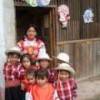
PERU: Coffee Growers Cultivate Education
"Without coffee there is no future," say coffee growers in the Selva Alta, in the central Peruvian region of Junín, where they are setting up schools near their farms so that their children don't abandon their studies.
Climate Change Forcing Penguins North?
Climate change could be the cauBOSTONse of an unprecedented stranding of thousands of penguins on the coast of Brazil, say researchers.Ecobreves – ARGENTINA: Protests Against Rally Dakar
Environmental and citizen groups, academics and lawmakers in Argentina are protesting the Rally Dakar 2009, the race that will be held for the first time in South America, in January, passing through 10 of the country's provinces.Ecobreves – MEXICO: Unstoppable Logging in Monarch Butterfly Reserve
Logging has not stopped in the monarch butterfly sanctuaries in Mexico, report local residents. The butterflies make annual migrations between Mexico and the United States and Canada.Ecobreves – HONDURAS: Fisherfolk Protect Marine Resources
Fishing communities from the southern Honduran Gulf of Fonseca, on the Pacific coast, began construction in December of the first center for production and management of marine resources, in waters that Honduras shares with Nicaragua and El Salvador.Ecobreves – BRAZIL: Ranching Is the Leading Cause of Amazon Destruction
In Ulianópolis, one of the Brazilian Amazon's most deforested municipalities, 76 percent of the land that was forested is now pasture, according to data from the government's Amazon Protection System.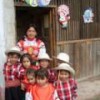
Peruvian Coffee Growers Cultivate Education
At the epicenter of Peru's coffee boom, small producers are fighting poverty and the lack of public schooling.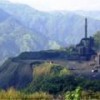
MEXICO: Manganese Mines Harm Children’s Mental Development
The Mexican mining company Autlán maintains that there is no evidence that manganese causes any harm to human health. But in the central state of Hidalgo, where the metal is mined, adults shake as if they suffered from Parkinson's disease and children's mental development lags behind normal.
CLIMATE CHANGE: Arctic Peoples Claim Their Right to Cold Temperatures
"Terrifying" is the word that best describes the situation of a hunter who is lost on shifting ice, or of the homeowner whose house splits in two when its foundation sinks, says Canadian indigenous leader Mary Simon when asked about the effects of global warming on the Inuit people.Ecobreves – BRAZIL: An Engine Fuelled by Garbage
An engine that uses garbage, farm and ranch waste and derivatives of oil, coal and ethanol, is the latest invention of Embrapa, the Brazilian agricultural research agency, to bring low-cost energy to poor rural and isolated communities.Ecobreves – VENEZUELA: Treetop Walkway in National Park
The people of Caracas will soon be enjoying El Ávila National Park from among its tallest trees, some 30 meters above the ground, standing on a walkway of hanging bridges 120 meters long.Ecobreves – HONDURAS: EU Funds for Environmental Projects
The European Union has earmarked for the next five years some 53 million dollars to carry out environmental projects in Honduras's poorest areas.
Manganese Mines Harm Children's Mental Development
Decades of manganese mining in the Mexican state of Hidalgo have left an indelible mark on children, according to health studies.« Previous Page — Next Page »





Tierramérica is the main communications platform on sustainable development and the environment in Latin America and the Caribbean. It is produced by IPS Noticias, the agency’s Spanish-language service, which created it jointly with the United Nations Development Programme (UNDP) and the United Nations Environment Programme (UNEP), with later support from the World Bank. The weekly editions of Tierramérica are published in Spanish, Portuguese and English and are picked up and printed by dozens of media outlets in the region. Follow us on Facebook and Twitter.

From the Frontline of Environment
Supported by

Tierramérica en Español

Terramérica em Portuguese

