
Saturday, October 24, 2026



News and Views from the Global South
Trade and poverty: Facts beyond theory
TRADE: It’s the End of the Export-Led Growth Model, Says UNCTAD
While the recovery from the financial and economic meltdown remains fragile in especially the developed world, the outlook for Africa inspires optimism, according to UNCTAD. The agency also believes the crisis might be the death- knell for the export-led economic growth model -- especially African countries should leave it behind.AGRICULTURE-AFRICA: Land Grabs in Poor Countries Set to Increase
After weeks of rumours sparked by the leaking of a draft World Bank position paper on so-called land grabs in poor countries, the international financial institution has officially released its report on the surge in farmland purchases and leasing which have elicited controversy for over two years.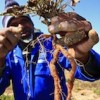
ENVIRONMENT: South Still Battling to Stop North’s Biopiracy
The United Nations declared 2010 the Year of Biodiversity. But 17 years after the Convention on Biological Diversity was adopted at the Earth Summit in Rio de Janeiro, the issue of biopiracy is still pitching North against South.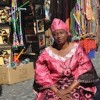
SOUTH AFRICA: “Xenophobia Simmering Just Below Boiling Point”
"Xenophobia is part of life. We do not live easy here. We only survive," says Somali shopkeeper, Abdinasir Shaikh Aden, looking tense.
AFRICA: Outrage Over Claim that Anti-GM Campaign “Causes Hunger”
Civil society organisations have reacted with outrage to claims that the international campaign against genetically modified (GM) crops is partly responsible for food shortages and food insecurity in Africa.HEALTH-UGANDA: Problems with Anti-Counterfeit Bill Persist
Health rights activists still insist that, despite some improvements to Uganda’s controversial Anti-Counterfeiting Bill, it will affect the availability of generic medicine if enacted in present form.
ECONOMY: “Sub-Saharan Africa Is Speeding Towards Affluence”
Africa is heading towards a bright economic future, according to a new book co-authored by the former director of the French state agency for economic cooperation and released recently in Paris.
WORLD: Fair Trade Is Growing But Africans Lag Behind
Despite its minuscule share of world trade, fair trade is a booming business, importing certified foodstuffs and products from all over the world to Northern supermarkets. But there is increasing concern that this growth is yet to benefit poor countries in Africa.Caribbean Civil Society Unites to Tap EU Development Funds
Roosevelt King, the secretary general of the Barbados Association of Non-Governmental Organisations (BANCO), believes that Caribbean governments have dropped the ball when it comes to their commitment to support the initiatives of civil society.
SOUTHERN AFRICA: Rallying Around Mugabe While Economic Unity Lags
Southern African leaders used the 30th Southern African Development Community (SADC) summit of government leaders to rally around Zimbabwean president Robert Mugabe’s land seizures, in a move that undermines regionalism, while lamenting their own failure to implement their decisions on regional economic integration.
ECONOMY: “Borderless Southern Africa Is a Pie in the Sky”
Regional economic integration plans in southern Africa are not rooted in reality, according to civil society organisations holding a parallel meeting alongside the Southern African Development Community (SADC) summit in Namibia’s capital of Windhoek.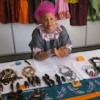
SOUTHERN AFRICA: Women Traders “Blocked” From the “Big Business”
"Africans do not believe women can do big business," fumes Zambian trader Angelica Rumsey.
MALAWI: Used Car Dealers Seeing Red Over New Green Tax
Small-scale importers of used cars in Malawi are crying foul over a government decision to introduce higher duties on second-hand passenger vehicles aged eight years and older.HEALTH-UGANDA: WHO Happy With Counterfeit Bill; Activists Not
The Uganda office of the World Health Organisation (WHO) and the country’s National Drug Authority are satisfied that the new version of the controversial Counterfeit Goods Bill does not threaten the importation and production of generic drugs by conflating them with fake drugs, as the first draft of the bill did. But health rights activists are not convinced.
ECONOMY: Rich Countries’ Farm Subsidies Benefiting Royals
Subsidies for agriculture in the industrialised countries of the world grew again in 2009, benefiting the largest companies and land owners, such as Prince Albert of Monaco and Queen Elizabeth of Britain.
TRADE: Africa Might Ditch Asian Rice if Prices Increase
Thailand and other major rice exporting countries are at risk of losing Africa as an important trading partner if they raise their rice prices. Half of the 10 million tons of rice exported by Thailand last year went to Africa. Nigeria, Benin, Cote d’Ivoire and South Africa were among the main buyers of rice in Africa.KENYA: Claim Disputed that Trade Measures “Aid” Counterfeiters
A major pharmaceutical company in Kenya alleges that special trade measures to make medicines available in poor countries create "loopholes" for counterfeit medicines to enter the market – a claim that health rights advocates refute.HEALTH: Uganda Authority Finding Less Counterfeit Drugs
Uganda’s National Drug Authority (NDA) says the failure rate among samples of medicines tested at their laboratories has fallen by 15 percent from the early 2000s. This serves as a possible indication of a drop in the availability of counterfeit medicines in the East African country.
TRADE-NAMIBIA: EU Backs Off on EPA
European Union (EU) Trade Commissioner Karel de Gucht has appeased leading European civil society organisations about the negotiations for a Southern African economic partnership agreement (EPA), promising "not to put undue pressure" on countries.
TRADE: Malawi Stands Firm on Conditions for Signing EPA
The Malawian government has again stood firm in the face of calls by the European Union (EU) to sign an economic partnership agreement (EPA) -- even after top-level EU officials visited the southern Africa to convince it to put pen to paper.
AFRICA: “Free Trade in Natural Resources Bad for Development”
While some believe that restrictions on natural resource exports should be done away with, this could cause an increase in such exports that would be detrimental to the environment and bad for development.« Previous Page — Next Page »





Trade has historically been a geopolitical tool, creating significant economic imbalances in developing countries. However, many countries in East Asia and Latin America have been able to alleviate poverty due to increasing trade. Tackling poverty has proven to be much harder in low income countries in sub-Saharan Africa, Asia and Latin America, and their dismal trade performance is one important reason for that. They remain at the margins of world trade and indeed of the world economy. These articles are aimed at informing readers about the complexities of trade and its varying effects on development, with a special focus on the consequences of the global economic crisis, the potential of fair trade and the gender implications of trade policies.

The Week with IPS

Tracking global progress towards a sustainable world
