Languages
Monday, November 23, 2026



News and Views from the Global South
Africa
EGYPT: Ruling Party Delivers More Disappointment
The ruling National Democratic Party (NDP) of President Hosni Mubarak promised a "new style of thinking" at its fifth annual party congress last week, but critics in the opposition say they saw little of it.
DEVELOPMENT-SOUTH AFRICA: From A ‘‘Red Bush’’, Opportunity Is Born
Nestled in a valley in the Cederberg region of the Western Cape, South Africa’s southern most province, lies the charming little village of Wupperthal.
TRADE-CAMEROON: Borders – Where Two Economies Meet
No one pays full price for petrol in northern Cameroon, not when there's cheaper Nigerian contraband available. In Garoua town for example, there are about 4,000 commercial motorcycles which all depend on "zoa zoa" or "federale" as this highly cherished liquid is generally referred to.
SOUTH AFRICA: Through The Eyes of Children
"I didn’t know that girls can play soccer. I thought it was a sport only for boys," says Thulile Khanyile. But after a photography and writing project changed her perception of gender roles, the 14-year-old helped start a girl’s soccer team at her high school in Nkandla, a rural area in the heart of Zululand.
POLITICS-MOZAMBIQUE: Fate and Merit
Two deaths in a row placed Rita Muianga at the helm of Xai-Xai's municipal council. In 2003, council presidents Ernesto Mausse and Faquir Bay died suddenly and successively. Rumours of witchcraft gripped Xai-Xai, a small town 220 kilometres north of Mozambique's capital, Maputo.Q&A: Major Challenges Will Be Met
When Barbara Hogan replaced South African health minister Manto Tshabalala-Msimang in September, her appointment was praised from all quarters. Hogan, who previously chaired Parliament’s finance portfolio committee, is known as an intellectual who stands up for what she believes in and finding hands-on approaches to solving difficult political issues.DEVELOPMENT-NAMIBIA: Land Reform Reaping Fruits Despite Problems
Almost two decades after independence Namibia’s land reform shows positive results and is guided by fair laws, but bureaucracy, slow progress in transformation of land ownership and unclear criteria for expropriation are overshadowing successes.
POLITICS-MOZAMBIQUE: The Modern Face of Renamo
If Maria Moreno is elected president of the Municipal Council in Cuamba, in Niassa Province, Mozambique's parliament will lose one of its most interesting personalities.
TRADE: Africans Should Confront ''Blind Governments'' on EPAs
African governments came under fire for ‘‘blindly’’ negotiating the controversial economic partnership agreements (EPAs) and not making an effort to educate ‘‘ordinary people’’ on what they were negotiating.
DEVELOPMENT: Zimbabweans Worried About Aid With Strings Attached
Aid with strings attached frequently does not translate into the improvement of the lives of the people for whom that money was ostensibly sourced in the first place. Most of the capital received in aid is used to pay back debt owed to Western donors.EGYPT: Islamists Hounded, On Campus and Off
Candidates associated with opposition movements, especially the Muslim Brotherhood, were reportedly barred from participating in last month's student union elections in universities across Egypt. Recent weeks have seen dozens of Brotherhood members detained.POLITICS-SWAZILAND: Hide And Seek
Swazi gender activists are angry that King Mswati III and the newly elected Parliament have betrayed their hopes, and the Constitution, by not appointing more women to the House of Assembly and the Senate.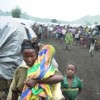
DR CONGO: The Cost of War
War is expensive. The costs include not only the millions of dollars spent on military equipment and maintaining an army, but the financial and psychological toll it takes on the everyday lives of people caught in the crossfire.POLITICS-BENIN: Women Left Out of New Govt
"Every change is a step backwards in this new era. It's disheartening," is Claire Houngan Ayémona's response to Benin's newly-appointed cabinet.POLITICS-DR CONGO: Regional Leaders Urge Effective Ceasefire
African leaders meeting in Nairobi have called for an end to the renewed fighting in the eastern part of the Democratic Republic of Congo (DRC) which has displaced 253,000 people since August, according to the United Nations.
Q&A: Trade Liberalisation No Silver Bullet Against Poverty
Countries around the world aim to eradicate poverty and hunger by 2015 as one of the Millennium Development Goals (MDGs).EUROPE: New Push to Send Troops to Congo
Troops from the European Union should be deployed in eastern Congo in order to protect civilians, human rights activists say.
POLITICS-MOZAMBIQUE: Still A Man's Thing?
Only a handful of women are running in Mozambique's municipal elections scheduled for Nov. 19. Among the 111 candidates vying to become president in 43 municipal councils, only eight are women.PORTUGAL: "Angolagate" Bribes in Local Banks
Portuguese banks that received transfers of money to Angolan politicians implicated in illegal arms sales have kept mum after the Lisbon paper Público reported their involvement.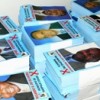
POLITICS-MOZAMBIQUE: Ready To Roll
The posters and flyers are ready, and so is Marta Simango. Ready for Nov. 4, when the municipal elections campaign officially kicks off in Mozambique.FINANCE: Watchdogs Criticise World Bank, IMF Mega Projects
The World Bank and International Monetary Fund (IMF) came under fire last week for failing to adequately promote transparency in extractive industry operations in resource-rich countries where the two institutions work.« Previous Page — Next Page » *#*

The Week with IPS

NEXT STOP - SDGs
Tracking global progress towards a sustainable world
