Languages
Monday, November 16, 2026



News and Views from the Global South
Europe
AFGHANISTAN: NATO Members in Waiting Mode
Corruption, doubts over Afghan leadership, and faltering public support have emerged as the main stumbling blocks to a demand for more NATO troops in Afghanistan.ENERGY: World Bank Looks for the Cleaner Way
With new energy and environment strategies in the pipeline, the World Bank and its critics are going head to head on issues of fossil fuel funding and clean energy. The Bank will now call in outside experts to ensure that its coal power financing is justifiable, but critics would prefer it to go for truly clean energy.RIGHTS: ‘Too Innocent to Try, too Guilty to Fly’
Getting blacklisted as belonging to a terrorist organisation is a punitive sanction, even though governments may say it is only an administrative measure, according to the American Civil Liberties Union (ACLU) and the European Centre for Constitutional and Human Rights (ECCHR).MIDEAST: ‘France, U.S. Pushing Arabs Into Nuclear Race’
The decision by the oil-rich United Arab Emirates to build nuclear reactors has unleashed frenetic, politically backed competition between giant corporations from France, the U.S., Japan and South Korea to win contracts estimated at more than 40 billion dollars.SPAIN: A Princely Prize for Creators of Email, Cell-Phones
U.S. engineers Martin Cooper and Raymond Tomlinson, considered the fathers of the mobile phone and email, respectively, received Spain's prestigious Prince of Asturias Award for Technical and Scientific Research from Crown Prince Felipe on Friday.
DEVELOPMENT: ‘Global Poverty Is Not Acceptable’
The economic crisis is a fresh reason to meet Millennium Development Goal targets, not an excuse to miss them, said European Commission president Jose-Manuel Barroso, opening the dialogue at the fourth edition of the European Development Days (EDD).PORTUGAL: Bible Is “A Catalogue of Cruelties,” Says Saramago
After a nearly two-decade truce, Portuguese Nobel literature laureate José Saramago has returned to the charge against the Catholic Church. This time his target is the Bible itself, which he describes as "a manual of bad morals," and a "catalogue of cruelties and of the worst of human nature."Q&A: Italian Women At A Loss
On the eve of the 30th anniversary of the Convention on the Elimination of All Forms of Discrimination against Women (CEDAW), Italy is far from attaining gender equality.HEALTH: EU Blocking Medicines for the Poor
The European Union is intercepting big shipments of medicines on their way to poorer countries, according to a new report published Tuesday.ENVIRONMENT: Pipeline Renews Debate on Sea-Dumped Chemical Weapons
On Sep. 24, a beachgoer near Swansea, Wales reported a piece of military equipment washed up on the shore. Three days later, the two members of the team that had showed up to dispose of the shell developed symptoms compatible with mustard gas – a chemical warfare agent used in the two world wars and other conflicts.HEALTH: New Vaccine for AIDS Raises Conditional Hope
The possibility that a vaccine could soon be developed to fight the deadly HIV virus has the scientific community brimming with hope and excitement, but there is also disagreement about how effective it could be in the global war against AIDS.
CLIMATE CHANGE: Carbon Capture Effort Collects Critics
The capture and underground storage of greenhouse gases, especially carbon dioxide, is a dubious method of effectively reducing the pollution that causes global warming, experts warn.BULGARIA: Migrants Denied Even Medicine
Hasun Albaadzh, an asylum-seeker from Syria, died Oct. 6 at the Busmantsi detention centre on the outskirts of Bulgarian capital Sofia. He had been held at Busmantsi for 34 months - considerably more than the maximum legal period of detention - and had been denied proper medical care.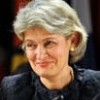
CULTURE: First Woman Head Seeks New Direction for UNESCO
The rapturous applause that greeted Irina Bokova Thursday as she was confirmed UNESCO's new director-general was a sign that the organisation is keen to move on from recent controversies.LABOUR-EUROPE: This Job Is Killing Me
A spate of suicides in France is raising new questions about precarious working conditions imposed by authoritarian management models.ECONOMY: ‘It’s Smart to Invest in Girls’
Sending more girls to school may help poor countries get out of the economic slump faster, the NGO Plan International says in a new report. Just a one percent rise in the number of girls attending secondary school boosts a country's annual per capita income growth by 0.3 percent.DEVELOPMENT: A 'Great Persuasion' Gets Under Way
They are calling it 'The Great Persuasion' in Britain as millions prepare around the world to stand up for action against poverty.GERMANY: East Is East
Twenty years after the Berlin Wall came down, rifts between east and west Germany remain: east Germans vote differently, are earning less money, and are more pessimistic than west Germans.
Q&A: Small Sugar Farmers Not so Sweet on End of Sugar Protocol
The Sugar Protocol enabling developing world sugar farmers to produce for the European market over the past 34 years ended on Sep 30. Among these, the small island state of Mauritius built two major industries -- tourism and textile and clothing – on the back of its sugar sales.EUROPEAN UNION: ‘Giving With One Hand, Taking With the Other’
"EU policies continue to undermine the economic, social and human development of developing countries" despite repeated commitments in treaties and declarations, a group of European NGOs said in a report published Wednesday.GERMANY: Rebuilding Controversially Over a Disputed Past
Reconstruction of some of Berlin's historic buildings that were damaged during World War II or by the Communist regime that earlier ruled East Germany, is raising troubling questions about Germany's past, and its future.« Previous Page — Next Page »


The Week with IPS

NEXT STOP - SDGs
Tracking global progress towards a sustainable world
Tracking global progress towards a sustainable world
