Languages
Saturday, November 21, 2026



News and Views from the Global South
Global
UNDP Pledges to Help Eradicate Poverty, Hunger By 2030
The UN Development Programme (UNDP) celebrated its 50th anniversary this week with a pledge to help implement the UN’s post-2015 development agenda aimed at eliminating extreme poverty and hunger by 2030. When the agency was founded in 1966, one in every three people was living in poverty. But that number has changed to one in eight, according to UNDP figures.
Fall in Commodity Prices Rings Alarm Bells in Papua New Guinea
Resource-rich Papua New Guinea (PNG) is seen as an economic powerhouse in the Pacific Islands with a state-led focus on resource extraction initially expected to drive one of the world’s highest growth rates of 15 per cent last year. But in the wake of falling commodity prices, GDP growth has plummeted from 8.5 per cent in 2014 to a forecasted 3 per cent this year. As the government faces a growing deficit between revenue and expenditure, exacerbated by high public debt, experts in the country believe greater efforts to diversify the economy are essential.
UNDP at 50 Seeks Broad Coalition Targeting Sustainable Development
Fifty years ago, one in every three people around the world was living in poverty. It was against that backdrop that the United Nations Development Programme, UNDP, was founded in 1966. Ever since, UNDP has been a leader in working for a more fair and prosperous world for all. We have worked with governments, civil society, the private sector, and philanthropy to empower people and build resilient nations.
Elections in Iran, a Test for the Regime
Iran will hold two crucial elections on February 26, 2016, which could decide the fate of the Islamic Republic for many years to come. Earlier this month, Iranians celebrated the 37th anniversary of the victory of the Islamic Revolution. During that period, the country experienced revolutionary upheavals, a disastrous eight-year war with Iraq that killed and wounded nearly a million Iranians, eight years of populist rule by a hard-line president, Mahmoud Ahmadinejad, and crippling Western sanctions.Children of Alcoholics – Hidden Human Rights Crisis & Crucial SDGs Issue
Children of alcoholics are the forgotten victims of someone else’s alcohol use. All too often they do remain invisible and alone, neglected by their parents, overlooked by teachers, down prioritized and ignored by governments and authorities.
World Leaders Agree to Save the Planet – Now It’s Time to Actually Do It!
The day, 12 December 2015 was historic. Following decades of negotiations, countries agreed to sign the first global, legally binding climate agreement.125 Million Crying for Help Symbolize World’s 11th Largest Nation
Ban Ki-moon maybe fighting a losing battle to resolve one of the biggest humanitarian problems facing the world body – even as he completes his last 10 months as UN Secretary-General.
Boutros Boutros-Ghali Turning Point in the United Nations
It is no coincidence that Boutros Boutros-Ghali was the only Secretary General in the history of the United Nations able to serve only one term instead of the two that have become traditional. The United States vetoed his re-election, in spite of the favourable vote of the other members of the Security Council.
The Nuclear Deal Implementation Day: Can the Deal with Iran Survive Iranian and US Elections? (part three)
Although the implementation of Iranian nuclear deal has been welcomed by all those who had been involved in the negotiations as part of the P5+1, the deal has had many vociferous opponents.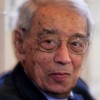
UN Chief Denied Second Term by a Livid US Veto
Boutros Boutros-Ghali, who passed away Tuesday at the age of 93, was the only UN Secretary-General (1992-1996) to be denied a second term in office because of a US veto in the 15-member Security Council.
TPP’s Threat To Multilateralism
2015 proved challenging for multilateralism, especially in relation to development concerns. July’s Addis Ababa third Financing for Development (FfD) conference delivered little real progress. Nevertheless, the September Sustainable Development Goals summit redeemed hopes with an ambitious and universal Agenda 2030.
Big War Lords Playing Brinkmanship Game in Syria
When 25 million Syrians--half of them refugees abroad or at home and the other half terrorised by daily bombing, learnt that major world leaders in their meeting in Germany launched an unprecedented confrontation threatening with unleashing World War III, instead of easily agreeing on a ceasefire to alleviate their inhumane suffering, they most probably fell into an even deeper desperation. See what happened.
ACP countries unite on empowerment of rural women and youth
Women make up, on average, over 40 percent of the agricultural labour force in the developing world and yet typically they do not have sufficient access to critical resources and services to become as productive as their male counterparts. In fact, across all regions, rural women and girls continue to face significant discrimination compared with men and boys, with women being more likely than men to hold poor quality jobs and benefit less from agricultural value chains.Attacks on Medical Workers in War Zones under Fire
The growing number of indiscriminate bombings in three of the most devastating military conflicts currently underway -– in Syria, Afghanistan and Yemen – are taking a heavy toll on medical personnel serving with humanitarian organizations — along with thousands of civilians caught in the crossfire between government forces and rebel groups.
Views Split on Nuclear Deal Implementation (Part Two)
The implementation of the Iranian nuclear deal with the P5+1 (the United States, Russia, China, the United Kingdom, France and Germany) on January 16, which resulted in the lifting of the sanctions imposed on Iran, has split the views of current and former US politicians.Rise of Middle Class Undermined in East Europe & Central Asia
The UN’s post-2015 development agenda, which was adopted by world leaders at a summit meeting last September, includes a highly ambitious goal: the eradication of extreme poverty by the year 2030. The decline in poverty, as reflected in the UN’s Millennium Development Goals (MDGs) which ended last December, had one positive fallout: the rise of a new middle class graduating largely from the ranks of the poor.
UN Chief Focuses on World’s First Humanitarian Summit
As the global humanitarian crisis continues to devastate civilian lives in conflict zones, UN Secretary-General Ban Ki-moon appealed to the international community to ensure “no-one in conflict, no-one in chronic poverty, and no-one living with the risk of natural hazards and rising sea levels, is left behind.”
CTBTO’s Verification System Thwarts Nuclear Tests
The Vienna-based Comprehensive Nuclear-Test-Ban Treaty Organization (CTBTO) – a 24-hour international watchdog body – is known never to miss a beat. The Organization’s international monitoring and verification system has been tracking all nuclear explosions -– in the atmosphere, underwater and underground –- including all four nuclear tests by the Democratic Republic of Korea (DPRK) – the only country in the world to test nuclear weapons in the 21st century.
Violence Is a Preventable Disease
The World Health Organization has said that ‘Violence is a preventable disease’ and people are not born violent, rather we all live in cultures of violence. This can be changed through nonviolent peacemaking and the persuit of ‘just peace’ and nurturing of cultures of peace.UN Seeks Zero Tolerance for Female Genital Mutilation
The United Nations says it is determined to end female genital mutilation (FGM) – a ritual practiced mostly in Africa, the Middle East, parts of Asia and even among some migrant communities in Europe. And the world body’s determination is being backed with facts, figures -- and a global campaign by a Joint Programme against FGM initiated by the UN Population Fund (UNFPA) and the UN children’s agency UNICEF.
The Nuclear Deal Implementation Day: A Win-Win Agreement (part one)
After many years of unprecedented, crippling Western sanctions that stopped Iran’s oil exports and even banking transactions, the long and arduous negotiations between Iran and the P5+1 (the United States, Russia, China, United Kingdom, France and Germany) culminated in the Joint Comprehensive Plan of Action (JCPOA) agreed on 14 July 2015. That agreement finally reached the Implementation Day on 16th January 2016, coincidentally 37 years to the day when the late Mohammad Reza Shah left Iran for good and paved the way for the victory of the Islamic revolution.« Previous Page — Next Page »


The Week with IPS

NEXT STOP - SDGs
Tracking global progress towards a sustainable world
Tracking global progress towards a sustainable world
