Languages
Saturday, October 24, 2026



News and Views from the Global South
Global

UN 80 – Clustering the Climate Conventions
The international governance of environmental challenges has progressively evolved over the past decades, transitioning from isolated treaties addressing specific issues to a complex web of multilateral agreements that aim to foster sustainable development and environmental integrity.
Toward Enhanced Synergies among Biodiversity Related MEAs: Addressing Fragmentation with Strategic Coordination
The governance of nature and biodiversity has evolved from early 20th-century treaties on hunting and migratory species to today’s complex web of multilateral environmental agreements.
Youth Lead Global Call to Support Hibakusha on UN Day Against Nuclear Test
Marking the United Nations’ International Day Against Nuclear Tests, young activists and experts gathered at the UN University in Tokyo for an event titled “The Role of Youth in Supporting Global Hibakusha.” The forum underscored how youth solidarity can amplify the voices of survivors of nuclear testing and bombings, known collectively as the “Global Hibakusha” — communities scarred by the use, production, and testing of nuclear weapons, from Hiroshima to the Marshall Islands — and strengthen global momentum toward nuclear abolition.
‘Who Will Take the Mic at the United Nations When Doing so Might Cost Them Their Freedom?’
CIVICUS discusses civil society’s challenges in engaging with United Nations (UN) processes with an activist from a Salvadoran queer-led organisation who asked to remain anonymous for security reasons.

UN General Assembly Urged to Temporarily Move to Geneva to Circumvent US Visa Denials
When Yasser Arafat, leader of the Palestine Liberation Organization (PLO) was denied a US visa to visit New York to address the United Nations back in 1988-- under the Ronald Reagan administration-- the General Assembly defied the United States by temporarily moving the UN’s highest policy making body to Geneva– for the first time in UN history– providing a less-hostile political environment for the PLO leader.
E3, US Need a More Effective Diplomatic Strategy for Iran Post-Snapback
The decision early this week by the E3 (France, Germany, and the United Kingdom) to initiate the process to snap back UN sanctions on Iran that were modified as part of the 2015 nuclear deal must be paired with an effective diplomatic strategy that restarts talks between the United States and Iran.
UN Reforms Include “Painful Staff Reductions”—and Forcible Return to Home Countries
The 193-member General Assembly, the UN’s highest policy-making body, will make the ultimate decision on the proposed UN restructuring, which will include staff cutbacks, merging or eliminating of departments and relocating UN agencies from high-cost to low-cost locations.
Soka Gakkai President Issues Statement on Creating a World Without War to Mark 80 Years Since End of World War II
Minoru Harada, president of the Soka Gakkai Buddhist organization, has today issued a statement marking 80 years since the end of World War II, titled “Creating a Wave of Change Toward a Century Without War,” clarifying its ongoing commitment to peace.
A New Non-Alignment for the Global South
The Global South had little voice, let alone influence, in shaping the economically ‘neoliberal’ and politically ‘neoconservative’ globalisation leading to contemporary geopolitical economic conflicts. Pacifist non-aligned cooperation for sustainable development offers the best way forward.
Sexual Violence Against Women, Children in War ‘Strategic’ and Growing
Sexual violence against women and children during wars should not be considered collateral damage. "It is strategy, it is systematic, and it is used more and more," Permanent Representative of Denmark to the United Nations (UN) Christina Markus Lassen said.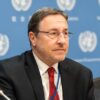
Who Should Lead the UN Development Programme?
In June this year, UNDP bade farewell to Achim Steiner. The ninth Administrator in UNDP’s history had completed a second four-year term in office.
2025 Is On Track To Mark The Deadliest Year for Humanitarian Aid Workers
World Humanitarian Day (August 19) honors humanitarian aid workers, raises public awareness for humanitarian crises, and advocate for strengthened international cooperation. Through this year’s theme, A Call to #ActForHumanity, the United Nations underscored the need for increased funding for lifesaving humanitarian missions, stronger protections for aid personnel, and accountability for violations of international law.
Boosting Trade in the World’s Least Developed Countries – The Power of Technology
Artificial intelligence and the use of frontier technologies are already transforming trade and boosting prosperity, particularly for developed and some developing countries. This ranges from the digital exchange of documents, the digitalisation of trade processes and leveraging online platforms to fast-track cross-border trade.
Sexual Exploitation & Abuse at UN Reveals “Significant Underreporting”
A system-wide UN survey of sexual exploitation and abuse (SEA), described as “grave violations of human rights”, has revealed that in 2024, there were 675 allegations reported. A UN message to staffers last week says this is “widely believed” to be “significant underreporting” because the real numbers may be much higher.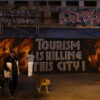
Overtourism: Civil Society Mobilising
It’s peak holiday season across Europe and North America, and people are hitting the beaches and crowding into city centres in ever-increasing numbers. They’re part of a huge industry: last year, travel and tourism’s share of the global economy stood at US$10.9 trillion, around 10 per cent of the world’s GDP.
Seeding Strength: Farmer Cooperatives and the Future of Food Systems
“The future of agriculture lies not in the hands of a few giants, but in the joint hands of many.” This quote captures the spirit of farmer cooperatives—values-driven, collectively run enterprises rooted in solidarity and self-help. As global food systems grow more fragile and inequitable, cooperatives offer a compelling model: putting people before profits, and communities before corporations, while advancing social equity, economic empowerment, and environmental sustainability.
Accountability on Trial: UN’s Unabated SEA Crisis Erodes Trust in World Body’s Leadership
After taking oath of office in December 2016 as Secretary-General, Mr. Antonio Guterres described the eradication of sexual offenses by UN peacekeeping and all other UN personnel as the first item on his reform agenda.
Plastic Talks Held Hostage by Petrochemical Lobby
On August 7, a tar-like slurry glistened on the roads leading up to the gate of the Palais Des Nations in Geneva, Switzerland. For fear of sticky substances sticking to tires, no vehicles were allowed to go inside for a while, forcing officials arriving from different parts of the world to disembark and walk through a side entrance.
Will the US Blacklist Bar Political Leaders & Delegates from UN’s 80th Anniversary Summit?
When the 193-member General Assembly commemorates the UN’s 80th anniversary during a high-level meeting in mid-September, how many political leaders and delegates will be barred from entering the United States --despite the 1947 US-UN Host Country Agreement?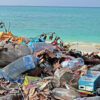
Plastics Treaty Talks End in ‘Abject Failure’ as US, Other Big Oil Allies Sabotage Progress
Negotiators in Geneva adjourned what was expected to be the final round of plastics treaty negotiations on Friday without reaching an agreement, a failure that environmentalists blamed on the Trump-led United States, Saudi Arabia, and other powerful nations that opposed any effort to curb plastic production—the primary driver of a worsening global pollution crisis.
Visualizing a Sustainable Future: The Intersection of Art and Climate Justice
In the 1900s, global discussions around climate change and fossil fuel usage reached new heights, leading to the emergence of climate change art. Since then, it has remained a key theme in contemporary art, with artists and corporations alike continuing to push messages of climate reform to instill a sense of urgency, fear, and shared responsibility in viewers.« Previous Page — Next Page »





The Week with IPS

NEXT STOP - SDGs
Tracking global progress towards a sustainable world
Tracking global progress towards a sustainable world
