Languages
Thursday, November 26, 2026



News and Views from the Global South
Global
ECONOMY: Accountability To Women Could Upset Business-As-Usual
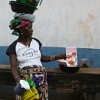
A public presentation of the "Progress of the World's Women" report by the United Nations Development Fund for Women (UNIFEM) in Pretoria, South Africa this week suggests that one of the most powerful constraints on realising women's rights and achieving the Millennium Development Goals is a lack of accountability to women's needs.U.S.: Clinton Orders Review to Enhance “Smart Power”
In a new initiative designed to reduce the imbalance between "hard" and "soft" power in U.S. policies abroad, Secretary of State Hillary Clinton has launched a planning process designed to better coordinate U.S. foreign and development policies in pursuit of what Clinton has called "smart power".DEVELOPMENT: India, China Fight Poverty, Population Growth
The world's two most populous nations - India and China - are placing a high priority on reproductive health and poverty alleviation as part of their efforts to meet the U.N.'s much-touted Millennium Development Goals (MDGs) and its 2015 deadline.AFRICA: Western Recipient Governments Cling to Dirty Money
In 2007, the French corruption watchdog Catholic Committee against Hunger and for Development (known by its French acronym CCFD) issued a first report on the colossal sums stolen by corrupt heads of states and hidden in mostly Western secret bank accounts. Figures are hard to come by, given the secrecy that shrouds such looting of public funds.Q&A: "I Saw People Dying Before My Eyes"
Very little is known about North Korean society considering the country is so isolated the outside world. Those who flee the country refrain from speaking out, fearing persecution against them or their families. IPS’s Zoltán Dujisin caught up with Kim Young Seong, a North Korean defector, who gave a rare insight into North Korean society. The following are extracts from the interview.FINANCE: Remittances to Poor Countries Plunge up to 10 Percent
The amount of money immigrants from poor countries send to their families back home is expected to decline between seven and 10 percent in 2009 compared to 2008 levels, according to a new report released here Monday by the World Bank.SCIENCE: G8 Failure to Launch on Climate
The G8's failure to make meaningful commitments on climate last week pushes the world ever closer to global climate catastrophe, experts warn. Without commitments to take action, there is little comfort in G8 countries' agreement to keep overall global warming below 2.0 degrees Celsius.
Q&A: Geopolitics Antithetical to Human Development
Sam Worthington is the president and CEO of InterAction, a coalition of 175 U.S.-based non-governmental organisations (NGOs) that focus on aiding the world's most poor and vulnerable people.POLITICS-JAPAN: Japan’s Taro Aso Declares Polls in August
Japanese Prime Minister Taro Aso called for sudden elections next month after his party suffered a major defeat in Sunday's Tokyo metropolitan election. Aso will dissolve the parliament on July 21, paving the way for the national election.
Q&A: "We Are Changing the Situation of Impunity"
Since its establishment in late 2006, the Comisión Internacional contra la Impunidad en Guatemala (CICIG) has been doing groundbreaking work fighting corruption, impunity and human rights violations in Guatemala.G8: Some Aid Can be Hard to Stomach
As numbers go, and as expectations went, 20 billion dollars would be a fair bit for the G8 to produce to fight the food crisis and bring down hunger. Certainly, it was more than most expected.CLIMATE CHANGE: G8 Declares a Lack of Promise
The G8 summit is no climate change meeting, and not formally associated in any sense with the series of negotiating meetings leading up to the climate change conference in Copenhagen in December. But the outcome of a G8 sponsored forum on climate change should get environmentalists worried about any outcome in Copenhagen.
Q&A: Teens Wrongly Excluded From Family Planning
Nafissatou Diop has worked for decades on issues of reproductive health, HIV/AIDS and development in West Africa, including designing and implementing many studies and programmes.POLITICS: Is the Non-Aligned Movement Still Relevant?
When the Non-Aligned Movement (NAM) holds its triennial summit meeting in the Red Sea coastal town of Sharm el-Sheikh next week, Cuba will formally hand over the chairmanship of one of the world's largest single political groups to Egyptian President Hosni Mubarak.AFRICA: FAO Paper On Land Grab Is "Wishy-Washy"
The boom in the acquisition of arable land in Africa by foreign companies and governments has stirred an international debate between international institutions such as the United Nations’ Food and Agriculture Organisation (FAO) and non-governmental groups and independent experts.G8: Doha Deal Begins to Look Nearer
Clear signs are emerging at the G8 summit here of progress towards concluding new terms for international trade.G8: The Five Throw a Challenge
"The world needs a new global governance," the G5 declared Wednesday, "the construction of which must be based on inclusive multilateralism." As rhetoric goes, this might sound like more of the same. But the time and place of that declaration gave the words a new significance.
POPULATION: Poorest Countries to Bear Brunt of Growth
The world's population - already at least 6.7 billion people - will double in the next 40 years if current growth rates are left unchecked, warns the United Nations Population Fund (UNFPA).WORLD: Trade Cannot Be Relied Upon to Reduce Poverty
Trade is positively linked to economic growth but trade policies alone cannot be relied upon to meet a country’s poverty reduction objectives, admits a review of aid for trade that was compiled for the World Trade Organisation (WTO) and the Organisation for Economic Cooperation and Development (OECD).G8: Politely, a Revolution Under Way
It is with too much ease that we all sometimes use the word 'revolution'. Because all too often the change being championed is one that too many others simply do not notice. But that isn't the case here: the change pushed for at the G8 summit in Italy, and at other such forums, is no less than revolutionary, and can only be seen as historic.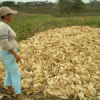
G8: ‘Just Invest in Women’
Investment in the health and the rights of girls and women can help economic recovery, civil society groups are telling G8 leaders.« Previous Page — Next Page »


The Week with IPS

NEXT STOP - SDGs
Tracking global progress towards a sustainable world
