Languages
Friday, October 9, 2026



News and Views from the Global South
Middle East & North Africa
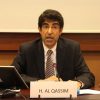
Geneva Centre for Human Rights Advancement calls on Arab and Western societies to stand united against violent extremism
The Chairman of the Geneva Centre for Human Rights Advancement and Global Dialogue, Dr. Hanif Al Qassim, has deplored the rise of xenophobia, bigotry and marginalisation targeting refugees, migrants and internally displaced persons that is taking effect in many regions of the world.International Red Cross Commends UAE’s Humanitarian Work in Yemen
The UAE’s soft power policy is a great profile that contributes to the positive reputation boasted by the UAE outside this region, the President of the International Committee of the Red Cross, ICRC, has said.
Aid Groups Condemn Yemen Blockade, Warn of ‘Catastrophic’ Famine
If aid deliveries are not resumed, Yemen will experience the worst famine the world has seen in recent decades.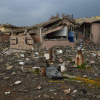
The Illusion of Justice: When Will Reparations be Served to Iraq’s Victims?
It is difficult to spend any time in Iraq without being struck by a sense of profound injustice. After successive decades of war and occupation, violence has become the rule rather than the exception in the country, with each phase of conflict outdoing the previous in terms of brutality and capacity to shock the conscience.GCAA welcomes women aviators from South America in ‘Women in Aviation’ programme
As part of a programme to advance the role of women in the aviation sector, both in the UAE and around the world, the General Civil Aviation Authority, GCAA, welcomed its third group of women from Latin American to take part in the ‘Women in Aviation Chapter.’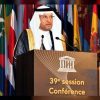
OIC to cooperate with UNESCO to protect cultural heritage
The Organisation of Islamic Cooperation, OIC, has expressed its readiness to cooperate with UNESCO in combatting the intentional destruction and illegal trafficking of cultural heritage in countries affected by armed conflicts, which are crimes incited by destructive ideologies.Louvre Abu Dhabi opens to public on 11th November
The much-anticipated Louvre Abu Dhabi will open to the public this Saturday, with a spectacular week-long series of celebrations. It is the first museum of its kind in the Arab region and offers a new perspective on the history of art in a globalised world.
UAE-UN meeting in Dubai examines crucial role of space for development
A United Nations meeting opened in Dubai on Monday aiming to examine how the global space community can contribute to international efforts to bring about a more just and equitable world for all people and the planet.
UAE peaceful nuclear energy programme in full compliance with international standards: IAEA
The United Arab Emirates' peaceful nuclear energy programme is in full compliance with the highest international standards of safety and security, set by the International Atomic Energy Agency, said Mikhail Chudakov, Deputy Director-General, IAEA.Members of European Parliament Visit UAE-Jordanian Camp Mrajeeb Al Fhood for Syrian Refugees
The UAE Federal National Council (FNC), the consultative council and UAE parliamentary body, in cooperation with the Emirates Red Crescent, organized a field visit for a delegation of members from the European Parliament (MEPs) of the "EU-UAE Parliamentary Friendship Group" to the UAE-Jordanian Mrajeeb Al Fhood camp for Syrian refugees.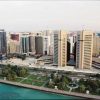
Abu Dhabi population hits 3 million, fertility rate up to 3.7 per citizen-female
Newly-published figures from the Statistics Centre- Abu Dhabi show the emirate's live births increase 317.2 percent from what it was in 1977, with the total population amounting to 2.9 million by the end of 2016, a growth of 4.4 percent as compared to 2015 official census.
Western Sahara’s Locked Positions Might be Loosening
In August last year armed forces from both sides pushed forward into the desert and into the no-go buffer zone that the UN had established.
Russian & US Vetoes Protect Client States
The vote on the latest American-sponsored resolution in the UN Security Council (UNSC) on Syria was predictable: of the five big powers, China abstained and Russia vetoed, while the US, UK and France voted for it.
Peace and stability must be restored in the Middle East and North Africa so as to alleviate poverty
On the occasion of the 2017 International Day for the Eradication of Poverty, the Chairman of the Geneva Centre for Human Rights Advancement and Global Dialogue H. E. Dr. Hanif Hassan Ali Al Qassim observed that the unprecedented rise of violence and insecurity in the Arab region combined, breed poverty and societal decline.
Strengthening Youth Potential and the Prospects for a Better Future
Investing in youth by developing their potential through education, job creation and instilling the values that advance the cause of humanity is the most daunting, yet promising challenge facing world leaders.
Non-violence and lasting peace are key to secure the long-term stability of the Arab region
The Chairman of the Geneva Centre Dr. Hanif Hassan Ali Al Qassim is calling on the international community to address the surge of extremist violence exacerbating the volatile security situation in the Arab region. This appeal was made by Dr. Al Qassim in relation to the commemoration of the 2017 International Day of Non-Violence observed on 2 October 2017.
Gender Equality and Women’s Empowerment in the Arab Region: Where Do We Stand?
Women’s empowerment and gender equality should remain a central objective of the world community. The recently adopted Sustainable Development Goals (SDGs) includes specific provisions to member States of the United Nations – notably through SDG 5 - to commit to enhancing gender equality and to give women a stronger voice in the fight for equality. The Preamble of the 1948 Universal Declaration of Human Rights calls for “equal rights” to be enjoyed by “men and women”: 69 years later, gender equality has not only been recognised for what it is: a fundamental human right, it is also becoming a guiding principle in the efforts of States to attain the highest ideals of a just and inclusive society and the highest rate of growth.
To Be an Egyptian Migrant in Rome (And Also Make Great Pizza)
“I asked him: do you want to come with us to Greece? He said: ‘Why not?’ So my wife and myself packed up and drove to Athens to open our ‘trattoria’ there.”
Out of Africa: Understanding Economic Refugees
Not a single month has passed without dreadful disasters triggering desperate migrants to seek refuge in Europe. According to the International Organization for Migration (IOM), at least 2,247 people have died or are missing after trying to enter Europe via Spain, Italy or Greece in the first half of this year. Last year, 5,096 deaths were recorded.
What Charities and Relief organizations do to alleviate poverty in the Arab region
Extreme poverty remains one of the world’s biggest challenges. According to the United Nations, 767 million people live in extreme poverty around the world. Although world society has managed to lift nearly 1 billion people out of extreme poverty – in 1999 it was estimated that 1.7 billion were affected by extreme poverty – the unprecedented rise of conflict and of violence in the Arab region has worsened the socioeconomic situation of vulnerable population segments in many countries. On 22 February 2017, the Under-Secretary-General for Humanitarian Affairs and Emergency Relief Coordinator of the United Nations –Stephen O’Brien – stated to the United Nations Security Council that 67% of the population in Syria is living under conditions considered as extreme poverty. In another Arab country affected by war and conflict – Yemen – the World Bank estimates that poverty affects 62% of the population, whereas the World Bank’s estimates this number to be at approximately 22% for Iraq or even as high as 40% in territories controlled by DAESH. Inevitably, conflict and violence have worsened the situation in the Arab region.
20,000 Civilians Trapped in Raqqa City, Deemed “The Worst Place on Earth”
The battle to reclaim Raqqa, the de facto capital of the Islamic State of Iraq and Levant (ISIL/Da’esh), has raised concerns among top UN officials as at least 20,000 civilians remain trapped under heavy fire in the city. Last week Monday, 42 civilians, including 12 women and 19 children, were killed in an air attack, according to the AP.« Previous Page — Next Page »





The Week with IPS

NEXT STOP - SDGs
Tracking global progress towards a sustainable world
Tracking global progress towards a sustainable world
