Languages
Thursday, October 8, 2026



News and Views from the Global South
Middle East & North Africa
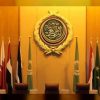
Arab Parliament affirms rights of Palestinians to establish independent country
Dr. Meshaal Al Salmi, Chairman of the Arab Parliament, has renewed the Arab Parliament's firm commitment to supporting the rights of the Palestinian people to establishing their independent sovereign country, with Jerusalem as its capital, in line with international laws and resolutions.
US Faces Collective Defiance at UN Over Jerusalem
When the UN General Assembly condemned the United States for its decision to recognize Jerusalem as the capital of Israel, the vote was described as a “collective defiance” of the international community against public threats against the United Nations and its member states by a politically unpredictable and predictably wavering US President.
MOCCAE launches e-Service regulating trade of endangered fauna and flora
The Ministry of Climate Change and Environment, MOCCAE, has launched an electronic service on its website to regulate domestic and international trade in endangered and threatened animals and plants covered by the Convention on International Trade in Endangered Species of Wild Fauna and Flora, CITES.Saudi German Hospital provides treatment services for Rohingya refugees
A medical team of doctors from the Saudi German Hospital in Dubai have volunteered in the Zayed Giving Convoy to alleviate the suffering of Rohingya refugees in the city of Cox's Bazar in Bangladesh, by providing diagnostic, therapeutic and preventive services.
UAE reaffirms commitment to achieving SDGs
The UAE has reiterated its serious commitment to achieving the UN's Sustainable Development Goals, SDGs, stressing the importance of reaching gender balance as part of its fulfilment of said goals.
UN and Forum for Promoting Peace in Muslim Societies to cooperate on religious education
Undersecretary-General Adama Dieng, United Nations Special Adviser on the Prevention of Genocide, announced a joint cooperation agreement between the United Nations and the Forum for Promoting Peace in Muslim Societies to organize ten research workshops to promote religious education in the Islamic world.GOSH celebrates topping out of Zayed Centre for Research into Rare Disease in Children
The Great Ormond Street Hospital, GOSH, has marked a crucial milestone in the construction of The Zayed Centre for Research into Rare Disease in Children, as a topping out ceremony was held to mark the moment when the building reached its highest point.Major collapse in Houthi militias’ defences, says Arab Coalition Forces Commander
Brigadier-General Abdul Salam Al-Shehhi, Commander of the Arab Coalition Forces on the west coast of Yemen, has stated that the UAE, Sudanese and Yemeni armed forces are conducting, with courage and determination, an epic battle to liberate Yemen from the control of the Iran-backed Houthi militias.ICRC: UAE judicial systems conform with International Human Rights Law
The International Committee of the Red Cross, ICRC, has praised the UAE's commitment to protection of human rights and ensuring the continual improvement of its judicial laws and practices in line with the basic rules of the Geneva Conventions and their Additional Protocols.
Trump-Mideast: Much More than a ‘Kiss of Death’ to Palestinians
US President Donald Trump’s decision to recognise Jerusalem as Israel’s capital does not represent only a ‘kiss of death’ to the two-State solution, but also a strong blow in the face of 57 Muslim countries, let alone igniting fire in this easily inflammable region, providing more false arguments to criminal terrorist groups to escalate their brutal attacks, in addition to taking a step further in Washington’s new conflict with Iran and the ‘restructuring’ of the Middle East.UAE condemns US decision to recognise Jerusalem as capital of Israel
The United Arab Emirates has expressed its deep regret and condemnation of the US administration's decision to recognise Jerusalem as the capital of Israel.
MOCCAE, GGGI, Korean Embassy hold youth workshop on climate change adaptation
The Ministry of Climate Change and Environment, MOCCAE, in cooperation with the Global Green Growth Institute, GGGI, and the Embassy of the Republic of Korea, held a youth workshop at the Youth Hub in Dubai to discuss topics of climate change adaptation and how young people can get involved.
UN’s Zeid Ra’ad Al Hussein condemns attacks on Rohingya
The UN human rights chief on Tuesday condemned "widespread, systematic and shockingly brutal" attacks against the Rohingya, as well as decades of discrimination and persecution.
Executive Director of Geneva Centre receives Franco Cuomo International Award
The Executive Director of the Geneva Centre for Human Rights Advancement and Global Dialogue, Ambassador Idriss Jazairy, has been awarded the 2017 Franco Cuomo International Award – under the category of Special International Award - at the Italian Senate in Rome in recognition of the Geneva Centre’s efforts to promote a value driven human rights system and to encourage global dialogue between the Global North and the Global South.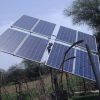
Solar capacity jumps by more than half in developing nations: Report
New solar-powered generating capacity is growing at a crackling pace in emerging markets. The growth is fuelled by low-priced equipment and innovative new applications that are expanding energy access for millions, Bloomberg New Energy Finance (BNEF) finds in a comprehensive new study of clean energy activity in key developing nations.
Organisation of Islamic Cooperation urges promotion of Islamic culture of diversity and pluralism
The Secretary General of the Organisation of Islamic Cooperation (OIC), Dr. Youssef Othaimeen, has called on Member States to publicise the Muslim world’s culture of diversity and pluralism, as a means to convey a message of universal peace, tolerance, moderation and love as advocated by Islam.UAE rolls out renewable energy training programme for Pacific Island countries
The Ministry of Foreign Affairs and International Cooperation, MoFAIC, has launched a two-year renewable energy training programme for Pacific Island countries financed by Abu Dhabi Fund for Development, ADFD, the leading national entity for development aid. The training is being led by Masdar, Abu Dhabi’s renewable energy company.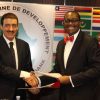
IsDB and AfDB partner to boost agriculture and fight drought in Africa
A joint initiative of the Islamic Development Bank (IsDB) and African Development Bank (AfDB) will boost agriculture value chains and enhance drought resilience in Nigeria, Somalia and Uganda.UAE strengthening role of education in countering extremist ideologies: UN Official
Dr. Hatem Fouad Ali, Regional Director of the United Nations Office on Drugs and Crime, UNODC, in the Gulf Cooperation Council, GCC, Region, stated that Aqdar World Summit is a leading UAE initiative that strengthens the role of education in countering extremist ideologies.
Turkish Surveillance Invades Social Media Privacy
”The present government has taken measures that go beyond anything the previous military juntas did”, according to legal expert Sercan Aran of the trade union confederation KESK. The army has previously registered personal data and the private political opinions of suspected dissidents, but always under secrecy.
UAE bears treatment costs of 88 injured Yemenis in Indian hospitals
Eighty eight injured Yemenis, along with their companions, have left Aden to complete their treatment in Indian hospitals under the supervision of the Emirates Red Crescent, ERC.« Previous Page — Next Page »





The Week with IPS

NEXT STOP - SDGs
Tracking global progress towards a sustainable world
Tracking global progress towards a sustainable world
