Languages
Friday, September 18, 2026



News and Views from the Global South
Sustainability

UN Reform: Is it Time to Renew the Idea of Clustering the Major Environmental Agreements?
“Never let a good crisis go to waste.” Winston Churchill’s famous maxim feels very relevant today, when multilateralism and many environmental causes seem to be in retreat. We now face a triple planetary crisis of climate change, biodiversity loss, and pollution.
The New Silk Road of Central Asia: Landlocked Countries Now Connected
Once landlocked, now connected, the UN Global Compact has bridged the gap between Europe, Asia, and the Middle East: having many call it the “New Silk Road”.
World Bank’s IFC Finally Adopts Remedial Action Framework
The World Bank’s private sector arm has raised the bar — and others may follow. On April 15, the International Finance Corporation (IFC) became the first development finance institution to adopt a formal remedy policy, publishing its Remedial Action Framework (RAF) to address environmental and social harm caused by IFC-supported investment projects.
FFD4 Must Deliver for the World’s Most Vulnerable Nations
Five years from the 2030 deadline for the Sustainable Development Goals (SDGs), we face a development emergency. The promise to eradicate poverty, combat climate change, and build a sustainable future for all is slipping away. The SDG financing gap has ballooned to over $4 trillion annually—a crisis compounded by declining aid, rising trade barriers, and a fragile global economy.
Brazil’s Most Sustainable Capital Puts Value on its Waste
Living with her neighbours, getting to know them and chatting with them is what Lucila Neves enjoys most in the community orchard of Portal de Ribeirão, a neighbourhood in the south of Florianopolis, considered the most sustainable of Brazil's 27 state capitals.
Ocean Protection is a Multi-Billion Dollar Opportunity
The services the ocean provides are the backbone of our collective health, wealth and food security, yet today just 2.7% of the ocean has been assessed and deemed to be effectively protected. In failing to establish adequate safeguards, not only are we condemning communities and ecosystems across the world to decline and collapse, we are also overlooking a significant economic opportunity.
Disaster Risk Reduction: The Insurance That Always Pays Off
Floods, earthquakes, and droughts are striking the wallets of the world harder than any other time in history. According to the Global Assessment Report on Disaster Risk Reduction, the cost of disasters is only growing, with annual expenditures exceeding 2.3$ trillion; accounting for over 2% of global GDP, and if represented as a nation, it would have the seventh largest GDP.
Make Use of all Urban Waste, a Utopia in Brazil?
In 2014, Santa Catarina became the first and only state free of open-air garbage dumps in Brazil. Now, 14 of its municipalities are seeking to also free themselves from landfills and make use of nearly all urban solid waste.
Reviving Mangroves at the Edge of Mozambique Channel
Just before dawn, a flotilla of wooden canoes drifts silently through mangrove-tangled channels where roots sprout from the black mud of the lagoon. Here, at the edge between sea and forest, lies a story of restoration.
Solar Energy Brings Water to Iconic Salvadoran Village of El Mozote
The worst massacre of civilians in Latin America occurred in the Salvadoran village of El Mozote, where environmental projects are beginning to emerge, slowly fostering awareness about protecting the natural resources of this deeply symbolic site, embedded in the country's historical memory.
Why we Must Put Ocean-Positive Solutions at the Heart of Global Development
The ocean is far more than a vast expanse of water; it is a cornerstone of life and a critical driver of sustainable development. The intricate relationship between human development and the ocean underscores why ocean governance and sustainability are pivotal to global progress. Its significance becomes particularly evident in Small Island Developing States (SIDS), where the ocean is not just a resource but an intrinsic part of identity and survival.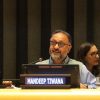
CIVICUS’ New Leader Speaks on Global Declines in Civic Freedom
On June 1, CIVICUS Global Alliance, announced the appointment of Mandeep Tiwana as its new Secretary-General. With his tenure underway, Tiwana sat down with an IPS correspondent to discuss CIVICUS’s work in promoting civic freedom and solidarity in an increasingly autonomy-restrictive world.
In a Changing World, Protecting Nature is Protecting Our Future
In a world marked by armed conflict, threats to democracy, technological disruptions, and geopolitical tensions, many people are asking: Why should we prioritize environmental crises when there are other, more visible or perceived as more urgent challenges?
Life Below Water Goes Deep: Our Planet’s Greatest Untold Story
As David Attenborough reflects in his new documentary Ocean, “After living for nearly 100 years on this planet, I now understand the most important place on Earth is not on land, but at sea". We wholeheartedly agree - and urge governments convening at the 3rd United Nations Ocean Conference (UNOC3) in France next month to remember that life below water goes deep.
Islands are Solutions: the Case for Island-Ocean Coalitions
As the world confronts escalating climate impacts, biodiversity loss, and ocean degradation, islands stand as critical test cases—not just as sites of vulnerability, but as living laboratories of resilience, restoration, and innovation. Too often, they are framed as victims of global circumstances, awaiting salvation from external forces.
Economic Growth is the Wrong Metric for Our Time
As the United States lurches toward isolationism and authoritarianism, its political problems are now bleeding into pocketbook anxieties that Trump's policies will torpedo economic growth, both domestically and globally.
In Harmony with Nature: A Dryland Perspective on Development and Biodiversity
Nowhere is this more apparent than in the world’s drylands. Covering 41% of the Earth’s land surface, these regions are home to over two billion people and support 50% of the world’s livestock and 44% of its cultivated systems (UNCCD). Far from being marginal, drylands are central to global food security, biodiversity, and climate resilience.
UN Ocean Conference Must Inspire Global Ambition
The United Nations Ocean Conference (UNOC) takes place every three years and in just a few weeks, the international community will gather in Nice, France, at a time when the International Science Council has called for the world to address the new reality of a disrupted Earth system.
Seafood Without Transparency is a Recipe for Disaster
Seafood is a staple in my house – fish tacos, paella, sushi. But no matter how good it tastes, I can’t help but wonder: was my fish caught responsibly? Or did something go horribly wrong before it ever reached my plate?
Tanzania’s Women Miners Digging for Equality in a Male-Dominated Industry
Under the scorching Tanzanian sun, Neema Mushi wipes sweat from her dust-covered face and swings her pickaxe into the earth. The impact sends dust swirling into the air, coating her tattered clothes. She barely notices. For the past eight years, this has been her life—digging, sifting, sieving, and hoping to strike gold in the male-dominated pits of Geita. It is a grueling task riddled with obstacles.
Four Rare Snow Leopards Spotted Together on Pakistan’s Northern Peaks
In a remarkable conservation achievement, four rare and elusive snow leopards have been spotted together in the rugged peaks of northern Pakistan, highlighting the success of the ongoing global efforts aimed at protecting this critically endangered species and preserving its fragile habitat.« Previous Page — Next Page »


The Week with IPS

NEXT STOP - SDGs
Tracking global progress towards a sustainable world
Tracking global progress towards a sustainable world
