Languages
Wednesday, November 11, 2026



News and Views from the Global South

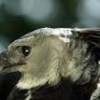
Harpy Eagle to Take Flight Again
Panama is a pioneer in rescuing the impressive raptor, the harpy eagle. More than 30 harpy chicks have hatched in captivity there since 2001.Ecobreves – BRAZIL: A Law to Combat Biopiracy
The Brazilian government wants a law for fighting biopiracy. A bill on this issue, drafted by the Environment Ministry, will be sent to parliament this year, and will define the crimes against Brazil's national genetic wealth and establish sentences.Ecobreves – CHILE:: Digital Map of Environmental Damage
The Chilean National Ecological Action Network, RENACE, presented the first digital version of its ''Map of Ecological Destruction in Chile'', an annual report that highlights the environmental trouble spots in each region of the country and the disputes with greatest public impact.Ecobreves – VENEZUELA: Center to Help Beached Whales
The Venezuelan Environment Ministry is pushing for the creation of a special center to deal with cetaceans -- whale and dolphin species -- that end up beached on the country's coast. There have been 40 such cases in the past three years.Ecobreves – GUATEMALA: Summit Against Drought
Some 200 officials and experts will gather in the Guatemalan capital in November to study the problems of drought and desertification afflicting Latin America and attempt to come up with some solutions, announced this Central American country's Ministry of Environment and Natural Resources.Ecobreves – HONDURAS: Protecting Sea Turtles
Authorities from the Honduran Ministry of Natural Resources set up a ban a month ago to protect the sea turtle species that nest around the Gulf of Fonseca, a maritime area shared by Honduras, Nicaragua and El Salvador.Ecobreves – CUBA: New Trees for Havana
''My Green Plan'' has slated for this year the planting of 2.5 million trees of 52 species in the Cuban capital, part of ongoing efforts to re-establish vegetation in this city of 2.3 million people
Ecobreves – A Transgenic Sunflower Is Born: ARGENTINA
Scientists from Argentina's Universidad del Litoral have isolated a gene that, once introduced into the sunflower, helps this crop tolerate extreme drought.Ecobreves – COLOMBIA: Eco-Certificates for Flower Growers
Nine Colombian flower-growing companies received ''Florverde'' certification from SGS (Société Générale de Surveillance, an international quality and testing company), for their contributions to protecting the environment and improving the working conditions of their employees.Ecobreves – MEXICO: Demands for Release of Maize Report
The environmental watchdog group Greenpeace will exhaust its legal options to force the Mexican government to release a report on contamination of traditional corn crops with pollen from genetically modified maize. The study was prepared by the North American Commission for Environmental Cooperation (CEC).Ecobreves – PERU: River Tube Proposed
The contamination of the Rímac River, which supplies water to the Peruvian capital, can be reversed by running it through a tube of at least 70 km, says engineer Nicolás Morales in a proposal to the authorities.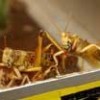
Biblical Plague Thrashes Africa
Millions of locusts are devouring vegetables, grains and even clothing in nine African countries. The United Nations Food and Agriculture Organization fears that the plague -- the worst in 15 years -- will extend even farther.Ecobreves – GUATEMALA: Aquifers Exhausted
The aquifers that provide water to around two million people in the Guatemalan capital are running dry, say assessors from Empagua, the municipal water agency.'The Kyoto Protocol is just a first step'
Tierramérica spoke with Joke Waller-Hunter, executive secretary of the United Nations Framework Convention on Climate Change and in charge of organizing the upcoming conference of parties to that agreement, to take place in December in Buenos Aires.Fires Burn Out of Control
The residents of Santa Cruz, Bolivia are suffering the effects of air pollution caused by more than 2,000 forest fires that were started to clear land for crops and cattle.Ecobreves – CHILE: Sculptures Denounce Impacts of Pesticides
Small sculptures made of clay and silicone, representing deformed fetuses inside glass jars, have caused a stir in Chile. They are part of a unique protest of the effects of indiscriminate use of pesticides on crops.Brazilian Heartthrob Goes Organic
Marcos Palmeira, a famous Brazilian film and television actor, spoke with Tierramérica about his experience in sustainable agriculture and what he thinks of genetically modified crops.Ecobreves – CUBA: Electrical Weeds
The 'marabú' (Dichrostachys cinarea), a weed that has proved difficult to eradicate from fields in Cuba, could become the raw material for generating electricity, through a project that is the brainchild of experts from the University of Camagüey.Ecobreves – GUATEMALA: A Vote Against Whales?
Environmental organizations, led by the international watchdog Greenpeace, denounced that Guatemala would vote in favor of reducing protection of whales, especially the hunting of minke whales.Ecobreves – HONDURAS: Women to Export Bio-Pesticides
In the Marcala region, in the central Honduran department of La Paz, a group of women is preparing to export biological pesticides to other Central American countries and to Europe.Ecobreves – VENEZUELA: Measuring Air Pollutants
The Venezuelan Environment Ministry is testing vehicles traveling on one of the main access routes to Caracas to assess the emissions of contaminating gases.« Previous Page — Next Page »





Tierramérica is the main communications platform on sustainable development and the environment in Latin America and the Caribbean. It is produced by IPS Noticias, the agency’s Spanish-language service, which created it jointly with the United Nations Development Programme (UNDP) and the United Nations Environment Programme (UNEP), with later support from the World Bank. The weekly editions of Tierramérica are published in Spanish, Portuguese and English and are picked up and printed by dozens of media outlets in the region. Follow us on Facebook and Twitter.

From the Frontline of Environment
Supported by

Tierramérica en Español

Terramérica em Portuguese

