Languages
Saturday, November 7, 2026



News and Views from the Global South


Climate Change Imposes New Conditions for Policy
If the raw material export sector and the governments of Latin America insist on depredatory productive systems, it will be unlikely that natural resources will be able to sustain future development, writes Chilean environmental leader Sara Larraín in this exclusive column for Tierramérica.Environmental Sustainability at a Crossroads
Latin America needs new sources of wealth and of employment, but sustainable development will require increasingly greater environmentally clean economic expansion, write Ricardo Sánchez, regional director of the UN Environment Program, and Mexican social development expert Enrique Provencio.Ecobreves – MEXICO: Teachers Lacking in Natural Sciences
An assessment of science teachers of secondary schools in Mexico shows that they know very little about physics, chemistry or biology.Ecobreves – HONDURAS: United Front Against Illegal Logging
The Honduran National Human Rights Commission signed a pact with civil society groups and the government as part of a shared strategy to halt illegal logging and lumber trafficking.Ecobreves – BRAZIL: Alternative Fertilizers to Fight Inflation
The Brazilian government has decided to set aside 4.8 million dollars to develop alternative fertilizers, given the brutal hike in prices of conventional fertilizers.
ENVIRONMENT-BRAZIL: Click Here to Plant a Tree
It has become fashionable in Latin America to pursue initiatives towards "zero carbon", neutralising the climate-changing greenhouse gases produced by industry, commercial aviation and even the football World Cup - and along with it, atoning for the environmental sins of polluters.Ecobreves – CHILE: Demand for Dioxin Information
The EcoOceans Center, the Latin American Environmental Conflicts Observatory (OLCA) and the Citizen Consumers League have called on all Chileans to abstain from eating pork during the national holidays of Sep. 18-19.Ecobreves – VENEZUELA: Flower Covers Vital Reservoir
The "bora" (eichhornia crassipes), is a species of tropical water hyacinth that has spread like a green carpet over two-thirds of La Mariposa reservoir in Venezuela. The reservoir covers 54 hectares and has a capacity of 8 million liters, which supplies most of the Venezuelan capital.Ecobreves – BRAZIL: African Palm to Reforest the Amazon
An agreement between Brazil's ministries of Agriculture and Environment authorizes utilizing the African palm (Elaeis guineensis) and other exotic species for recuperating forests in the country's Amazon region.Ecobreves – HONDURAS: New Environmental Rules Announced
The Honduran government has announced new environmental regulations two years after the free trade agreement with the United States, known as CAFTA, entered into force.
Click Here to Plant a Tree
The wave of ideas for mitigating the impacts of carbon emissions of consumers has its commercial side, but the bottom line is that it mobilizes people to join the fight against climate change.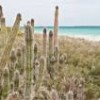
Progress Towards Protecting La Tortuga Island
A legislative modification would help protect the uninhabited Venezuelan island of La Tortuga, which holds rare Caribbean ecosystems.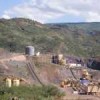
MEXICO: Peasants Seek Ways to Block Canadian-Run Mine
The Canadian mining corporation Minefinders has explored a rural area of the northern Mexican state of Chihuahua for 14 years. But as it gets ready to begin mining gold and silver there, its plans are threatened by peasant farmers' protests.
ENVIRONMENT: Amazon Increasingly Oily
More than 180 oil and natural gas fields extend across the western Amazon, shared by five South American countries and threatening biodiversity and indigenous lands, warns a study by U.S.-based organisations.Ecobreves – BRAZIL: São Paulo Sets Climate Change Goals
The city government of São Paulo, Brazil's most populous city, has set a goal to reduce municipal emissions of greenhouse gases by 30 percent, with a deadline of 2012 -- ahead of the federal government's target date.Ecobreves – HONDURAS: Universities Commit to the Environment
The 20 universities in Honduras signed an environmental pledge on Aug. 18 that includes reforms in their programs and greater participation in managing threatening situations, research and policies.Ecobreves – ARGENTINA: Justice Orders Demolition of Embankment in Wetland Preserve
The Forestal Andina company received an order from the justice department of the northern Argentine province of Corrientes to demolish immediately the 27-kilometer embankment it built in the Esteros del Iberá ecological preserve.Ecobreves – MEXICO: More Traffic Restrictions, Better Air Quality
The inclusion of Saturdays in the Mexican capital's program for limiting the circulation of certain cars to certain days has made a notable improvement in air quality.
Amazon Increasingly Oily
Oil and natural gas exploration permits are multiplying in the Amazon region, especially in its most remote and biodiverse corners, say researchers.
Mexican Peasants Seek Ways to Block Canadian-Run Mine
In the Western Sierra Madre mountains of Mexico, a very common conflict these days in Latin America is heating up: the booming mining industry versus local residents.Ecobreves – VENEZUELA: Thousands of Children in Eco-Games
Some 15,000 children headed to 50 parks and zoos in Venezuela to start the 30th Ecological Games, which combine recreational activities with environmental education during two weeks of school vacation.« Previous Page — Next Page »





Tierramérica is the main communications platform on sustainable development and the environment in Latin America and the Caribbean. It is produced by IPS Noticias, the agency’s Spanish-language service, which created it jointly with the United Nations Development Programme (UNDP) and the United Nations Environment Programme (UNEP), with later support from the World Bank. The weekly editions of Tierramérica are published in Spanish, Portuguese and English and are picked up and printed by dozens of media outlets in the region. Follow us on Facebook and Twitter.

From the Frontline of Environment
Supported by

Tierramérica en Español

Terramérica em Portuguese

