Languages
Monday, October 5, 2026



News and Views from the Global South
Other Voices
News and Views from our Content Partners
Gordon Brown – Education Cannot Wait
"For 75M children & young people trapped in conflict zones, #EducationCannotWait. A lost generation is one where hope dies in those who live. It is our responsibility to rekindle hope." ~ Gordon Brown.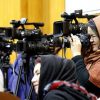
Journalists covering conflict, essential workers for a ‘durable peace’ says Guterres
Reporters and other media workers in warzones across the world, are reliable witnesses who contribute to forging peace, and must be better-protected under international humanitarian law, said the UN chief on Wednesday.
They Deserve No Less in Central Sahel
“I am so happy. This is my success!” says 13-year old Cynthia, beaming proudly as she shows her Primary School Certificate with an average mark of 120 out of 150. Thanks to the Radio Education Programme, she will now graduate on to Grade 6! Cynthia’s sense of pride, joy and achievement can only be fully understood when placed in the context of her circumstances. Cynthia is an internally displaced girl, living in Burkina Faso in Central Sahel.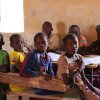
Promoting Peace in Mali
Despite the various challenges they face, teachers are showing incredible dedication to their profession, writes Leandro Salazar-Lievano, our education expert deployed to UNHCR Mali.What does the second wave of Covid-19 mean for the apparel industry?
During the past few months, I had worked on a documentary for the BBC which looks at the impact of the coronavirus pandemic on the apparel industry of Bangladesh. That documentary caught me at an exceptionally low ebb. I was struggling amid the cancellation of orders and some brands being unwilling to pay for orders which had already been shipped.New Myanmar govt must ensure Rohingya repatriation: UK
The United Kingdom wants the new government in Myanmar to take steps towards safe, voluntary and dignified return of the Rohingyas to their place of origin in Rakhine State.
Education Cannot Wait Interviews LEGO Foundation CEO John Goodwin
John Goodwin joined the LEGO Foundation as CEO in April 2017 to pursue a career where he could combine his business skills with his passion for philanthropy and driving positive social impact.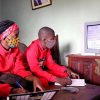
Television Education in Mozambique
"We missed our teachers, they were very friendly and helped us solve the complex exercises, but with the coronavirus, we need to adapt and learn to solve our exercises alone at home," says Alzira Ngomane, 17 years old, and her brother Amilcar Ngomane, 14, from the Albazine district, in the city of Maputo, Mozambique.
The rise in plastic pollution during Covid-19 crisis
Ever since the pandemic began this year, countries across the globe have been striving to protect their people from the virus through various preventive measures where protective gear also known as PPE are in high demand. On the contrary, this has dramatically increased the unsustainable use of plastic posing significant risk for the environment. Personal Protective Equipment (PPE) which includes masks, gloves and goggles have become indispensable plastic products for everyone currently witnessing the coronavirus pandemic. The global health crisis has given rise to the consumption of PPE at a staggering rate, which is considered a shield for combatting the virus. PPE is playing a key role in protecting people, especially the frontline workers, who are fighting day and night to cure millions of patients ever since the outbreak started. This has led to some tough questions for those of us who are continually advocating for environmental protection and sustainability— how are we going to manage the devastating impact of plastic waste generated due to Covid-19?
Escaping the ‘Era of Pandemics’: experts warn worse crises to come; offer options to reduce risk
Future pandemics will emerge more often, spread more rapidly, do more damage to the world economy and kill more people than COVID-19 unless there is a transformative change in the global approach to dealing with infectious diseases, warns a major new report on biodiversity and pandemics by 22 leading experts from around the world.
Climate Friendly Travel and Tourism
SUNx Malta, a not-for-profit organization, based in Malta is advancing and enabling “Climate Friendly Travel” which is tourism and travel that is Low-Carbon and linked to the Sustainable Development Goals (SDGs) and follows the Paris Agreement 1.5 degree trajectory.
Good data is the key to a sustainable post-COVID Pacific
Good data and statistics make essential contributions to building resilient and strong democratic societies. Decisions based on empirical data rather than anecdote or opinion are the foundation for good policy and planning. A focus on science and evidence-based data has been the cornerstone of SPC’s work for over 70 years. And as our understanding of the complexities and interconnected nature of our world increases, the need for good data has become ever more critical.
GGGI and SEA to develop four mitigation activities generating ITMOs in energy, waste, and manufacturing
Following the cooperation agreement signed in December last year for the Mobilizing Article 6 Trading Structure (MATS) Program, the Swedish Energy Agency (SEA) and the Global Green Growth Institute (GGGI) have agreed to further develop four mitigation activities with the goal of completing transactions of internationally transferred mitigation outcomes (ITMOs). 75% of these activities will come from GGGI's pipeline of bankable projects across its Members and partners. Out of the four proposed activities, two will target the energy sector in Ethiopia, one will be focused on the waste sector in Nepal, and one will focus on the manufacturing sector in Cambodia.
NESFAS Partner Communities Celebrate World Food Day
World Food Day, a day dedicated to tackle world hunger, is annually celebrated on October 16, 2020 globally. To commemorate this day, the North East Slow Food and Agrobiodiversity Society (NESFAS) along with its partner organisations — Society for Urban and Rural Empowerment (SURE) and North East Network (NEN), Nagaland — hosted several programmes across 27 communities in Meghalaya and Nagaland. It may be mentioned here that all government SOPs and measures were followed during the events.
WORLD FOOD DAY 2020
 The COVID-19 pandemic is threatening the food security and nutrition of millions of people around the world.
More than 820 million people were classified as chronically food insecure before the virus hit.
The COVID-19 pandemic is threatening the food security and nutrition of millions of people around the world.
More than 820 million people were classified as chronically food insecure before the virus hit.
« Previous Page — Next Page »


The Week with IPS

NEXT STOP - SDGs
Tracking global progress towards a sustainable world
Tracking global progress towards a sustainable world
