Languages
Thursday, October 1, 2026



News and Views from the Global South
Other Voices
News and Views from our Content Partners

Afghanistan, Hope Fading in the midst of Fear and Silence
Distant and blurred, as if it belongs to the past, the war in Afghanistan has never been so fierce and forgotten. On the 7th of October, the country entered the twentieth year since the United States announced the first airstrikes against the Taliban, adding a new chapter to the endless bleeding of this corner of Asia, where more than four decades without peace have left entire generations hopeless.
Building Back Better: Education Cannot Wait
 The United Nations General Assembly adopted Resolution 66/170 declaring October 11 as the International Day of the Girl Child, to recognize girls’ rights and the unique challenges girls face around the world.

Caribbean Communities Building Resilience through Water Harvesting
On the Eastern Caribbean (EC) islands of St Kitts’ Nevis, hotter and fewer rainfall days have begun to impact everyday life.
Empowering Women in Organic Value Chains
As COVID-19 shapes and re-shapes the “new normal” in the Pacific, organic food and products will be a key to community adaptation and resiliency in the region’s economies and livelihoods, with the opportunity to advance a more inclusive gender and people centred approach.
On the Occasion of World Teachers’ Day, ECW, GPE, UNESCO & UNICEF Call for the Resumption of Salary Payments for Teachers for the Coming School Year in Yemen
This World Teachers’ Day, celebrated under the theme, “Teachers: Leading in crisis, reimagining the future”, the Global Partnership for Education, Education Cannot Wait, UNESCO and UNICEF are calling for the resumption of salary payments for around half of the Yemeni teachers and school-based staff (estimated 160,000) who have not received regular salary payments since 2016. With suspended salary payments and schools regularly coming under attack, many teachers have been forced to find alternative sources of income to provide for their families.
If I Didn’t Believe, I Wouldn’t Know How to Breathe
Here’s a story that encapsulates the terrible situation of our world: Associated Press reporters were on a Turkish coast guard vessel which picked up 37 migrants, including 18 children, from two orange life-rafts in the Aegean Sea on 12 September. The refugees were from Afghanistan, a country that shudders from an endless war. One of the refugees, Omid Hussain Nabizada told the reporters that the Greek authorities held them in Lesbos, put them onto life rafts, and then sent them into the turbulent seas. They were left there to die.
Hundreds of sustainable and profitable agribusiness opportunities available in Nigeria – IITA DDG
CGIAR-IITA Deputy Director General, Partnerships for Delivery, Kenton Dashiell, has encouraged Nigerians to take up sustainable and profitable opportunities in the country’s agriculture sector. He made this appeal during his keynote address at the National Conference on Agricultural Innovations for Food Security in the Post COVID-19 Era.
Pivoting Through the Pandemic: A Global Problem with a Pacific Solution
As the Intergovernmental Oceanographic Commission (IOC-UNESCO) reported earlier this year, COVID-19 has caused massive disruptions to ocean observing systems around the globe, as research cruises, maintenance visits, and sensor deployments have been postponed or cancelled.
Anne Larigauderie UN Biodiversity Summit #ForNature Video
On the eve of the United Nations Summit on Biodiversity, Dr. Anne Larigauderie calls on everyone to make ambitious commitments to protect #biodiversity and #nature. 
Vietnam’s Updated NDC: A Comprehensive and Unified Climate Action Pathway
Vietnam is the ninth country to submit its updated NDC to the UNFCCC. The submission followed a comprehensive process over three years, under the guidance of Prime Minister Nguyễn Xuân Phúc. Vietnam’s inclusive NDC review and updating process, which was coordinated by the Ministry of Natural Resources and Environment (MONRE), involved active participation by scientists, ministries, agencies, non-governmental organizations, research institutes, enterprises, international organizations, and development partners. MONRE also spearheaded a series of national, sub-national, sectoral, and thematic workshops to assess feasibility, content, and implementation measures.
Agriculture for Development
Special Issue on the contributions of non-governmental organisations and civil society to agricultural and rural development - Involving local communities in setting the agricultural development agenda - Ten years of opportunities to improve the lives of family farmers - BRAC’s contributions to agricultural development - Updated data sets for more efficient investment strategies for family farms - Can food production keep up with population increase in Malawi? - Northern civil society in agriculture in the South: a failure? - A systems approach to unlock the potential of African agriculture - Promoting biodiversity and livelihoods through community forest restoration - Introducing the new Chair of TAA - Alternative livelihoods in an opium-based agricultural economy - News from NGO institutional members Source: 'Agriculture for Development' journal
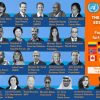
Global Leaders Focus on Education in Emergencies & Protracted Crises at ECW’s Global High-level #UNGA75 Event: ‘the Future of Education Is Here for Those Left Furthest Behind’
Education Cannot Wait (ECW) brought together an impressive, diverse line-up of world leaders, policymakers, youth, teachers, celebrities and global advocates to rally around the cause of education in emergencies and protracted crises during the 75th Session of the United Nations General Assembly under the inspiring theme “The Future of Education is Here for Those Left Furthest Behind.”
Wise People Know That Winning a War Is No Better Than Losing One
From the desk of the Tricontinental: Institute for Social ResearchDedicated to Soni Prashad, 1929-2020, who spent her life looking for a better world. US President Donald Trump and his ‘war council’ – led by Secretary of State Mike Pompeo – have amplified their aggression against China. What began as a trade dispute in the 1990s has now escalated into the United States making an existential challenge against China.

Education Cannot Wait Mobilizes an Additional US$23.6 Million to Increase Support for Vulnerable Children and Youth – Already Affected by Armed Conflict, Forced Displacement and Protracted Crises – Now Doubly Hit by COVID-19 Pandemic
World leaders today committed to expand education in emergency aid for children and youth impacted by the COVID-19 pandemic – girls and boys already suffering the brunt of armed conflict, forced displacement, climate-change induced disasters and protracted crises – with a focus on the most marginalized, including girls, refugees and children with disabilities.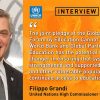
Interview with the UN High Commissioner for Refugees, Filippo Grandi
Education Cannot Wait: As the UN agency mandated by the UN General Assembly to provide international protection and seek solutions for refugees, could you please elaborate on the overall importance of education for refugee children as a component of protection and solutions?« Previous Page — Next Page »


The Week with IPS

NEXT STOP - SDGs
Tracking global progress towards a sustainable world
Tracking global progress towards a sustainable world
