Languages
Saturday, October 3, 2026



News and Views from the Global South
Other Voices
News and Views from our Content Partners

UNESCO launches the “Li Beirut” initiative to support education, putting culture and heritage at the heart of reconstruction efforts
The Director-General of UNESCO, Audrey Azoulay, on Thursday 27 August launched an international fund raising appeal, Li Beirut (For Beirut in Arabic), to support the rehabilitation of schools, historic heritage buildings, museums, galleries and the creative economy, all of which suffered extensive damage in the deadly explosions that shook the Lebanese capital on 4 August.
UNESCO sounds the alarm on global surge in attacks against journalists covering protests
A new UNESCO report highlights a sharp increase in the global number of protests during which the police and security forces violated media freedom in the first half of 2020. Between January and June this year, 21 protests around the world were marred by violations of press freedom, including protests in which journalists were attacked, arrested and even killed.Rebbilib Episode 2
Come to the table, with a willingness to share and be vulnerable: This video is the second in a 3 part series hearing directly from Monitoring Evaluation and Learning practitioners within the Pacific region and their experience of using Pacific approaches in their work. In this video we hear from Associate Professor Cresantia Frances Koya – Vaka’uta who works with the University of the South Pacific, the regionally owned provider of tertiary education in the Pacific region and an international centre of excellence for teaching, research consulting and training on all aspects of Pacific culture, environment and human resource development needs.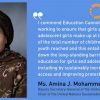
Statement by UN Deputy Secretary-general Amina J. Mohammed at ECW High-level Steering Group
As a friend and strong advocate of Education Cannot Wait, I welcome this opportunity to convey my support for ECW’s critical work and my solidarity with the millions of children and youth who are still being deprived of the opportunity to obtain a quality education because they are caught up in conflict, crisis or disaster.Rebbilib Episode 1
It is important to understand the needs of the Vanua, the culture, tradition and its’ protocols: This video is the first in a 3 part series hearing directly from Monitoring Evaluation and Learning practitioners within the Pacific region and their experience of using Pacific approaches in their work. In this video we hear from Mr. Eroni Wavu, the MEL Officer with the Ministry of i-Taukei Affairs in Fiji who are responsible for developing, implementing and monitoring government programs focussed on the governance and wellbeing of the iTaukei people.The science behind the #Biodiversity and #Tourism relationship – #wtflucerne in conversation with IPBES Chair Ana Maria Hernandez Salgar (Colombia)
Biodiversity is declining faster than at any time in human history. Tourism and biodiversity have a symbiotic relationship – positive and negative.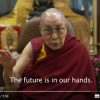
Message for Laureates and Leaders for Children
 His Holiness the Dalai Lama’s message for "Fair Share for Children - Laureates and Leaders Summit 2020", held online September 9, 2020.

Education Cannot Wait Responds to Beirut Explosion with US$1.5 Million in Education in Emergency Funding to Rehabilitate Damaged Schools
Education Cannot Wait (ECW) today approved US$1.5 million in new education in emergency funding in response to last month's explosion in Beirut.UNESCO urges action to meet rampant $200 billion annual funding gap for education in poorest countries due to COVID-19
New research by the Global Education Monitoring Report at UNESCO shows an increase in the annual funding gap for education in the poorest countries to as much as US$200 billion a year. These findings are published in the new paper, Act Now: Reduce the impact of COVID-19 on the Cost of Achieving SDG4.
Navigating Safely Through The Pandemic
Having reported on SARS, Ebola, Bird Flu (H5N1) outbreaks, as well as writing about efforts to combat HIV, I was horrified by what was going on in Wuhan, China last Jan mainly because of how fast this new SARS-CoV-2 virus spread. By early Feb it seemed likely there’d be a global pandemic and by the end of Feb I started to freak out as the pandemic took hold. I’ve never been to Wuhan or China nor seen anyone who had; and I hadn’t travelled any where recently. It was nearly impossible for me to have encountered the virus but that didn’t keep me from getting sick with fear and dread knowing that a goddamn microscopic parasite was going to turn our lives upside down when we already had multiple crisis of on our plate. (You know, climate, ecological collapse, rise of populism and authoritarianism.) I refused to write about the virus or the disease it causes — COVID-19 — until I had to face the little bastard personally.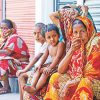
Women’s access to stimulus packages and post Covid-19 gender equality
All crises—natural disasters, wars, pandemics—affect different sections of people in different ways. Like any other crisis, Covid-19 has differing impacts on society. It has affected men and women, rich and poor, and adults and children differently. Since the ramifications of the coronavirus pandemic vary across people, measures towards the recovery from this crisis should also be focused towards each section of society distinctively.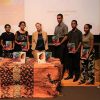
Pacific Partnership launches human rights and social justice-themed poetry book for children
The Pacific Partnership to End Violence Against Women and Girls (Pacific Partnership) programme has launched a poetry anthology publication comprising a collection of Pacific poems and artworks about human rights and social justice suitable for students in Years 7-13.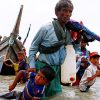
Rohingya repatriation: Myanmar doing little while Bangladesh facing challenges
When Bangladesh continues to bear the brunt of sheltering more than a million Rohingyas, Myanmar is doing little for their repatriation amid the silence of global powers though the Southeast Asian country faces a genocide case, experts and officials said.
The Invisibles: Inhumane Conditions of Italy’s Migrant Farmworkers
Over 200,000 migrant laborers, mostly from Africa, work in Italy’s fields. After being exploited for years, the coronavirus global pandemic made these workers “essential” overnight — but without labor rights or even access to basic sanitation, these farmworkers are living and working in conditions that have been described as modern slavery. Union leader Aboubakar Soumahoro has been documenting these inhumane conditions and is now helping the workers organize to demand real and lasting change.
How Two Young Women Are Working to Improve Access to Contraception in Trinidad and Tobago
According to a 2016 Guttmacher Institute study, 60% of girls ages 15-19 in developing countries who want to avoid pregnancy do not have access to modern contraceptive methods. Women Deliver Young Leaders Kizanne James and Khadija Sinanan dive deeper into stigma around contraceptive use in their home country of Trinidad and Tobago as part of their projects as World Contraception Day Ambassadors.« Previous Page — Next Page »


The Week with IPS

NEXT STOP - SDGs
Tracking global progress towards a sustainable world
Tracking global progress towards a sustainable world
