Languages
Tuesday, October 6, 2026



News and Views from the Global South
Other Voices
News and Views from our Content Partners
Fueling Pacific Economic Engines with Open Data in Times of Covid-19
Throughout my career, I have always championed the value of open data, especially geospatial and earth observation data for the social, environmental and economic growth that it brings. Access to timely and accurate data is critical to maximizing the efficiency of development programmes and is a critical economic as well as scientific imperative for our region.
A Historical SPC Tuna Tagging Cruise
 The Pacific Community (SPC) 7-week research expedition to monitor the health of world’s largest tuna fishery has departed from Honolulu on Saturday 15 August 2020 despite the significant challenges presented by COVID-19. With most research and fisheries observer programmes currently suspended, the importance of this cruise cannot be overstated. Half of the world's tuna catch comes from the Western & Central Pacific, providing a critical source of protein and export revenue for Pacific Island Nations.

Tourism Trauma and COVID-19
Pandemic-related lockdowns, flight cancellations, and border closures may be putting a crimp on summer vacation plans. However, the precipitous drop in tourism will have an outsized impact on countries that rely on foreign travelers—with potentially large-scale effects on their economies’ national accounts.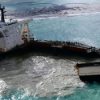
Mauritius Oil Spill Puts Spotlight on Ship Pollution
Small island nations face an existential and developmental threat from ship-source pollution endangering their vulnerable marine ecosystems and ocean economies. An effective international legal regime can help.
Pacific Tuna Tagging Expedition Overcomes COVID Challenge
Despite the significant challenges presented by COVID-19, the Pacific Community (SPC) 7-week research expedition to monitor the health of world’s largest tuna fishery will depart from Honolulu on Saturday 15 August 2020.
Education Cannot Wait Interviews EU Commissioners Jutta Urpilainen & Janez Lenarčič
The European Commission (EC) is one of the founders of Education Cannot Wait, which was established at the World Humanitarian Summit in 2016 and aims at increasing funding and efficiency in delivering quality education to some 75 million children and youth affected by conflicts, natural disasters and forced displacement. EC plays a major role since in advancing education in the humanitarian-development nexus during crisis. Please elaborate on the EC vision in driving education to achieve humanitarian-development coherence and deliver quality education in situations of crisis, for refugees, for girls, and other stakeholders who are left furthest behind.
Sri Lankan Parliamentary Polls: The Return of the Rajapaksa Raj
Sri Lanka is a country endowed with abundant natural beauty. The serenity of its geographical bounties matched the peaceful nature of its polity in the aftermath of the passage of power to local political leaders with the withdrawal of the British from the island in 1948. Its Constitution was crafted by some of the brightest legal minds of the British Commonwealth. The nation seemed well on the path to prosperity and progress. So much so, that once Lee Kuan Yew looked upon that country as a model for Singapore, with its commonly shared experience, to emulate.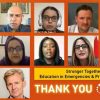
Stronger Together: Education in Emergencies & Protracted Crises
‘Stronger collective efforts and collaboration are key to meeting the urgent education needs of children and youth affected by crises’: this is the unifying message from leaders and youth advocates brought together by Education Cannot Wait (ECW) and Devex in a high-level, Global Discussion held online on 12 August, on the occasion of International Youth Day.
Dr. David Obura: The New Natural
Coral reefs are iconic, but we have all seen the images of bleached areas that were previously teeming with life and colour. These ecosystems, and more broadly coastlines, are a vital part of the efforts to protect biodiversity. So how are coral reefs doing? Are we too late? Can we still secure a better future for reefs and people? In this week’s episode, Brit talks to Dr. David Obura. David has studied coral reef resilience and adaptation his whole life. He founded CORDIO, a non-profit organisation specialising in finding solutions that benefit marine ecosystems and people. To find out more about IPBES, head to www.ipbes.net or follow us on social media @IPBES.
Let them go: release undersized, untargeted or unwanted fish!
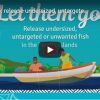
Is it weird for fishers to release fish? Not at all. It’s actually smart to let some fish go back to the ocean: fish that are under the minimum size limit or are protected during their spawning season. Fishers who catch them and release them alive give them a chance to reproduce and become bigger. Also, fish that are poisonous or not edible should go back to the ocean because they help keep the reefs alive and healthy.
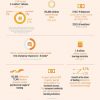
STRONGER TOGETHER IN CRISES’ – EDUCATION CANNOT WAIT REACHES 3.5 MILLION CHILDREN AND YOUTH IN HUMANITARIAN CRISES WORLDWIDE
Education Cannot Wait launched its ‘Stronger Together in Crises - Annual Results Report 2019’ today, reaffirming itself as the global fund for education in emergencies and protracted crises. Since the Fund’s inception in 2016, its investments have reached nearly 3.5 million children and youth in many of the world’s worst humanitarian crises.
US-IRAN-CHINA: Travails of a Trilateral Triangle, and the Emergence of an Eastern Front
President Jimmy Carter of the United States had once paid Iran glowing tributes, which was received quite normally in American policy circles and raised no eyebrows: He had said: “(Iran was) an island of stability in one of the most troubled areas of the world”. In one of the weirdest ironies of history, within months in 1979, with the Iranian Revolution, the perception of Iran in American eyes underwent a most radical transformation. It was followed by the hostage-taking of American diplomats, and a nose-diving of bilateral relations. Since 1980 there have been no diplomatic connections. However, over the years a kind of modus vivendi had evolved, a grudging tolerance of each other accompanied by some functional interactions. Eventually, in 2015, the US along with key European States entered into what was called the Joint Comprehensive Plan of Action (JCPOA), virtually capping Iran’s nuclear capabilities, and largely stabilizing the relationship.
International Day of the World’s Indigenous Peoples 2020 – Statement of the Indigenous Partnership (TIP)/NESFAS
As we commemorate the International Day of the World’s Indigenous Peoples, let us not forget that supporting Indigenous Peoples is not only a social good; it is also a sound development policy. Defending the lands, languages and cultural practices of indigenous peoples and tackling the racism and injustices against them will lessen the outbreaks of future pandemics and manage climate change.
International Day of the World’s Indigenous Peoples 2020
Indigenous Peoples are culturally distinct societies and communities.
There are approximately 476 million Indigenous Peoples worldwide, in over 90 countries.

Anger and Sadness in Beirut
Eliane Eid, IPS correspondent in Beirut spoke to a cross section of people who shared their views and fears with her. On the third day of the deadly explosion, amidst an outpouring of anger from the Lebanese people, Angelina, 18, speaks about her lost home in the Mar Mikhael area. Josette, 27, talks about her experience of the explosion while she was on the road and Charbel, 28, shares his thoughts about being a volunteer at this critical time. They are all numb and speak calmly of how their lives were turned upside down, with this tragedy affecting thousands of people.« Previous Page — Next Page »





The Week with IPS

NEXT STOP - SDGs
Tracking global progress towards a sustainable world
Tracking global progress towards a sustainable world
