Languages
Sunday, October 4, 2026



News and Views from the Global South
Other Voices
News and Views from our Content Partners

UNESCO United Against Racism Message Rallies Leading Personalities to Fight Against Racial Discrimination
 Leading personalities from all over the world have joined UNESCO in denouncing mounting racial discrimination in an advocacy video, United Against Racism, released today.

Beirut On its Knees
Following the massive explosion in Beirut on Aug. 4, IPS correspondent Eliane Eid reports that the residents of the city are still shell shocked. Beirut looks like a battlefield, with destruction all around. The main port was on fire before the explosion. Described by some quarters as a “chemical bomb”, the explosion ripped through the heart of Beirut While the investigations have begun, the Lebanese community is uncertain as to what might have been the cause of this exposition that tore apart peoples lives with the blink of an eye.
Prof. Kai Chan: Choose Your Own Adventure
In the IPBES Global Assessment report, we learnt that to safeguard all life on Earth, we need transformative change. So what does that mean? How can we make it happen? This week's guest is Kai Chan. He is a professor at the University of British Columbia and one of the Coordinating Lead Authors of the Global Assessment. To find out more about IPBES, head to www.ipbes.net or follow us on social media @IPBES.
Pacific Tuna Fisheries: Electronic reporting in Tonga
In order to help captains onboard longline fishing vessels and port samplers collect data, SPC has developed two digital apps, Onboard and Offshore. Let's travel to Nuku'alofa, capital of the Kingdom of Tonga, to see innovation in action!
For further information, please contact SPC: spc@spc.int
World Day Against Trafficking in Persons 30 July 2020
The illicit trade of human lives is happening right under our noses every day. It is primarily affecting the lives of millions of women and children.
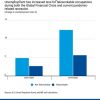
Unemployment in Today’s Recession Compared to the Global Financial Crisis
There has been much discussion in recent months about how workers who transitioned to working from home—and those who were deemed “essential”—are less affected by the layoffs and job losses brought on by lockdowns than are workers in “social” jobs that require closer human interaction (e.g. restaurant workers). However, our new IMF staff research suggests that this does not tell the full story.
Sino-Indian Disengagement at Galwan: Two Steps Back and One Step Forward?
On the first Sunday of July, there was an important telephone call between the Chinese Foreign Minister and State Councillor Wang Yi and the Indian National Security Adviser Ajit Duval. Some important decisions were announced thereafter. This is not to say that these were the outcome of that interaction only. For weeks the militaries of both China and India and their diplomats had been negotiating on the grounds of the disputed territory along the Line of actual Control at the Galwan Valley, as well as through other channels to end the bloodiest border stand-off between the two Asian powers that had lasted two months. True, while not a bullet was fired in anger, troops had battled with sticks and stones that left twenty Indian soldiers dead and, reportedly, an unknown number of Chinese casualties. Indeed, it appeared that the two sides, who had fought a war in the Himalayas in 1962, was yet again on the brink of a possible war.
Singaporeans Opt for Continuity in Polls: ‘Strong Mandate’ for Government, but ‘no Blank Cheque’!
Singaporeans went to polls on Friday the 10th of July. It was a crisis election, seen as the most significant since the country’s independence in 1965, given the backdrop of the COVID 19 pandemic and its massive negative impact on the economy on this small but wealthy island republic. Out of a population of nearly 5.85 million on election day, the number of registered voters stood at 2.65 million. It was no surprise that in a nation with a reputation of unmatchable discipline, the voting was an orderly process. In conformity with rules each voter was masked, safe distancing was scrupulously maintained, and their hands were sanitized as they entered the booths. The elderly, who needed it, were provided assistance. The electorate returned what has been assessed as a sophisticated, calibrated and mature outcome. It re-elected the incumbent People’s Action Party (PAP) to power with a sufficiently strong enough mandate to help it pull the nation out of the crisis. At the same time, it also created a diversity in the legislature that would ensure that the government did not have a blank cheque for unrestricted authority.
Billy Offland, Dr. Anne Poelina: Wake up the Snake
 How do we incorporate different knowledge systems in the battle for biodiversity? Billy Offland set off on a 2-year journey to learn about conservation from as many different people as possible. In his travels, he met Dr. Anne Poelina in the Kimberley in Western Australia. Anne is a Nyikina Warrwa Traditional Owner and chair of the Mardoowarra Fitzroy River Council.What can we learn from the Fitzroy River Council? How do we create "forever industries"? How can we use this knowledge in global policymaking?Music: River Feeling by Kalaji (Mark Coles Smith)To find out more about IPBES, head to www.ipbes.net or follow us on social media @IPBES.

Putting Young People at the Heart of Their Climate Plans
The NDC Partnership is a global initiative to accelerate climate and development action -- ensuring countries have the support and tools they need to achieve ambitious climate and sustainable development targets as fast and effectively as possible.
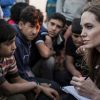
UNESCO, UNHCR & EDUCATION CANNOT WAIT Call for the Inclusion of Refugees in the Post-Covid-19 Education Effort
We must not leave young refugees by the wayside, urged UNESCO, the Office of the United Nations High Commissioner for Refugees (UNHCR) and Education Cannot Wait as they urged more support in favour of young refugees’ education during an online debate today, moderated by UNHCR Special Envoy Angelina Jolie, on how best to provide them with improved learning during and after the pandemic.
Heifer Nepal Farmers Persevere During COVID-19 Pandemic
For nearly three months, the government of Nepal implemented a strict lockdown to combat the spread of COVID-19. And while it slowed the spread of the virus, it also put a tremendous economic burden on many families nationwide. As of June 15, the country transitioned to a “soft lockdown,” easing some restrictions such as allowing private vehicles to operate on an odd/even-day scheme. But the economic effect is already being seen.
Education Cannot Wait Interviews Karina Gould, Canada’s Minister of International Development
The Honourable Karina Gould was first elected as the Member of Parliament for Burlington in 2015. A graduate of McGill University and the University of Oxford, Minister Gould is passionate about public service and international development. Before her election as the Member of Parliament for Burlington, she worked as a trade and investment specialist for the Mexican Trade Commission in Toronto, a consultant for the Migration and Development Program at the Organization of American States in Washington, D.C., and spent a year volunteering at an orphanage in Mexico.
Somerset Maugham, His Short Stories, and Singapore: Mutual Influences
William Somerset Maugham was already an established author when he began to focus on short stories. His interest in this genre was actually meant to have been a form of relief from novel-writing, but interestingly it was this literary form that rendered him more famous in the East. Though intensely English in attitudes and behaviour, he was not quite a ‘legit Brit’. Born in Paris (in 1874), he learnt to speak in French before he spoke English, spent some time studying at Heidelberg Germany, before continuing further education in England, then settled down in the south of France. Having written a few novels, he turned to short stories. Perhaps due to his cosmopolitan exposure, he was deeply influenced, in his short stories, by foreign writers. In particular, the Russian author Chekov and the Frenchman Guy de Maupassant.Covid-19 And Migrant Workers: Planning the return and reintegration of forced returnees
During the pandemic, forced return of migrants has become a major issue of concern for intergovernmental bodies and the global civil society engaged in migration issues. The United Nations Network on Migration (UNNM) has urged states "to suspend forced returns during the pandemic, in order to protect the health of migrants and communities, and uphold the human rights of all migrants, regardless of status". UNNM has called for a halt to arbitrary expulsions and reiterated that their "protection needs must be individually assessed; and that the rule of law and due process must be observed". It reminded the states that these obligations under international law "can never be put on hold and are vital to any successful approach to combatting Covid-19 for the benefit of all".« Previous Page — Next Page »


The Week with IPS

NEXT STOP - SDGs
Tracking global progress towards a sustainable world
Tracking global progress towards a sustainable world
