Languages
Wednesday, October 7, 2026



News and Views from the Global South
Other Voices
News and Views from our Content Partners
Drought, rising temperatures, and extreme weather pose risks to Lesotho
The Mountain Kingdom of Lesotho is a place of stark beauty; deep canyons, majestic highlands, vertiginous hillsides, alpine grasslands, sun and sky. Although no bigger than Belgium, it is a critical watershed, giving rise to the headwaters – the ‘white gold’ – that feed two of the major river systems of southern Africa, the Senqu (Orange) and uThukela.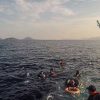
The price of a migrant worker’s dream
May 27, 2020 marked another dark chapter in the history of global migration. On that day, 26 sons of Bangladesh were brutally murdered in Libya. The crime for which they paid this ultimate price was that they dared to dream! They dreamt of having a better life. They had the audacity to reject the rigid class-based society of theirs, which offers little scope to make an upward transition in life. Had fate been kind to them, they would have made it to Italy, or Spain, or some other European nation. They gambled with their life and lost the game. How long can such gambling continue?
Press Release, Desertification and Drought Day, 17 June 2020
The cost and consequences of the land transformation grossly underestimated says the UN The cost and consequences of land use change are underestimated as demonstrated by COVID-19. Investing in the over 400 million hectares of land earmarked for restoration will help to build back better and safeguard our relationship with nature.
2020 Desertification and Drought Day

“If we keep producing and consuming as usual, we will eat into the planet’s capacity to sustain life… …until there is nothing left but scraps.”

Tanzania: Postharvest innovations key to raising youth involvement in horticulture
Horticulture is a field of agriculture that involves a short growing season averaging three months and offers quick yields and returns on investments despite the high rate of postharvest losses.
UN chief in ‘support migrants’ plea, as remittances drop by 20 per cent predicted
Marking International Day of Family Remittances, the UN Secretary-General, António Guterres, has released a message appealing for “people everywhere” to support migrants, at a time when remittances – the money migrants send home to support their families – have fallen by more than $100 billion, causing hunger, lost schooling and deteriorating health, for tens of millions of families.
Human and Societal Behaviour: How Pandemics Have Shaped Them
The departing German envoy in Singapore, Ambassador Ulrich Sante, in a recent published article in the Straits Times shared some of his thoughts with the readership including on the impact on the community of the COVID-19 Pandemic. Among other things he has noted that it has implanted in us what in German is called Lebensangst, literally meaning ‘fear of life’ but in a broader sense, the loss of trust in resilience, and coldness. He has impassionedly argued: “We need to regain trust in each other again, to show warmth and affection and not treat everyone as potential messengers of death. Social distancing serves its purpose, but it cannot be a recipe for all time. It has the power to lead to social division, perhaps the most serious danger our societies face these days”. He is right. There is nothing to replace a light touch or a gentle caress to bring humans closer together. The handshake and the embrace were tools devised as humanity progressed towards civilized conduct, as these acts were performed to demonstrate that those hands carried no weapons.
African Development Bank COVID-19 response: moving from commitment to action
The African Development Bank has responded swiftly to the needs of its member countries during the ongoing COVID-19 pandemic.China’s “Two Sessions”, and the Hiccups in Hong Kong
The eyes of much of the world were focused on Beijing during the last week of May. That was because China had scheduled for that time-perod what is generally collectively termed “Two Sessions” or Lianghui in Mandarin. These are back-to-back annual parliamentary meetings of the Chinese People’s Political Consultative Conference (CPPCC) and the National People’s Congress (NPC). The event usually take place in March, but this year had to be pushed back to May because of the COVID virus. Again, ordinarily, these last ten days, but this year, for the same reason, the period was compressed to a week.
Covid-19 has increased children’s exposure to traffickers
With Covid-19 bringing economic activities across nations to a halt, more and more people are being pushed into poverty. Job losses, business losses and farming losses, leading to economic stress, are pushing many to the fringes of poverty. And as families are being rendered helpless, the worst sufferers are invariably the children.
From farm to fork: The women championing agricultural transformation in Africa
From Sudan to Mali, Senegal to Mozambique, and Zambia to Mauritania, women are changing the face of agriculture, adapting and innovating to tackle the challenges of climate change, and feeding the continent’s growing population.What is lost in the smoke of COVID-19
When countries shuttered their shops, closed their markets, and cordoned off places of gathering to help ward off the coronavirus, they did so out of immediate concern for the health and wellbeing of their citizens.
Falling Clean Energy Costs Create Opportunity to Boost Climate Action in COVID-19 Recovery Packages
As COVID-19 hits the fossil fuel industry, a new report shows that renewable energy is more cost-effective than ever - providing an opportunity to prioritize clean energy in economic recovery packages and bring the world closer to meeting the Paris Agreement goals.
Politics of the Pandemic Pains: WHO is to Blame?
Politics have exacerbated the already severe pains that the raging COVID Pandemic have been inflicting on the global population. The spread of Coronavirus coincided with three major developments in the global arena. First was the end of what Charles Krauthammer, the American neo-conservative guru had called, as the title of his book on that subject suggested, America’s “Unipolar Moment”. This was the period, since the implosion of the Soviet Union in the early 1990s, when the United states was the only pre-dominant superpower that ruled the roost in the global arena. Though China was rising in the meantime, politically, economically and militarily, it was still coy about it, conforming to the Deng Xia0ping counsel to “hide its capabilities and bide its time”.
Agroecology. The Challenge of Farming for the Future
The COVID-19 outbreak has brought the world back to the essentials: health and food. Fighting the spread of the virus while ensuring access to food has proven to be a challenge in many countries. The loss of income is reducing families’ ability to feed themselves; movement restrictions and lack of labour for planting and harvesting are a strain on the chain that brings food from field to fork. Hundreds of millions of the most vulnerable people are on the brink of acute hunger, and food insecurity is likely to increase globally.« Previous Page — Next Page »





The Week with IPS

NEXT STOP - SDGs
Tracking global progress towards a sustainable world
Tracking global progress towards a sustainable world
