Languages
Thursday, October 8, 2026



News and Views from the Global South
Other Voices
News and Views from our Content Partners

Post-COVID recovery should lock in ocean sustainability, says Commonwealth Secretary-General
The Commonwealth Secretary-General is urging governments to ensure their countries’ post-COVID economic recoveries are environmentally sustainable and safe for the ocean.
Blog: Making technology an effective weapon in the battle against COVID-19
Imagine a world without the internet and erase the last few decades of technological advancement. Then imagine how governments, schools and businesses would have dealt with the COVID-19 pandemic.
The Music of Madagascar Is Real Star of New Film
The film Haingosoa had barely made it onto screens in France when the government ordered a lockdown because of the Covid-19 pandemic. Theatres, cinemas, museums and other cultural institutions had to shutter their doors, leaving the arts world scrambling to salvage numerous projects.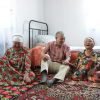
Elimination of Leprosy
Warm greetings from Sasakawa Health Foundation in Tokyo. The 100th Issue of the WHO Goodwill Ambassador’s Newsletter has been published. Read special interviews with the Goodwill Ambassador and the UN Special Rapporteur on leprosy, and check out the Timeline of all that has happened since the first issue.
IITA banana research paper in Wiley’s Plant Pathology journal among the most downloaded
A paper published by a team led by scientists from IITA was among the top 10% most downloaded of all papers published between January 2018 and December 2019 in Wiley’s Plant Pathology journal.
War-Fighting in the Future and Our Current Hobson’s Choice!
Despite all the preoccupation with the current raging pandemic, it sadly appears that there has been no let-up in the global arms race among the major powers. In mid-May, the United States President Donald Trump, at an event for his new Space Force at the White House made a significant announcement, It was that the US was building right now an “incredible” new missile which would travel faster than any other in the world “by a factor of almost three”. This was obviously a response to the latest Russian ‘Avangard’ missile, which Russian President Vladimir Putin claims in invincible, with a speed of twenty times that of sound. The Chinese, reportedly are also feverishly working on their own hypersonic counterparts. All these would be strategic tools to significantly alter the war-fighting capabilities of humanity in the future.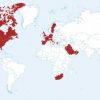
‘Declare remittance as an essential financial service’
The UK and Switzerland are calling for greater global collaboration to ensure access to digital remittance services to support people during the coronavirus outbreak.
How is the COVID-19 impacting climate action?
 In the context of COVID-19 crisis, what are the risks for climate action?
Climate change still continues and climate impacts are still very visible in the Pacific. A few weeks ago, we had major forest fires in Australia and in other countries. Now we’re battling tropical cyclone Harold which is a result of climate change. This week a new study was released, pointing out that the great barrier reef in Australia suffered one of its most severe bleaching in 5 years. Climate change is still happening, so climate actions have to be pursued. People might have different priorities these days, with funding being reoriented to other activities, but the action definitely needs to be continued to strengthen the resilience of our systems to global changes.
In the context of COVID-19 crisis, what are the risks for climate action?
Climate change still continues and climate impacts are still very visible in the Pacific. A few weeks ago, we had major forest fires in Australia and in other countries. Now we’re battling tropical cyclone Harold which is a result of climate change. This week a new study was released, pointing out that the great barrier reef in Australia suffered one of its most severe bleaching in 5 years. Climate change is still happening, so climate actions have to be pursued. People might have different priorities these days, with funding being reoriented to other activities, but the action definitely needs to be continued to strengthen the resilience of our systems to global changes.
Sustainable Development Goals: What to salvage from Covid-19
Once the Covid-19 pandemic is under control, and the world economy is back on its tracks, the status and fate of the 2030 Agenda, also known as Sustainable Development Goals (SDGs), needs to be reassessed. The year 2020 was supposed to kick-off the Decade of Action. With just 10 years to go, plans were made to undertake "ambitious global efforts" to deliver the 2030 promise—by mobilising more governments, civil society, businesses, and calling on all people to make the Global Goals their own.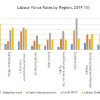
Striking at the core of the COVID-19 employment crisis
What is happening now
In the early months of 2020, much of the globe was put on pause as governments fought to contain the COVID-19 outbreak. For many, work came to a grinding halt as factories and shops were forced to close their doors, transforming a global health catastrophe into a labour market and economic crisis.
Yanghee Lee: Champion of justice for Rohingyas
"We all knew that [Aung San Suu Kyi] was put on a pedestal or portrayed as the icon of democracy and human rights, but ever since [her party] has taken office [after the 2015 election] and ever since she took the office of the State Councillor, all of her actions and her words, statements point otherwise", noted Professor Yanghee Lee, in one of her last conversations with Al Jazeera as the Special Rapporteur on the Human Rights Situation in Burma. "Perhaps the world didn't really know who she was", she said.
The Government of Kenya and UN commit to expanding education, training and employment opportunities for young people, on an unprecedented scale
Hon. Joseph Mucheru, Cabinet Secretary for ICT, Innovation and Youth, (CS) and Kenya’s representative in the Generation Unlimited (GenU) Global Board convened today the UN Kenya Country team to identify opportunities on how to swiftly expand education, training and employment opportunities for young people, on an unprecedented scale.
Dr Stuart Minchin, Director-General of SPC: With the crisis, we’re learning new ways of working
A conversation with SPC's Director-General on how the Pacific Community (SPC) helps Pacific countries respond to the COVID-19 crisis.

UNESCO and Education Cannot Wait provide the Ministry of Education and Higher Education with online learning material for teachers and students
(UNESCO/Ministry of Education and Higher Education/ECW) - The COVID-19 pandemic has translated into a major education crisis. In Lebanon, 1.2 million children are affected by school closures and have seen their learning routines disrupted. While Lebanon has switched to distance teaching and learning to mitigate the effects of this disruption, challenges related to preparedness, infrastructure and capacity, as well as the digital gaps, have put additional strains on students, parents, teachers, and the educational authorities.
COVID-19 and the assault on fundamental rights
A spectre is haunting the conscientious citizens of Bangladesh—the spectre of the Digital Security Act, 2018 (DSA). By now the law has become synonymous with curtailment of freedom of expression and repression. The recent developments of involuntary disappearance, re-appearance and subsequent detention of several commentators and social activists have raised the alarm if indeed we as a nation are shying away from upholding one of the cardinal principles of the Muktijuddher Chetona (the spirit of the Liberation War) to freely express our views.« Previous Page — Next Page »





The Week with IPS

NEXT STOP - SDGs
Tracking global progress towards a sustainable world
Tracking global progress towards a sustainable world
