Languages
Thursday, October 8, 2026



News and Views from the Global South
Other Voices
News and Views from our Content Partners
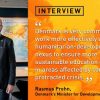
The Power of Education in Emergencies: Interview with Denmark’s Minister of Development Cooperation Rasmus Prehn
Denmark is Education Cannot Wait’s (ECW) third largest donor, with US$79.1 million in contributions to date. In this insightful interview with Denmark’s Minister for Development Cooperation, Rasmus Prehn, we explore the importance of girls’ education and gender equality, the humanitarian-development nexus, expanded engagement with the private sector, education in emergency response to the COVID-19 pandemic and more. A former high school teacher, with a master’s degree in social science, Minister Prehn has been a member of Danish Parliament since 2005, and was named Minister for Development Cooperation on June 27, 2019. Minister Prehn is the former chairman of the Danish Research, Education and Further Education Committee, a tireless advocate for education in emergencies, and a true champion for achievement of the Sustainable Development Goals, especially SDG4: inclusive and equitable, quality education for all.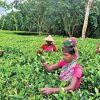
May Day: Large number of children work in tea estates
After her mother passed away, her father remarried and moved elsewhere, and so attending school became a luxury for 12-year-old Sheuly Munda.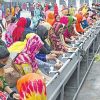
New Normal? Better Normal!
In these times of Covid-19, the big challenge for most of us is how to protect ourselves and our families from the virus and how to hold on to our jobs. For policymakers, that translates into beating the pandemic without doing irreversible damage to the economy in the process.Press Freedom and Tackling Disinformation in the COVID-19 context
On the occasion of World Press Freedom Day 2020, join UNESCO for a dynamic online discussion on the importance of press freedom and independent journalism to provide reliable, life-saving information during the COVID-19 pandemic. Topics to be covered include:- • Fighting disinformation and rumours
• Journalists on the front lines: ensuring their health and safety
• The role of governments: protecting press freedom and independent journalism
• The role of social media and technology: supporting journalism and fighting disinformation

Blocking media access during Covid-19
Press freedom in Bangladesh has been in decline long before the coronavirus came to our shores. Over the last decade, thanks to increasingly repressive media laws and highhanded measures adopted by the authorities, the health of journalism has been deteriorating in such a way that even the stalwarts of the fourth estate began to worry if the damage could ever be reversed. Yet, an outcome few would have expected during the Covid-19 crisis—which was expected to unite the people and their leaders against humanity's most dreaded enemy in decades—is the tightening of the noose around free flow of information, which holds the key to this unity. It's a self-defeating strategy that hurts not only the general people and the media, but those tightening the noose as well.OSCE PRESS RELEASE: COVID-19/Human Trafficking
How to address the consequences of the COVID-19 pandemic for the most vulnerable in our societies, especially for human trafficking victims and survivors, is the focus of a set of recommendations to governments published by the OSCE Special Representative and Co-ordinator for Combating Trafficking in Human Beings Valiant Richey today.Rohingya refugees stranded at sea show urgent need for regional response
The Bangladesh authorities should rescue and welcome Rohingya refugees currently stranded at sea, Amnesty International said today. Other governments must fulfil their shared responsibility to carry out search and rescue efforts, in line with their international obligations to protect life, and allow safe disembarkation of refugees and asylum seekers at sea.
Reimagining a Post COVID World: Key Principles for the Future
In her book, ‘A World Made New: Eleanor Roosevelt and the Universal Declaration of Human Rights,’ Mary Ann Glendon tells the beautiful story of how out of the ashes of the Second World War emerged the world’s pre-eminent rights framework. The Declaration recognises the inherent dignity of every human being and was born out of the shared horror felt by the international community with war crimes and genocide on an unprecedented scale. It acknowledged that fundamental change was needed to make the world fit for future generations.
Addressing the rise in domestic violence during lockdown
While one-fourth of the world's population is under home-quarantine to contain the spread of the novel Covid-19 pandemic, another crisis is brewing behind closed doors—domestic violence.
COVID-19. No school meals, millions of kids at risk of food insecurity
For millions of children around the world, the COVID-19 outbreak means not getting the most important, if not the only, meal of the day.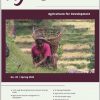
Ag4Dev, Spring 2020: Journal of the Tropical Agriculture Association
No. 39, Spring 2020, Agriculture for Development: open edition 14th Hugh Bunting Memorial Lecture: Smarter foods | Agricultural hazard management in Bangladesh |IPPC special report Climate change and land: extended review | Getting more, much more, from tropical agriculture | Sir George Stapledon | Agriculture and rural roads | TAA 2019 AGM report | TAA 2019 Honours |Moving coastlines: farming the mudflats of Bangladesh | Digital farming and tropical agriculture.

Unesco to Support Cultural Sector Hit by COVID-19
The United Nations Educational, Scientific and Cultural Organization (UNESCO) has announced it is “launching initiatives” to support cultural industries and cultural heritage, sectors hit hard by the COVID-19 pandemic. “COVID-19 has put many intangible cultural heritage practices, including rituals and ceremonies, on hold, impacting communities everywhere,” the organization stated April 9. “It has also cost many jobs, and across the globe, artists … are now unable to make ends meet.”The Declaration of the Human Solidarity Initiative Against the Coronavirus Pandemic
We find this to be a difficult time in the history of humanity. COVID-19 has brought about ever-increasing tragedies of death and deprivation all the while inflaming our social and economic problems. The time has come to form a humanitarian consensus – strong and active – to face the challenges and dangers that threaten humankind and its future onour small planet.
UN and Partners Request $267.5 Million to Respond to Humanitarian Needs Arising from COVID-19 Pandemic in Kenya
The Government of Kenya, the United Nations and humanitarian partners have launched today a Flash Appeal requesting $267.5 million to respond to the most immediate and critical needs of10.1 millionpeople.
10 Ways Young People are Leading the Way Against COVID-19
As the world grapples with unprecedented challenges posed by the COVID-19 pandemic, young people are demonstrating their continued leadership in their communities and countries. According to a new UN plan to address COVID-19, young people are some of the most affected by the pandemic’s socio-economic impacts. Nevertheless, youth are also among the most active in global responses: Not only are they on the frontlines as health workers, but they are also advancing health and safety in their roles as researchers, activists, innovators, and communicators. As such, decision-makers must commit to ensuring youth voices are part of the solutions for a healthier, safer, and gender-equal world.« Previous Page — Next Page »





The Week with IPS

NEXT STOP - SDGs
Tracking global progress towards a sustainable world
Tracking global progress towards a sustainable world
