Languages
Thursday, September 24, 2026



News and Views from the Global South
Other Voices
News and Views from our Content Partners

IOM, WHO, DR Congo Ministry of Health Partner to Stop Ebola from Spreading to Kinshasa, Neighbouring
Last week, in the Democratic Republic of the Congo (DRC), cases of Ebola were confirmed in Mbandaka, a city with a population of 1.2 million people some 150 kilometres from where the outbreak originated in Bikoro Health Zone, Equateur Province.
Pioneering Water Solutions for the World
Many governments have made great strides in fighting cholera, an infectious disease that causes severe diarrhoea that can lead to dehydration and even death, thanks to the work of American microbiologist Rita Colwell.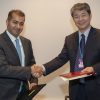
UAE’s FANR signs MoU with China’s Nuclear Safety Administration
The UAE's Federal Authority for Nuclear Regulation, FANR, signed today a Memorandum of Understanding with China’s Nuclear Safety Administration, NNSA, on the cooperation and exchange of information in nuclear safety regulation.
IOM, Partners to Assist Business Leaders in Combatting Human Trafficking
The Interactive Map for Business of Anti-Human Trafficking Initiatives and Organisations was launched yesterday (22/05) at the British Telecom Centre in London. IOM, the UN Migration Agency, as part of the RESPECT Initiative, joined the Global Business Coalition Against Trafficking (GBCAT), and the United Nations Global Compact through its Action Platform on Decent Work in Global Supply Chains organizations in launching this platform.
Ministry of Climate Change and Environment hosts upcycled food Iftar
In a departure from norms for the Holy Month of Ramadan, the Ministry of Climate Change and Environment, MoCCAE, hosted an upcycled food iftar utilising food that would have otherwise been wasted if it was not consumed during this event for high-level public and private sector officials.
Lesotho Constitutional Court declares criminal defamation unconstitutional
The Committee to Protect Journalists today welcomed yesterday's ruling by Lesotho's Constitutional Court that criminal defamation is unconstitutional, calling it a significant step toward safeguarding press freedom in the country.
“See a child begging? Call the police!” UN Migration Agency Calls on Ukrainians to Fight Child Exploitation
We see them in the metro. We see them in pedestrian tunnels. We see them in the streets. Every day we see begging children, but usually we just ignore them.Abu Dhabi Sustainability Week to explore role of industry convergence in accelerating sustainable development
Abu Dhabi Sustainability Week, ADSW, one of the world’s largest sustainability gatherings, has announced its theme for its next edition, which takes place from 12th to 19th January, 2019.
“Cultural Diversity Is the Greatest Strength of Humanity,” Says the Chairman of the Geneva Centre
On the occasion of the 2018 World Day for Cultural Diversity for Dialogue and Development, commemorated annually on 21 May, the Chairman of the Geneva Centre for Human Rights Advancement and Global Dialogue, Dr. Hanif Hassan Ali Al Qassim reiterates the importance of embracing cultural diversity and acknowledging the common heritage of humanity.
World Green Economy Summit to kick off in October in Dubai
The annual World Green Economy Summit, WGES 2018, will be organised in Dubai to tackle global issues and important strategies, including the digital age and its impact on building a ‘green’ and sustainable future growth across industries. This was announced today by the organising committee of the fifth WGES 2018.
UNHCR launches global #HandinHand campaign
The United Nations High Commissioner for Refugees, UNHCR, is intensifying its efforts to support the overwhelming number of families torn apart by war and violence and who are struggling to provide for their families. The agency today launched its global campaign #HandinHand to raise awareness around the pressing need of refugee families, particularly women and children, for vital support and cash assistance.
How will development in the Arctic affect Asia?
As climate change disrupts the Arctic, a myriad of changes are predicted that will affect everywhere on Earth, even countries that have historically been sheltered from the wrath of nature, such as Singapore, as the melting polar ice raises sea levels.
Grass Planting Reduces Soil Erosion, Risk of Landslides in Rohingya Refugee Camps
Over two million vetiver grass plants have been distributed by IOM, the UN Migration Agency, in the past two weeks to reduce soil erosion and the risk of landslides in southern Bangladesh’s Rohingya refugee camps, where hundreds of thousands of people are at risk from impending monsoon rains.
Leveraging Climate Finance in Africa
What: GGGI, in partnership with the Government of the Federal Democratic Republic of Ethiopia, and the Government of Rwanda will host a side event during the 53rd Annual Meeting of the African Development Bank (AfDB) in Busan, Republic of Korea. The side event will focus on the great strides made by Ethiopia in mobilising financial resources for the Climate Resilient Green Economy (CRGE) initiative to protect the country from the adverse effects of climate change and to build a green economy that will help realise its ambition of reaching middle-income status before 2025.
ICBA scientists start growing halophytic vegetables in UAE
Scientists at the International Centre for Biosaline Agriculture, ICBA, have successfully started growing halophytic (salt-loving) vegetables in the UAE conditions, using reject brine from desalination units treated with fish effluents. It is the first time that halophytic vegetables are being grown in the UAE conditions, both in the open field conditions and a simple net-house structure, without using fresh water.« Previous Page — Next Page »


The Week with IPS

NEXT STOP - SDGs
Tracking global progress towards a sustainable world
Tracking global progress towards a sustainable world
