Languages
Saturday, October 17, 2026



News and Views from the Global South
Other Voices
News and Views from our Content Partners

Zambia: Commercial Farms Displace Rural Communities
The Zambian government is failing to protect the rights of rural residents displaced by large commercial farms in Serenje district, Human Rights Watch said in a report released today.No New Names
The names and places associated with the atrocities that stain the world’s recent history are only too well-known: Guernica, Babi Yar, Sharpeville, Treblinka, Hiroshima, Halabja, Rwanda, Srebrenica and, more recently, Aleppo and Yemen, to name but a few. The memories of those who have suffered are as painful as the list is long.
Why the West Grew Rich
About 1,000 years ago, when Europe was supposedly traversing through its dark ages, the Muslim empire was the envy of the world. Its wealth and material standards were such that Cordoba alone was pronounced as the ‘ornament of the world’ by Hrotsvitha, a mediaeval German writer and nun. By 1500, it was China and India whose riches and wealth became the stuff of fables. By the 17th century, the tide had started turning in favour of northern European nations. By the mid-19th century, this turnaround was complete. What accounts for this transformation?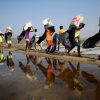
Case for a UN Interim Administration in Rakhine
The Myanmar military's latest campaign against the Rohingyas began after the attack on multiple police posts in Rakhine on August 25, 2017. The country's military leadership, with the support of radical Buddhist elements, is perpetrating an “ethnic cleansing” campaign killing, raping, maiming, and setting ablaze one Rohingya village after another. Nearly 600,000 Rohingya refugees have crossed into Bangladesh within a span of two months. The world has not witnessed such a large exodus of people in such a short period since the Rwandan genocide in 1994. As a result of this brutal campaign, the majority of Rohingyas are now residing in Bangladesh.
When a School Is Turned into a War Zone
It was 32 degrees Celsius outside, a sunny day in the last week of August. Yet, I vividly remember getting the chills.
Lifting of All Sanctions Against Khartoum: A New Era for the Sudan
The lifting of sanctions on Sudan by the United States on 12 October was a monumental event that recognized the importance of engaging in dialogue with States in order to improve the human rights conditions. During his visit to New York to present his report to the General Assembly, the Special Rapporteur on the negative impact of the unilateral coercive measures on the enjoyment of human rights, Mr. Idriss Jazairy, reflected on his contribution to this event, and suggested it might be an example of how other unilateral sanction regimes could be lifted.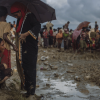
No Food, No Water, No Shelter: Two Days of Muck, Rain and Uncertainty
Last week, the Government of Bangladesh moved near 7,000 Rohingya refugees, who had been stranded in “no man’s land” near the Anjuman Para border crossing point in Cox’s Bazar’s Ukhia District, into more appropriate settlement areas. The Rohingya are fleeing violence, which broke out in Myanmar on 25 August.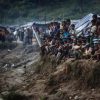
Donors Pledge over $344 Million in Response to Rohingya Refugee Crisis
The international donor community today announced pledges for more than US$344 million to urgently ramp up the delivery of critical humanitarian assistance to Rohingya refugees and host communities in Bangladesh.
World Energy Day raises awareness about importance of ensuring safe and sustainable energy for everyone: DEWA CEO
World Energy Day is an opportunity to emphasise the importance of joint efforts among organisations and members of society to reduce practices that harm the environment and raise awareness about the importance of rationalising energy use and reducing carbon emissions, Saeed Mohammed Al Tayer, Vice Chairman of the Dubai Supreme Council of Energy and Managing Director and CEO of the Dubai Electricity and Water Authority, DEWA, said in a statement on World Energy Day.
UN Migration Chief Ends Visit to Bangladesh as Bleak Picture Emerges of Rohingya Settlements
Yesterday (19/10) over 6,900 Rohingya refugees who were stranded in dire conditions in no-man’s land at Anjuman Para on Bangladesh’s side of the border, were moved by the Bangladesh military to several makeshift settlements in the Ukhia and Teknaf sub-districts of Cox’s Bazar. Some 800,000 Rohingyas are now living in the settlements, 589,000 of whom have arrived since August 25th.
Moment of Clarity in Marawi and the War on Terrorism
“Wars are always clarifying” is a line that I jotted down from a column in the New York Times that was written two years after the attack on the twin towers on September 11, 2001. The subject was ostensibly “9/11” and the war on terrorism that it set off (Thomas Friedman wrote the line).
Women in the News
Should the state appreciate or even acknowledge the work of Pakistani citizens, especially women, that is recognised abroad?
Income Disparity on the Rise
The Bangladesh Bureau of Statistics unveiled the report “Household Income and Expenditure Survey (HIES) 2016” on October 17. It is the most exhaustive nationwide survey carried out and is usually brought out every five years or so. What it tells us is that the income inequality between the rich and poor has widened with the top 10 percent of the population now having an income share of 38.16 percent, which is 2.32 percent higher than what it was in 2010. Whereas, the bottom 10 percent of the population has half (1.01 pecent) of the income share it had in the year 2010 (2 percent). Indeed, poverty reduction has also slowed down a full 0.5 percent over this period.
Caught in Conflict without Travel Documents
In early October, three Ethiopian boys in Yemen told IOM, the UN Migration Agency, “we miss our family and can no longer stay here.”
FAO, WFP reaffirm their commitment to working for Zero Hunger in the Middle East
The United Nations Food and Agriculture Organisation (FAO) and the World Food Programme (WFP) have signed a partnership agreement to solidify joint efforts to combat hunger in the Middle East.« Previous Page — Next Page »





The Week with IPS

NEXT STOP - SDGs
Tracking global progress towards a sustainable world
Tracking global progress towards a sustainable world
