Languages
Saturday, November 21, 2026



News and Views from the Global South
Africa
DEVELOPMENT-SWAZILAND: Water – "Just a Matter of Delivery"?
The main religious ceremony of the Swazi people is the "Incwala" or ‘Festival of the First Fruits’, held in late December. Dressed in traditional attire, tens of thousands of Swazi men and women dance and chant prayers to their ancestors. They seek good rains that will ensure abundant crops.TRADE-ZIMBABWE: A Balancing Act Between China and the EU
The Zimbabwean government’s isolation from the international economic arena has forced it to turn right while indicating left.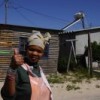
ENERGY-SOUTH AFRICA: The Poor Fly Under the Solar Water Heating Radar
Earlier this year, IPS reported that the South African coastal city of Cape Town was debating a "first of a kind" bylaw that would make solar water heating compulsory for relatively costly new buildings, and certain renovations. This got us thinking: what of solar water heating for less expensive structures - especially homes being built under the country's extensive low cost housing programme...Are any initiatives on the drawing board in this regard?
Q&A: "Inmates Who Are on Death Row Are Without Legal Representation"
Olawale Fapohunda is a leading human rights lawyer in Nigeria and managing partner of the Legal Resource Consortium, a non-governmental organisation (NGO) based in the economic capital of Lagos that provides free legal aid to prison inmates.HEALTH-SWAZILAND: Septic Tanks Preferred to the Latest in Sewage Treatment
Located on the outskirts of Swaziland's commercial hub, the state of the art Manzini Waste Treatment Centre was built to end the city's sewage disposal problems. A World Bank loan was secured by the Ministry of Housing and Urban Development to construct the 16 million dollar facility: a spotless, landscaped plant which has a lifespan of 25 years.COTE D’IVOIRE: Educating Children on the Job
Nibon Soro and Kartenin Silué, two children living in the Korhogo region of northern Côte d'Ivoire, should be in school. But, farm duties - and their family's poverty - stand in the way of education.TRADE-AFRICA: COMESA States Urged to Drop Non-Tariff Barriers
Despite the reduction in trade tariffs within the Common Market for Eastern and Southern Africa (COMESA), member states are still grappling with non-tariff barriers which restrict the flow of exports and imports. This is regarded as putting brakes on the improvement of trade volumes in the region.HEALTH-DRC: A Groundbreaking Television Series Tackles HIV/AIDS
It's a first for the Democratic Republic of Congo (DRC): a Congolese filmmaker directing a television series in Lingala - the most widely spoken language in the country - about HIV/AIDS.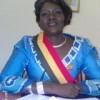
Q&A: "The Advice I Give Women Is to Leave Hang-Ups Behind"
For women politicians in Mali, winning a seat in parliament is a tall order - difficult enough with party backing, and possibly harder still without it. But, this didn't stop Haïdara Ichata Cissé from taking her chances as an independent earlier this year.
SOUTH AFRICA: High Stakes Battle Between Mining and Environment
Environmentalists and tour operators appear to be losing the battle against mining companies in Mpumalanga, a province in the east of South Africa. This confrontation - which also pits two ministries against each other - will determine the future of hundreds of lakes and rivers, and has implications for the economic sustainability of the province.ZIMBABWE: A Water and Sewerage Crisis That Goes "Straight to the Grave"
A young Zimbabwean couple glances furtively around before settling on a bench in a bare patch of ground that used to be a recreational park in Glen View, a sprawling, high-density suburb of the capital, Harare. It’s a Monday morning, and the two of them are struggling to come to terms with a strange sickness that has gripped their family. Every move they make in the direction of the Glen View One Satellite Clinic shows they are in great pain.TRADE-SOUTHERN AFRICA: Non-Tariff Barriers Blocking Flow of Goods
While the Southern African Development Community (SADC) has moved towards liberalising trade to make the flow of goods between countries easier and economically more rewarding, non-tariff barriers continue to be a concern, a recent study found.SOUTH AFRICA: A National Health Controversy Takes on Regional Dimensions
The Treatment Action Campaign (TAC), one of South Africa’s largest AIDS lobby groups, says it has obtained evidence indicating that government was implicated in illegal medical experiments on people living with HIV/AIDS in Tanzania, involving the discredited product Virodene.DEVELOPMENT-GHANA: Picking Up the Pieces After the Floods
"We prayed to God to open the heavens, but this is not what we expected," says Peter Nayoon, a farmer from Gushiegu in the north of Ghana, one of several African countries blighted by floods over recent weeks. "I am finished," he adds, pointing dejectedly towards the area that used to be his yam farm. "Who would give me money to start a new life?"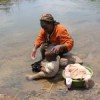
DEVELOPMENT-MALAWI: Lack of Running Water Puts Girls' Education at Risk
Rita Kalikokha of Dowa, a rural district in central Malawi, thinks about abandoning school every time she menstruates.DEVELOPMENT-SOUTH AFRICA: “We Drink Condoms and Panties”
Police arrested ten people who were part of a large group of protesters blocking the N4 highway linking South Africa and Botswana earlier this month. Residents of the tiny village of Ntsweletsoku were so angry about the persistent water shortages in their area that they resorted to violent demonstrations to attract the attention of the authorities.MOROCCO: Polls Largely Maintain the Status Quo for Women in Parliament
This month's parliamentary elections in Morocco have seen the number of women legislators decline from 35 to 34 in the 325 member body. With 30 of the female representatives elected under a quota, the results would seem to indicate that women face challenges in making their presence felt in the lower house - even though a proportional representation system is used for polls.
POLITICS-SIERRA LEONE: A Sea of Challenges for the New Government
A voting process that has stretched over more than a month came to an end this week with the announcement that Ernest Bai Koroma of the All People's Congress (APC) had won the presidency in Sierra Leone's general elections.HEALTH-WEST AFRICA: Rural Areas Said To Be in the Shadow of AIDS Efforts
Certain West African researchers have expressed concern at the disparities between rural and urban areas in their countries as regards HIV/AIDS services and prevention initiatives.Q&A: "The Involvement of the Government Is Still Mixed"
Some cause for optimism, but several reasons for concern...That's the message from Amadou Wassouni as regards efforts to address desertification in Cameroon.ENVIRONMENT-COTE D’IVOIRE: Soya By Way of War
When the failed coup of September 2002 led to a prolonged period of isolation for northern Côte d'Ivoire, farmers in this rebel-held region counted the cost.« Previous Page — Next Page »


The Week with IPS

NEXT STOP - SDGs
Tracking global progress towards a sustainable world
Tracking global progress towards a sustainable world
