Languages
Thursday, November 19, 2026



News and Views from the Global South
Asia-Pacific
SRI LANKA: Island Faces Key Test in Upcoming Elections
Elections in early August for local administrative bodies in Jaffna and Vavuniya, two Tamil-dominated northern towns, would be the first litmus test for the Sri Lankan government to restore normalcy in a region devastated by nearly three decades of war.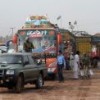
PAKISTAN: Scared, But Terrible Camp Life Forces IDPs Home
Civilians who fled the Malakand region in northwest Pakistan after the army launched operations against the Taliban, are starting to trickle home. On Wednesday, the government said 2,885 families have returned to Swat and Buner.MEDIA-CHINA: News of Ethnic Strife Skirts Chinese Censors
The story of ethnic strife engulfing China's far-western province of Xinjiang may have been relegated to the inner pages of the country's state-controlled newspapers, but this time, the government could barely suppress the outflow of information.NEPAL: Crime Grows Amid Political Instability
Khyati Shrestha, a 17-year-old high school student in Kathmandu, was abducted and brutally murdered last month. 17 days later, her body parts were found in the outskirts of the valley. The accused, Biren Pradhan, later chillingly revealed that she was killed within 24 hours of kidnapping.SRI LANKA: Aid Organisations Struggle to Operate in Post-war Sri Lanka
The Sri Lankan government wants the International Committee of the Red Cross (ICRC) to scale down its operations in the country, but is sparing other international nongovernmental organisations amid questions over the post-war role for humanitarian workers.
Q&A: "My Boyfriend Insisted I Quit Dancing, My Answer Was No"
She has had to change her name, sever links with her family and boyfriend, and even move cities because of male stalkers in the Bahraini capital. But no "sacrifice" is too much in the pursuit of her dream for Tufaha, just 24.IRAN: Tale of Sohrab Arabi Raises Fears About the Missing
After a 26-day search, Parvin Fahimi finally discovered that her son Sohrab Arabi, 19, had been gunned down during the peaceful protest march from Tehran's Enghelab (Revolution) Square to Azadi (Freedom) Square on Jun. 15.POLITICS-MALAYSIA: Anwar Ibrahim Set to Go On Trial
Anwar Ibrahim, the country’s charismatic former deputy prime minister, is set to go on trial this month for allegedly sodomising a male aide. It’s a charge his supporters dismiss as a political conspiracy against him.
Q&A: "The Killing of Women Is Like Killing a Bird Today in Afghanistan"
It is easy to understand why epithets such as brave and courageous often accompany the name of Malalai Joya. Slight of stature and serenely demure, the young Afghan woman’s past and present encapsulate the plight of her countrywomen.
IRAN: Protests Erupt on Student Massacre Anniversary
Tehran's relatively tranquil week ended with large protests commemorating the tenth anniversary of attacks on the dormitories of Tehran University in 1999, making Thursday yet another significant day in the short post-election history of protests since Jun. 12.ECONOMY-PHILIPPINES: Migrant Workers Use Remittances as Investment Tools
George Detubio, once an Overseas Filipino Worker (OFW) is enjoying his new career as an entrepreneur. The 47-year-old owns a thriving business – distributing liquefied petroleum gas (LPG) products in this town, 200 kilometers north of Manila.RIGHTS-AUSTRALIA: Uplifting Aboriginals, a Matter of “Urgent National Significance”
In this remote Aboriginal town, 420 km south-west of Darwin, Northern Territory’s capital, third world living conditions still prevail despite the Australian government’s efforts to improve life for its oldest inhabitants.RIGHTS-CAMBODIA: Decades Later, S-21 Survivors Recall Ordeal
"They cuffed me and told me to lie on the floor with my face facing down," the old man told the judges.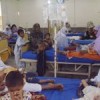
PAKISTAN: Displacement Traumatic for Pregnant Women
Pregnant women uprooted by the violence in the Malakand region, northwest Pakistan, have suffered acutely in refugee camps for the internally displaced.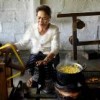
LAOS: The New Silk Road
At the age of 13, Kommaly Chantavong, now 64, walked over 600 kms to Vientiane from her home in Lao’s northern province of Huaphan. She walked through the buzzing war with the French in bare feet. All she took were heirloom pieces of woven silk, legacies from her grandmothers.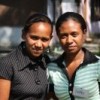
EAST TIMOR: Politics – Women Take the Plunge
Women in East Timor are being wooed to participate in the local council elections, likely to be held in September.
IRAN: Censors Fail to Silence Cyber-Activists
To mark the tenth anniversary of Iran's student uprising in 1999 amid the continued rejection by many voters of the results of the disputed Jun. 12 election, student activists issued a national call to protest last week.RIGHTS-SOUTH KOREA: Prostitution Thrives with U.S. Military Presence
With the presence of U.S. soldiers, flesh trade is flourishing near the Camp Stanley Camptown close to Seoul.EAST TIMOR: Disabled Athletes Shine With Pride
Getting around isn’t easy for Jose Noronha. With minimal use of his legs, he has opted for a red wheelchair-bicycle hybrid that he pedals with his hands, a common sight in Dili, East Timor’s capital.ENVIRONMENT-LAOS: Rubber Plantations Spawn Social Strife
For decades, rubber plantations in the country's Mekong region have reaped huge profits for local businessmen. However, this industry, long regarded a blessing, is now increasingly becoming a source of social strife.CHINA: Chinese Question Government’s One-Child Policy
When China’s population control was imposed in 1980, it was meant to be a temporary measure which the government promised to phase out in three decades. It was intended to halt the baby boom of the 1950s and 1960s.« Previous Page — Next Page »


The Week with IPS

NEXT STOP - SDGs
Tracking global progress towards a sustainable world
Tracking global progress towards a sustainable world
