Languages
Sunday, November 8, 2026



News and Views from the Global South
Europe
ITALY: Windscreen Wipers Face Clearance
In several towns across Italy, forced windscreen wiping is becoming a criminal offence.SPAIN: Self-Immolation Highlights Plight of Trafficking Victims
A Romanian immigrant set himself alight in Spain Tuesday, in a state of despair over his inability to take his family back to their home country. The man, who said he had been the victim of a false job offer, is in a serious condition in hospital.RUSSIA: Murder Arrests Unconvincing
The public announcement by Russian prosecutor-general Yury Chaika last week that ten people have been arrested in connection with the killing of journalist Anna Politkovskaya has called into question the effectiveness of the justice system.FRANCE: New Employment Law Sets Stage for Showdown
On a rainy day in an eastern Paris suburb, members of the Confédération générale du travail (CGT), one of France's two largest labour unions, told the assembled press corps at their union hall that the government of President Nicolas Sarkozy wanted to "disarm" French workers with a new law aimed at curbing transportation strikes.BALKANS: Media Bowing Under Pressure
The ways of Serbian media have come into focus again after the Organisation for Security and Cooperation in Europe (OSCE) declared earlier this week that Serbian media must practise professionalism and respect human dignity.BULGARIA: Roma Treated like Trash
Recent violent episodes involving Roma in Bulgaria emphasise the deep prejudice against this ethnic group, as well as politicians' intention to turn anti-Roma feelings into electoral gains.ENVIRONMENT-GREECE: Fires Char a Way of Life
Greece is set to pay an enormous cost after a week of unstoppable inferno, with fires still burning out of control.ALBANIA: Civil Society Far from Local Needs
Achieving environmentally sustainable tourism in Albania will also be up to the efforts of communities and civil society organisations, but as in much of the post-socialist world, non-governmental organisations (NGOs) and their donors will have to clean up their act first.ECONOMY: Thinking Big, Russia Misses Microfinance
In the big expansion plans for the economy, financial institutions are neglecting the microfinance that small and medium business enterprises need, experts say.EUROPE: Russian Gas May Escape Politics
Many European politicians look desperately for alternatives to Russian gas, but while concerns over excessive dependency on one source are legitimate, many have missed the point that in the big energy game economic considerations weigh more heavily than political ideology.FRANCE: Differences Arise Over Education Law
The government of President Nicolas Sarkozy announced after it was swept into power this spring that its policies would bring a "tranquil rupture" with many cherished traditions, particularly in education.POLAND: Not Done With Fighting the Past
After a tough decision by Poland's constitutional court, and with early elections looming, it remains unclear how the country will deal with its government's attempt to expose former communist collaborators.BALKANS: Privatisations Pick Up in Kosovo, Privately
"The Kosovo Trust Agency is now preparing to privatise one of the most remarkable properties remaining in south-eastern Europe - the Dragash Sarrprodhimi socially owned enterprise. Sharrprodhimi offers over 22,000 hectares of largely untouched land...with excellent potential for tourist industry development."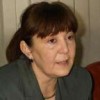
Q&A: Corrupted Politicians Expected to Fight Corruption
Monica Macovei is at the centre of a national dispute over cleaning up the Romanian government.UKRAINE: Election Set to Bring Another Crisis
The political crisis that has ravaged Ukraine since President Viktor Yushchenko decided to dissolve parliament is not likely to end with the early elections scheduled for Sep. 30.EUROPE: Reform Tastes an Eastern Flavour
The European Union has agreed on a document to reform itself institutionally, but Brussels is beginning to understand it will have to get used to tough opposition from some of its Eastern European member states.ALBANIA: Forget Communism…or Sell It
Bunkers? Underground catacombs? Submarine bases? Albania has been shaped by one of the most bizarre communist regimes ever and the potential to exploit it for tourism is inestimable.ENVIRONMENT-SPAIN: Offshore Wind Power for Earthly Benefits
A boost for renewable energy, a growing sense of corporate responsibility for the environment, and the decision to create a large offshore wind park are news items that have had little impact in Spain.ROMANIA: Culture Capital Is Another World
Sibiu, one of the most dynamic regions in Romania, thrives as the European City of Culture for 2007. But its prosperity is not representative of the entire country.HUNGARY: No Way Around Gas, for Now
With reliable alternatives remaining a relatively distant dream, Hungary, one of the most gas-dependent countries in Europe, will have to rely on Russian sources in the foreseeable future.SPAIN: Hemmed In, ETA Steps Up Pressure
Although greatly weakened, the Basque separatist group ETA has stepped up its pressure on businesses in that northern Spanish region with a view to raising funds through extortion, while it has become increasingly radical in its political demands and is preparing a new attack, according to the police.« Previous Page — Next Page »





The Week with IPS

NEXT STOP - SDGs
Tracking global progress towards a sustainable world
Tracking global progress towards a sustainable world
