Languages
Monday, November 9, 2026



News and Views from the Global South
Global
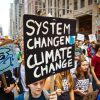
Will 2020 World Economic Forum Deliver on Combating Climate Change?
For the first time, the world’s elites meeting this year at Davos have listed environmental issues as their top concerns about the next decade.
UN Chief & Staff Union Predict Another Cash Crisis in 2020—if Member States Don’t Pay Up
UN Secretary-General Antonio Guterres declared last week that the United Nations just “managed to survive its deepest financial crisis in a decade.”
UN Report: Rising Inequality Affects More Than 70% of the Globe
Inequality is growing for more than 70 per cent of the global population, exacerbating the risks of divisions and hampering economic and social development. But the rise is far from inevitable and can be tackled at a national and international level, says a flagship study released by the UN on Tuesday.
Why the Coronavirus Should Worry Us All
The coronavirus outbreak -- which began in Wuhan, China, and causes a pneumonia-like illness -- is raging across Asia, infecting close to 300 people and killing four. It was initially known to be transmitted from animals to human, and was just confirmed to be transmitted from human to human.
“For Generations, We Have Been Nominating Men Just Because They are Men”
Marlène Schiappa, Minister of State for Gender Equality and the Fight against Discrimination in France, attended the 25th year Regional Review Meeting of the Beijing Platform for Action for the UN Economic Commission for Europe (UNECE) Region last month. She highlighted why this meeting is key for advancing the gender equality agenda and the priorities for the Generation Equality Forum in 2020, a global gathering for gender equality, convened by UN Women and co-chaired by France and Mexico.
School Lunch Programmes for Progress
If well planned, coordinated and implemented, a government funded school feeding programme for all primary school children can be progressively transformative. Such a programme, involving government departments and agencies working together, can benefit schoolchildren, their families, farmers and public health, now and in the future.
From Digital Diplomacy to Data Diplomacy
The digital revolution arrived late at the heart of ministries of foreign affairs across the Western world. Ministries latched on to social media around the time of Tahrir Square and Iran’s 2009 Green Revolution, beguiled by a vision of the technology engendering a networked evolution toward more liberal societies.
Geneva Staff Battles UN Chief over Unequal Pay & Illegal Salary Cuts
As the United Nations commemorates its 75th anniversary this year, the financially-crippled Organization is also saddled with a rash of administrative problems, plus an ongoing cash crisis, perhaps one of the worst in history.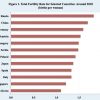
Pro-Growth Demographic Dogma
Whenever the issue of population comes up, pro-growth demographic dogma invariably dominates. Governments, political parties, businesses, the media and many others typically praise population growth and lament population slowdown, stabilization or decline. The demographic dogma basically advocates maintaining robust population growth and a larger and youthful population.
Women Activists Escalate Demand for “Bodily Autonomy” as 19 Nations Dissent
The United States and 18 other UN member states have come under fire for denying a woman’s legitimate right to “bodily autonomy”—the right to self-governance over one’s own body without coercion or external pressure.
Climate Change and Financial Risk
Climate change is already a reality. Ever-more-ferocious cyclones and extended droughts lead to the destruction of infrastructure and the disruption of livelihoods and contribute to mass migration.
Cybersecurity Threats Call for a Global Response
Last March, Operation Taiex led to the arrest of the gang leader behind the Carbanak and Cobalt malware attacks on over 100 financial institutions worldwide.
Australia’s Wildfires Part of a Vicious Cycle of Food & Fire
“Unprecedented.” “Hell on Earth.” “Catastrophic.” In Australia, these terms are being used to describe 17.9 million acres of burned land so far. While fires of this magnitude are certainly unprecedented, they’re far from unexpected.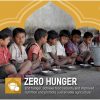
Can UN Development Be Reformed? Not at This Rate
Like his predecessors, United Nations Secretary-General António Guterres has been pushing a reform program to help the organization adjust to the demands of contemporary global governance.
Women’s Groups Applaud Gender Action Plan Following COP 25
After nearly two weeks of negotiations at COP 25 climate negotiations in Madrid last month (2-13 December), governments will be adopting a new 5-year Gender Action Plan (GAP) that progressively builds upon the first GAP, and works to address many of the concerns raised by women and gender groups at the Framework Convention on Climate Change (UNFCCC), including calls for greater focus on implementation and scaling up gender-just climate solutions.
Let’s Give Trade a Chance
Imagine going through the day without consuming or using some product, service, data, technology, personal contact, or payment which has not – at least in some part – crossed one or more national borders before reaching you.
Billionaires Beware
The latest November 2019 UBS/PwC Billionaires Report counted 2,101 billionaires globally, or 589 more than five years before. Earlier, Farhad Manjoo had seriously recommended, ‘Abolish Billionaires’, presenting a moral case against the super-rich as they have and get far, far more than what they might reasonably claim to deserve.
How Gender-based Violence Should be Reported in the Media
Sexual and gender-based violence terrorizes women and girls around the world, affecting as many as one in three women. Reporters play an essential role in bringing these cases to light so that authorities can take action and prevent further abuses. Yet reporting on gender-based violence comes with serious risks to survivors.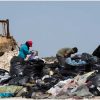
Not all Trade is Good – the Case of Plastics Waste
Currently, approximately 300 million tons of oil-based plastic waste are produced every year. A significant amount of plastic waste ends up in the oceans, having a detrimental effect on marine ecosystems and coastal communities. Most of this waste originates from the Asia-Pacific region.
2020: a Year Full of Danger
Let’s face what lies ahead with open eyes: 2020 is going to be a very tough year for the world, and developing countries in particular. The infant decade has already begun with the harbingers of climate disaster as thousands fled to beaches in Australia from raging bush fires, and the Middle East braced for more conflict after a U.S. air strike in Baghdad killed Iran’s top general.
Reflections for a New Year
In a world shaken by so many problems, it is difficult to look at 2020 and not make some kind of holistic analysis. While enormous progress has been made on many fronts, it is clear that the tide has turned, and we are now entering – or have already entered – a new low point in the history of humankind..« Previous Page — Next Page »





The Week with IPS

NEXT STOP - SDGs
Tracking global progress towards a sustainable world
Tracking global progress towards a sustainable world
