Languages
Sunday, September 6, 2026



News and Views from the Global South
IPS UN Bureau
Will Changes to the UN Resident Coordinator System Damage the Development Pillar & Downgrade its Assistance to Middle-Income Nations?
A letter to staff unions from economists working in the resident coordinator system, blows the whistle on a restructuring that could damage the development pillar and downgrade support to middle income countries.
Understanding an Interconnected World
When Roberto Savio begins talking about The Global Citizen Handbook, he does not begin with the book itself. He begins with today’s young people.
Middle East Conflict Fallout Pushes Countries toward US$1 Trillion Fossil Fuel Subsidy Bill, warns UN Development Programme
Developing countries’ efforts to tackle the ongoing effects of conflict in the Middle East carry a high price that leaves little room for critical investments in education, health and other development priorities, according to a new report by the UN Development Programme (UNDP) released today.
UN Peacebuilding Week: Military Expenditure Soars as Funding for Civilian Protection and Prevention Collapses
From June 22 to 26, the United Nations (UN) commemorated its first annual Peacebuilding Week, marking the 20th anniversary of the UN Peacebuilding Commission’s inaugural session. Featuring discussions among world leaders, policymakers, civil society, and advocates, the event explored how collaboration among governments, international organizations, and the private sector can enhance the visibility and effectiveness of peacebuilding efforts worldwide.
Agency Cannot Be Decreed
India's new education policy asks a great deal of its teachers. The National Education Policy of 2020 and its NISHTHA (National Initiative for School Heads' and Teachers' Holistic Advancement) training scheme, want teachers to be more than deliverers of syllabus. They are to be empowered professionals, agents of change who shape the future of children and, the policy says, of the nation itself. It is a generous and welcome ambition.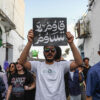
Tunisia: Civil Society Criminalised
In May, Tunisian lawyer and journalist Sonia Dahmani was handed her second conviction of the year. Her latest sentence, a two-year jail term, came in reaction to her criticism of poor prison conditions. She previously received an 18-month sentence for calling out the government’s anti-migrant policies. Dahmani faces five more charges under a 2022 cybercrime law that criminalises the spreading of what it calls ‘false information’.
US Slams Israel for Undermining Peace Negotiations with Iran –but Rift is Dismissed as a Passing Show
The on-again, off-again US-Iran peace negotiations, which have been disparaged by Israeli leaders, have resulted in a rare rift between the US and Israel, a Middle East ally which has had America’s unwavering “iron clad” support since its creation in 1948.
Building Peace Infrastructures: African Leaders Reflect on Peacebuilding
As the United Nations held its first-ever Peacebuilding Week (June 22-26), UN officials and developmental partners gathered at Egypt's Permanent Mission on June 23 to hold a dialogue on the main question that emerged from the 2025 Peacebuilding Architecture Review (PBAR): “How can global commitments to peacebuilding translate into tangible results on the ground?”
My Journey Through 50 Years of Seychelles’ Independence
On the night of 29 June 1976, just before midnight, I stood among my fellow Seychellois at the heart of a moment that would change our history forever.
GHANA: ‘This Is Bigger than Lgbtqi+ Rights – It’s about the Kind of Society We Want to Be’
CIVICUS discusses Ghana’s anti-LGBTQI+ law with Leila Lariba, Executive Director of One Love Sisters Ghana, a community-driven organisation that advances human rights, social inclusion and wellbeing for Muslim LGBTQI+ people in Ghana.
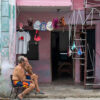
Cuba’s Last Hand
Ever since the Berlin Wall fell 37 years ago and the communist Eastern Bloc collapsed, Cuba has been debating economic reforms to its socialist system. Essentially, the discussion always revolves around the same issues: less state planning, more personal responsibility. In other words, a strong dose of capitalism as an antidote to inefficient and corrupt state bureaucracy.
The Silent Metamorphosis
There is a question that is never asked plainly enough in reports on Haiti: why, despite decades of analysis, billions in international aid, and an abundance of national strategies, does the potential of Haitian youth remain so consistently underutilized? This report, The Silent Transformation, is an attempt at an honest answer.
The Forgotten Triumph of Rinderpest Eradication, and the Cost of Ignoring Its Lesson
Animal disease is no longer a distant concern for farmers and veterinarians alone. It is increasingly visible in household budgets: global egg prices surged more than 60% during recent bird flu outbreaks. In South Africa, foot-and-mouth disease pushed beef prices up by 34%. These are not isolated fluctuations in price. They are reminders that when prevention falls short, families, farmers and food systems all pay the price.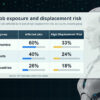
AI Will Destabilize Jobs, the Middle Class and the Welfare State Unless We Act in Time
Artificial intelligence (AI) promises remarkable gains in productivity, science, medicine and education. But it is also poised to wipe out millions of jobs, hollow out the middle class, and drain the tax revenues that pay for hospitals, schools and pensions. The process has already begun, and the time to act is running out.
Colombia’s next President: A Reckoning for Peace, Climate and Human Rights
On 21 June Colombians made their choice. By the narrowest of margins, Abelardo de la Espriella, a far-right criminal lawyer who’s never held elected office, became president-elect. Climate activists, human rights defenders, Indigenous communities and peace advocates have the most to lose from the incoming government’s agenda.
Aid Is Falling Fast. What Can African Countries Do?
For decades, official development assistance has been a central pillar of financing in sub-Saharan Africa. That pillar is now weakening—quickly and broadly.
In a Post-Aid World, Investing in Sustainable Livestock Farming Is an Investment in Global Stability
Smallholder farmers in Africa and Asia are likely to still be reeling from the fuel and fertilizer crisis caused by conflict in the Middle East when what forecasters expect to be a “super” El Niño arrives later this year.
Should BRICS+ Lead the Global South?
Leadership of the Global South has gradually declined since the 1980s. Many hope BRICS+ will fill the vacuum, but its purpose and membership suggest such hopes may be misplaced. A repurposed Non-Aligned Movement (NAM) offers the best way forward.
UNCTAD: A Shift of Risk, Geopolitical Tension Weighs on Global Markets Heavier than Trade Policy
Amidst increased geopolitical tensions, the risk of volatile energy markets, trade corridors, and regional stability in the Middle East has garnered more attention than trade policy in terms of its power to alter the global economy, according to new findings from the United Nations Conference on Trade and Development (UNCTAD).
Beyond Commemoration: Why Conflict-Related Sexual Violence Demands Urgent Global Attention
Three years ago, during a mission to the Central African Republic from United Nations Headquarters, I met a woman whose story has remained with me ever since. She had survived rape during the conflict. Yet what stayed with her most was not only the violence she had suffered, but the stigma that followed it. When she returned home, her family refused to take her back. In a society where survivors of sexual violence are too often burdened with shame that rightfully belongs to perpetrators, she found herself isolated and struggling to rebuild her life. In that moment, it became painfully clear that for survivors, the violence does not end when the assault ends, it continues through stigma, exclusion, and the resulting silence for most.
Social Business – It’s Time
June 27-28 is the 16th Social Business Day, observed in Savar (Dhaka) Bangladesh. In June 2024 at the Western Sydney University’s graduation ceremony where I was conferred Emeritus Professor status, I urged the new business graduates to:- • purge the world of the… obnoxious Friedmanite idea that is destroying our planet and tearing our communities apart;
• look instead to the “Social Business Model” of Bangladesh’s Nobel Laureate Muhammad Yunus; and
• work on the right side of history; stand up for justice and liberation; spread the “moral violence” for peace; and put people and the planet before profit.
« Previous Page — Next Page »


The Week with IPS

NEXT STOP - SDGs
Tracking global progress towards a sustainable world
Tracking global progress towards a sustainable world
