Languages
Wednesday, September 23, 2026



News and Views from the Global South
Beyond Doha: Better Financing for Development
FINANCE: World Bank "Playing Both Sides of Climate Crisis"
A new study released by an independent policy think tank casts further doubts on the World Bank's ability to stay neutral in the global politics of climate change.ECONOMY: From the IMF and World Bank, Visions of Gloom
The United States will fall into recession this year, dragging down global economic performance for the next two years, the International Monetary Fund (IMF) said on Wednesday.DEVELOPMENT-EU: Declining Level of Aid 'Dangerous'
European Commission President José Manuel Barroso has described declining levels of development assistance from rich to poor countries as "dangerous".EUROPE: NGOs Seek More Attention to Local Realities
The EU has promised to increase efforts to include civil society in its strategy to bring change in Serbia, Belarus and Russia, but NGOs are pointing out that each country has specific needs.DEVELOPMENT: U.N. Poverty Goals Face New Threats
The U.N.'s Millennium Development Goals (MDGs), aimed primarily at reducing poverty, hunger, disease and illiteracy, are being undermined by a rash of new problems threatening to cripple the ongoing efforts by developing nations to reach their targets by 2015.DEVELOPMENT: A Winding Journey From Seed to Plate
Ballooning food prices around the world are prompting a reevaluation of the underpinnings of aid practices that many analysts consider to be inefficient and, in some cases, counterproductive.EGYPT: Can't Wait a Generation to Eat
A World Bank official said this month it could take as long as "a generation" for the effects of Egypt's recent economic growth to be felt by the poorest segments of the population. But as "neo-liberal" economists urge patience, retail prices for essential foodstuffs continue to skyrocket, stretching many household salaries to breaking point.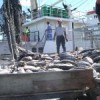
TRADE: ''You Have to Be Rich To Live in This World''
‘‘The globalisation train is moving. It is up to us as developing countries to run fast enough to catch it. Whether we like or not, globalisation is unavoidable. We should accept and adapt to it to be able to benefit from its advantages.’’
DEVELOPMENT-INDIA: Cotton Farmers in Distress – Relief Given Elsewhere
On Mar. 4, barely four days after Indian Finance Minister P. Chidambaram announced a mammoth loan waiver for farmers, 55-year-old Dattu Chaudhary, who owned 3 hectares (ha) of land committed suicide in Nara village in Maharashtra state.
DEVELOPMENT-INDIA: Subsidies Cornered by Politically Powerful
An intensifying agrarian crisis claimed the life of at least one cotton farmer every day last year in Maharashtra, western India. But government subsidies were monopolised by the state’s powerful sugar lobby.GLOBALISATION: So, Back to Regulation, Then
The financial crisis around the world marks the end of neo-liberal globalisation and the beginning of a new era of regulation of the global economy, political leaders and economists say.DEVELOPMENT: Services Needs Poorly Served
Developing countries say they are unlikely to secure meaningful market access for their short-term contractual and independent services providers in developed countries during the ongoing Doha trade talks.DEVELOPMENT: Women Seek to Put Equality at Core of Doha
When the second international conference on Financing for Development (FfD) takes place in Qatar come November, women activists are planning to pitch their tents in the capital of Doha in an attempt to demand concrete commitments for "gender equality" and "gender empowerment" from the 192 U.N. member states.MAURITIUS: There Is Life After 40 Years of Trade Preferences
‘‘The days of trade preferences and of cheap food are over. We are living in an era of competition and we have no choice but to reduce our costs of production.’’INDONESIA: Women Still Pay Decade After Asian Meltdown
Over a decade after the Asian financial crisis, Indonesian women are still feeling the pinch of losing their jobs, says a leading trade unionist from the archipelago.EUROPE: Water Aid To Go Public, A Little
The European Commission has indicated that it will take steps to address claims that private firms have been given preferential treatment in a flagship aid programme for improving water services in Africa.RIGHTS: Fund to Fight Gender Violence Puts Donors to the Test
The U.N. "Trust Fund to End Violence against Women" has risen significantly over the last year: from 3.5 million dollars in 2006 to over 15 million dollars in 2007.RIGHTS: Gender Equality Gets a Drop of the Funding Bucket
The United Nations has never run out of statistics to reinforce its arguments against one of the most troubling issues the world over: gender discrimination.RIGHTS: U.N. Budgeting Bypasses Women
When the Commission on the Status of Women (CSW) holds a two-week session beginning next Monday, one of the lingering issues high on the agenda will be the continued under-funding of women’s activities at the United Nations.DEVELOPMENT: Helsinki Follow-Up to Stress Inclusive Governance
Government and civil society representatives from Africa, Europe, and other regions of the world are meeting here beginning Nov. 27 to examine issues of globalisation - from peace and security, environment and energy policy, to respect for human rights, and financing for development.
COMMONWEALTH: "Get Rid of Your Agricultural Subsidies" – McKinnon
The political crisis in Pakistan and global trade negotiations are amongst issues set to dominate the Commonwealth Heads of Government Meeting (CHOGM) that starts Friday in the Ugandan capital, Kampala.« Previous Page


The Week with IPS

NEXT STOP - SDGs
Tracking global progress towards a sustainable world
Tracking global progress towards a sustainable world
