Languages
Wednesday, September 23, 2026



News and Views from the Global South
Beyond Doha: Better Financing for Development
ECONOMY-SRI LANKA: Business as Usual Despite Rights Record
Is Sri Lanka's bloody ethnic conflict and dismal human rights record an issue for international corporations and multinationals doing business in the country? Business leaders and rights activists are divided on this.
Q&A: Of Elephants, Mice and Fleas
Sylvia Borren was executive director at Oxfam Novib from 1999 until Feb 2008. Before that she was programme director.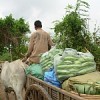
CAMBODIA: Seeing Opportunity in Rising Food Prices
Cambodian government sees opportunity for this impoverished country in the global rise in food prices that could help turn the fortunes for its agrarian economy.RIGHTS: Women’s Groups Push for Gender-Sensitive Budgets
As women's groups and political activists intensify their global campaign for gender empowerment, there is a growing trend towards "gender budgeting" both among developed and developing nations.DEVELOPMENT: Sweden, Ireland, Britain Lead in Aiding Africa
Sweden, Ireland and Britain top an index of 21 rich countries that ranks their commitment to help develop African nations. The United States, the world's largest economy, was a distant thirteenth, while Japan remains the least committed to the continent among rich nations.ENVIRONMENT-ASIA: Mekong Commission Fends Off Credibility Charges
The head of the Mekong River Commission (MRC) has defended the regional body against charges that it faces a crisis of credibility arising from inability to guide hydropower development on the Mekong mainstream.CHINA: Buying Farmland Abroad, Ensuring Food Security
Rattled by rapidly rising global grain prices, China is looking at strategies to ensure long-term food security for its 1.3 billion people such as procuring farmland overseas and opposing the formation of any international grain price- fixing monopolies.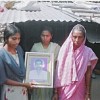
INDIA: Gov't Leaves Farmers to the Mercy of Moneylenders
There is no let up in farmers’ suicides, say activists urging the Indian government to extend its loan waiver offer to more agriculturists in western Maharashtra and central Madhya Pradesh states where the agrarian crisis is most severe.DEVELOPMENT: Food Crisis Linked to Doha Deal
The issue of rising food prices was raised at the WTO's General Council meeting Wednesday, and for the first time, discussed in some detail. But there remains, as one African delegate put it, "a lot of confusion about the rising prices of commodities and the Doha Round. Somebody needs to demystify the links. The D-G (Director-General) is using this as a bait to catch us on concluding the Round as soon as possible."ASIA: Food Crisis Adds to Women’s Burden
As if the burdens they shoulder are not enough, Asia’s women are being compelled to bear the additional weight of rising food prices, say women’s rights activists from across the region.ARGENTINA: Training Health Agents to Reduce Child Mortality
An ambitious new programme for training health agents to help reduce infant mortality in small rural communities and indigenous villages, launched by one of Argentina’s best-known human rights groups, drew many more applicants than the organisers had hoped for.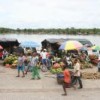
LATIN AMERICA: Eliminating Poverty at Low Cost
The success of pioneering efforts to reduce inequality and poverty using relatively few resources has led to an expansion in Latin America of direct aid, targeting the most vulnerable families, especially in rural areas.EUROPE: Subsidies Feeding Food Scarcity
European subsidies for agriculture are contributing to rapidly rising food prices and the destruction of small-scale farming in the South, experts say.Q&A: “Transgenic Seed Companies Lie and Bribe”
Biotech corporations that developed genetically modified seeds are bribing authorities and carrying out costly advertising campaigns "plagued with lies in order to create monsters that attack life," says Jesús León Santos, an indigenous man who is one of this year's winners of the Goldman Environmental Prize.TRADE: UNCTAD Hears Gender Inequality Becoming Worse – and Better
The only way that the poor, particularly women, will benefit from all the efforts that the United Nations Conference on Trade and Development (UNCTAD) has put into improving global trade is to ensure that power inequalities are redressed.RIGHTS: Development Financing Still Gender-Blind
When the U.N.'s Economic and Social Council (ECOSOC) held a special high-level meeting to discuss the new challenges facing the international community, the focus was largely on the credit crisis, rising commodity prices, declining development aid and the devastating impact of climate change on developing nations.TRADE: Fair Is Not Easy
From its humble beginnings in the 1950s, the fair trade movement has gone from selling coffee at left-wing political meetings to having whole sections devoted to its fruit and chocolate products in European supermarkets. The last five years have been especially buoyant; after witnessing annual growth rates of up to 40 percent, the sale of fair trade products hit 2 billion euros (3.2 billion dollars) in 2007.LATIN AMERICA: 'Development Must Be Inclusive"
The Latin American Economic System (SELA) will promote a regional secretariat on social inclusion, "based on the idea that development, to be worthy of the name, must be inclusive," said the regional body’s new permanent secretary, José Rivera.
POLITICS: Democracy Unfinished
A new report by the Geneva-based Inter Parliamentary Union (IPU) has shown that women are changing the priorities and sometimes the tone of legislatures around the world. But, it also highlights the slow pace at which the number of parliamentary seats held by women is increasing.ITALY: New Govt Asked to Deliver on Development
Civil society groups are asking the new Italian leadership to prioritise official development aid. Italy's credibility is at stake, they say.GLOBALISATION: New Curbs on Investment From the South
Germany's decision to introduce controls on investments from the South in strategic domestic sectors is yet another indicator of growing protectionism in European and other industrialised countries against the neo-liberal globalisation they once masterminded.« Previous Page — Next Page »


The Week with IPS

NEXT STOP - SDGs
Tracking global progress towards a sustainable world
Tracking global progress towards a sustainable world
