Languages
Friday, October 23, 2026



News and Views from the Global South
Beyond Doha: Better Financing for Development
SPAIN: Debt Write-Off, Development Funds for Bolivia
Bolivian President Evo Morales wound up a three-day official visit to Spain Tuesday with a financial aid commitment from the Spanish government - in the form of a debt-for-development swap - and a reciprocal agreement to allow Bolivians and Spaniards resident in each other's countries to vote in local elections.DEVELOPMENT: NGOs Question World Bank’s Clean Energy Roadmap
The World Bank's 2010 World Development Report (WDR), released Tuesday, calls on the developed world to lead global efforts to cut carbon emissions, but some civil society groups remain highly sceptical of the bank's role in brokering climate finance.
BRAZIL: Art is the Best Education
A broad range of projects in Brazil are using ballet and folk dances, classical and popular music, theatre, circus arts, capoeira - an Afro-Brazilian combination of dance and martial arts - fashion, visual arts and the audiovisual media to reach disadvantaged and at-risk children.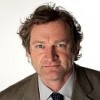
Q&A: The World Needs a Marshall Plan for Climate Change
When world leaders meet for a mega talk-fest on climate change at the United Nations in late September, the focus will be more on politics and less on finance.
URUGUAY: Development from the Ground Up
Putting people, not the economy, at the centre of development by coordinating and designing initiatives based on the interests of the target populations themselves is the goal of the Support to Territorial Networks (ART) programme, which is growing year after year in Uruguay.HAITI: Aid Flowing, But Food Crisis Drags On
Though beleaguered with their own financial problems, donor countries say they are not planning to withdraw financial support for cash-strapped Haiti.FINANCE: Africa Wants Greater Voice at IMF
Civil society in Kenya has urged the International Monetary Fund (IMF) for greater representation within its decision making boards and the formation of a dispute resolution body.
Q&A: Geopolitics Antithetical to Human Development
Sam Worthington is the president and CEO of InterAction, a coalition of 175 U.S.-based non-governmental organisations (NGOs) that focus on aiding the world's most poor and vulnerable people.G8: Some Aid Can be Hard to Stomach
As numbers go, and as expectations went, 20 billion dollars would be a fair bit for the G8 to produce to fight the food crisis and bring down hunger. Certainly, it was more than most expected.
POPULATION: Poorest Countries to Bear Brunt of Growth
The world's population - already at least 6.7 billion people - will double in the next 40 years if current growth rates are left unchecked, warns the United Nations Population Fund (UNFPA).HEALTH: Private Sector Boosts Public Toilets in Poorer Nations
The United Nations is disappointed that most governments in the developing world have made relatively little progress in providing basic sanitation facilities to nearly 2.5 billion people who still have no access to toilets.HEALTH: Gender Finally Moving to Forefront of AIDS Fight
With women now comprising 61 percent of all people infected with HIV in Sub-Saharan Africa, international donors, governments and advocacy organisations are looking more closely at the connections between HIV/AIDS and gender inequality.POLITICS: U.N. Decries Aid Shortfall in Afghanistan
The United Nations, which has expressed disappointment over the slow disbursement of development aid to crisis-stricken Afghanistan, has hurled one of its biggest political insults at Western donors: threatening to turn to a U.S. philanthropist for financial assistance.POLITICS: U.N. Plan for Financial Crisis Derided as Weak
When the General Assembly adopted a proposed plan of action aimed at overcoming the global financial crisis, one of the political surprises was that all 192 member states gave their blessings to the wide range of proposals spelled out in an "outcome document".DEVELOPMENT: Not Another Missed Opportunity, Civil Society Urges
A coalition of civil society organisations called the Global Social Economy Group (GSEG) is pressing for the immediate and long-term financing needs of developing countries to take centre-stage at the U.N. Conference on the World Financial and Economic Crisis.
ECONOMY: "Patching Up Bretton Woods Makes No Sense"
The world community must take immediate action to overhaul the current global financial system – that's what a vast majority of political leaders and policymakers from the developing world who are attending a three-day U.N. conference on the global economic crisis are saying.DEVELOPMENT: Western Aid Declines, Financial Bailouts Mount
As the world's poorer nations warn about the gravity of the global financial crisis on their fragile economies, the United Nations has exposed the hypocrisy of Western donors who cry poverty even while they raise trillions of dollars to rescue their beleaguered financial institutions.
ECONOMY: More Democracy the Cure for Broken System, U.N. Says
The United Nations General Assembly kicked off a three-day conference on the world financial crisis Wednesday with calls for a substantial overhaul of the decades-long model under which the world's richest countries set the terms of global fiscal and trade policy.DEVELOPMENT: China Lends Support to U.N. Finance Summit
China has lent its support to a U.N. finance summit where developing countries are pressing to air their grievances over how the global economic crisis has affected the world’s poorest. Yet, for the largest developing country the crisis remains a debacle with a silver lining - a matchless opportunity to accomplish its dream of regaining the regional and global clout it once held, and fast forward its ambitions.
ARGENTINA: Huge Loan to Flow into ‘Open Sewer’ River
Local residents and environmentalists are eyeing with cautious optimism a major loan from the World Bank to the Argentine government to clean up the Matanza-Riachuelo river that runs through Buenos Aires - the country's most polluted waterway.
Q&A: U.N.’s Enormous Potential Being Marginalised
An international conference on the global financial crisis - hosted by the United Nations - is being marginalised by Western countries which have refused to send any of their political leaders to the meeting.« Previous Page — Next Page »





The Week with IPS

NEXT STOP - SDGs
Tracking global progress towards a sustainable world
Tracking global progress towards a sustainable world
