Languages
Sunday, October 25, 2026



News and Views from the Global South
Burma
POLITICS-BURMA: Mass Amnesty for Prisoners Signals New Era
Burma’s military leaders have signaled the start of a new political era with the release of 9,002 prisoners, including several key political detainees.RIGHTS-BURMA: Monks Jailed, Disrobed For Challenging Junta
In military-ruled Burma the jails are filling up with Buddhist monks. Currently, 136 members of the clergy are behind bars, most of them in the notorious Insein Prison in Rangoon, the former capital.BURMA: Suu Kyi – A Living Legend
Nyo Ohn Myint still remembers the moment, 20 years ago, when the legend of Aung San Suu Kyi began. He was there when she gave a stirring speech and became the symbol of hope for a country under the oppressive grip of military rule since 1962.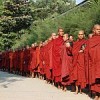
BURMA: No Photo Op for Gambari
A United Nations-led effort to push political reform in military-ruled Burma plunged to a humiliating low on the weekend, raising questions about the effectiveness of the world body’s special envoy to the country, Ibrahim Gambari.BURMA: Expats Keep Democracy Hopes Alive
Aung Moe Zaw still lives in the hope that democracy will take root in Burma, 20 years after hundreds of thousands of people took to the streets in Rangoon to oppose that country’s military dictatorship. ‘’More people have joined our democracy movement. We are very optimistic about it,’’ the 41-year-old said in an interview on the eve of that anniversary better known in Burma as ‘8-8-88’, the day when this spirit of democracy flowered, Aug. 8, 1988.BURMA: Females Hit Worst by Cyclone Nargis – Report
Nearly three months after the powerful Cyclone Nargis tore through Burma’s Irrawaddy Delta, it has emerged that the majority of those who died in the devastated area were women.BURMA: UN Missions Draw Derision
In their hour of despair, Burma’s beleaguered people continue to find comfort in humour. New jokes reflect new frustrations. The latest target is Ibrahim Gambari, United Nations special envoy for Burma.SOUTH-EAST ASIA: Offer to Release Suu Kyi a Ploy?
Reacting to growing international pressure Burma’s military regime has said it will consider releasing the pro-democracy leader Aung San Suu Kyi from house arrest in six months.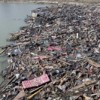
BURMA: One Million Survivors Not Yet Reached – U.N.
U.N. officials are giving the impression that the world body is making headway in helping the millions of survivors in Burma’s cyclone-hit Irrawaddy Delta.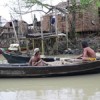
BURMA: Crime for Civil Society to Provide Relief?
The detention of a prominent comedian in Burma points to an ominous turn of events in the military-ruled country. It has reportedly become a ‘crime’ for individuals and civil society groups to provide emergency relief to the hundreds of thousands of cyclone victims.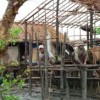
BURMA: Nargis Victims Forced From Camps
A global human rights lobby slammed Burma’s military regime for driving survivors who have endured untold hardship since last month’s powerful cyclone into further misery.BURMA: Thousands of Children Orphaned By Nargis
Ko Ko Aung remembers the moment when he thought he had lost his older brother, Wai Yan Soe, to the powerful waters that tore through their house on the night Cyclone Nargis struck, one month ago.BURMA: ASEAN Steps in Where Others May Not Tread
Four weeks after Cyclone Nargis swept through the populous Irrawaddy Delta in Burma, a regional effort to help the victims is slowly grinding into shape.BURMA: Did Cyclone Nargis Kill 300,000 People?
Three weeks after Cyclone Nargis crashed through Burma’s populous Irrawaddy Delta, the country’s military regime has been more forthcoming about the number of buffaloes and chickens that perished than on human casualties.
BURMA: Earthquake Lets China Off the Hook
The outpouring of global sympathy in the aftermath of the deadly Sichuan earthquake has shifted the focus away from China’s role and influence in cyclone-stricken Burma, quieting critics.
ENVIRONMENT-BURMA: 'Mangrove Loss Exacerbated Cyclone Devastation'
When researchers surveyed the battered coastlines of Asian countries after the December 2004 tsunami, they stumbled upon an arresting fact - that mangroves can save lives.BURMA: Public Health Ailing Even Before Cyclone Struck
Even before Cyclone Nargis tore through Burma’s populous Irrawaddy Delta, the country’s public health system was ailing. It struggled to survive on a slow drip of funds from the state’s coffers.POLITICS: Burma Fears Politicisation of Humanitarian Crisis
The United Nations, which has accelerated its pace of humanitarian assistance to cyclone-devastated Burma (Myanmar), is making little or no progress in dealing with the country's military leaders - both at a political and personal level.
BURMA: Foreigners, Cameras Banned in Cyclone-Hit Areas
Images of the dead keep trickling out of Burma. The most moving are those of children who died when Cyclone Nargis tore through their world in the populous Irrawaddy delta.
BURMA: 'Junta Aid Blocks Could Multiply Cyclone Toll'
Burma’s military regime may soon face charges of allowing tens of thousands of its own people to die through incompetence and bureaucratic red-tape placed in the way of international relief efforts for over one million cyclone victims in the country.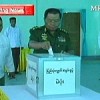
BURMA: Junta Holds Referendum in Cyclone Aftermath
Shortly after sunrise on Saturday, a few men and women in this town on the banks of a river broke their morning routines to cast ballots - an act unusual in the military-ruled country.« Previous Page — Next Page »





The Week with IPS

NEXT STOP - SDGs
Tracking global progress towards a sustainable world
Tracking global progress towards a sustainable world
