Languages
Saturday, September 19, 2026



News and Views from the Global South
Changing Lives: Making Research Real

HEALTH-SAO TOME: The Forest is the Pharmacy
If you live in São Tomé, a good investment in your health is to plant a po-sabom tree (Dracaena aroborea) in your backyard. Leave space: it can grow up to 20 metres high, with sword-shaped leaves.
DEVELOPMENT-AFRICA: Women in Pursuit of Knowledge
While Africa is still far from having adequate capacity for scientific innovation, women are more and more present in the field of research for the continent's sustainable development.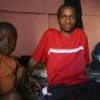
HEALTH-SOUTH AFRICA: Returning Sick – HIV, Illness, Death and Migration
It's a Wednesday afternoon at the Joe Gqabi bus terminus in Philippi, Cape Town, and ticket touts scramble to recruit passengers wanting to travel to the rural Eastern Cape, a 1,000 kilometre, 16-hour haul away.DEVELOPMENT: World’s Poor Offer Lessons in Bank Study
To be successful, poverty-reducing programmes must be informed by the lives and experiences of the millions of poor people around the world and emphasise economic opportunity, says a study released Wednesday by the World Bank.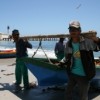
ENVIRONMENT: Climate Change Threatens Livelihoods Along Africa's Coast
Environmental experts warn that climate change will lead to oceanic acidification and increase surface water temperatures, especially around the African continent.
TECHNOLOGY: Fab Labs Channel Your Inner Scientist
Inside the confines of a modest 275-square-metre office space in this southern California city, the human imagination is running wild.HEALTH-AFRICA: Who Is To Blame for the Crisis?
Health systems on the continent are riddled with inadequate policies, strategies, lack of institutional capacity, poor scientific review mechanisms and weak funding for research in the public and private sector, said Luis Sambo, regional director of the World Health Organisation (WHO) in Africa.KENYA: Failing Grade For Free Primary Education?
When in 2003 Kenya followed its neighbours Ethiopia, Tanzania, Uganda and Malawi in introducing free and compulsory primary education for all, the response from the public as well as international donors was overwhelming.RIGHTS-EGYPT: New Family Laws: A Success Story?
It was a love story of sorts and one that led to marriage. But 18 months later Nayrouz filed for divorce, making her part of a growing number of Egyptian women who are leaving their marriages. One in three marriages in this highly traditional and predominantly Muslim society fails within its first year, according to government figures.
DEVELOPMENT: Signs of Hope for Ethiopia’s Children
Amid the hardship facing Ethiopia's children, there are signs that conditions may be improving and that children's lives are changing for the better.AFRICA: Research and Tradition Could Save Environment
Africa risks losing up to 50 percent of its indigenous species over the next century due to global warming.KENYA: Predicting Weather With Science and Spider Webs
When the magungu bird flies higher in the sky than usual and seems to float in the air in its passage from south to north, the Abasuba people living on the islands of Kenya's Lake Victoria and on the highlands near the lake know the rains are on their way and that it is time to plant.ENVIRONMENT-KENYA: Threat to Pastoralists' Way of Life
Ole Kaparo works as a school teacher in Nairobi, though his family still herds cattle in the Masai pastures of the north Rift Valley province. Five years ago, during a prolonged spell of drought, he left this traditional life to seek work in the city.
EGYPT-REFUGEES: Stepping Stones Across the Desert
"When I left Darfur, I left the hell of death and entered the hell of life. That is the only difference," said Galoud*, one of the many Darfuri refugees who have escaped to Egypt.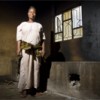
DEVELOPMENT-TANZANIA: Lighting Up Women’s Lives
Anneth Laizer shoved her kerosene lantern onto the top shelf and switched on the lights after her home in Tanzania's third-largest city, Arusha, was connected to electricity earlier this year.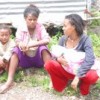
DEVELOPMENT-ETHIOPIA: Understanding Poverty's Impact on Children
When the school bell rings, Alemtsehay and her three younger sisters rush home to change out of their school uniforms and into tattered clothes to go out begging around Bole Road, one of Addis Ababa's smarter areas.Q&A: Finding New Ways To Reach Farmers
When beekeepers in central and eastern Uganda got vouchers to go online at internet cafés, their most popular query was how to treat bee stings. A local agricultural information provider replied in Baganda, the local language.SOUTH AFRICA: Measuring the Carbon Footprint of Fruit and Wine
In an effort to stay competitive in a global market where increasing demands are made by consumers for 'green' products, South African fruit and wine farmers have launched an initiative to determine the environmental impact of their industries. The research could challenge the idea that exported products from the developing world have a higher environmental cost.
DEVELOPMENT: Escaping the Poverty Trap
What do they have in common - the landless widow with a deaf son in Bangladesh, the 12-year-old miner in Kyrgyzstan, the Ugandan farming couple with 12 children and the South African domestic worker who loses her home when her husband dies and her job when she breaks a leg? They, and their children, are trapped in chronic poverty, even as their countries show economic growth.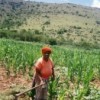
SOUTHERN AFRICA: Digging for Hope in Land Reform
Through the difficulties facing the land reform process in Zimbabwe, South Africa and Namibia, glimmers of hope are emerging. The challenge now is to seek lessons which enable newly settled farmers to create a livelihood.
POPULATION-KENYA: Women's Choices Change Cities
This year the world reaches an invisible but momentous milestone: for the first time in history, more than half its population will be living in urban areas. In Kenya, rapid urbanisation is creating deepening poverty among urban residents.« Previous Page — Next Page »


Research findings may be widely published in scientific journals, peer-reviewed and academically admired -- but are they filtering through to the public, and bringing about tangible improvements to everyday life? In partnership with www.research4development.info, IPS is seeking to answer these questions, enliven the debate about research, and help to ensure that it does indeed change lives.

The Week with IPS

NEXT STOP - SDGs
Tracking global progress towards a sustainable world
Tracking global progress towards a sustainable world

