Languages
Thursday, October 1, 2026



News and Views from the Global South
CIVICUS 2023

UAE Complicit in Sudan Slaughter
Sudan is the scene of unimaginable suffering. As war between army and militia continues, civilians are paying the highest price. Both sides are killing non-combatants and committing gross human rights crimes.
AFGHANISTAN: ‘The Doha Meeting Has Raised Concerns the UN Is Indirectly Legitimising the Taliban’
CIVICUS discusses the exclusion of women from international talks on Afghanistan currently being held in Qatar with Sima Samar, former chairperson of the Afghan Independent Human Rights Commission (AIHRC). The AIHRC is the Afghan national institution devoted to the promotion, protection and monitoring of human rights. Its status is now a matter of contention: on returning to power, the Taliban decreed its dissolution, but the AIHRC refuses to abide by the decision due to the illegitimate nature of the Taliban regime.

Namibia: LGBTQI+ Rights Victory amid Regression
In June, the Namibian High Court struck down two sections of the country’s Sexual Offences Act that criminalised consensual sexual relations between men, finding them unconstitutional. While hardly anyone has been convicted for decades, the fact that their relationships were criminalised forced gay men to live in fear, perpetuated stigma and denied them recognition as rights holders, enabling discrimination, harassment and abuse.
Myanmar: International Action Urgently Needed
Myanmar’s army, at war with pro-democracy forces and ethnic militias, must know it’s nowhere near victory. It recently came close to losing control of Myawaddy, one of the country’s biggest cities, at a key location on the border with Thailand. Many areas are outside its control.
IRAQ: ‘Tolerance for Abuses Against LGBTQI+ People Has Now Been Made Explicit Through Legislation’
CIVICUS discusses the criminalisation of same-sex relations in Iraq with Sarah Sanbar, researcher at Human Rights Watch’s Middle East and North Africa division.

Thailand’s LGBTQI+ Rights Breakthrough
At the height of 2024 Pride season, decades of civil society campaigning came to fruition in Thailand. With 130 votes for and only four against, on 18 June the Senate passed the Marriage Equality Bill. With a few strokes of the pen, the bill tweaked the language of the Civil and Commercial Code, replacing gendered references such as ‘man’ and ‘woman’ with gender-neutral ones such as ‘persons’ and ‘spouses’. It now goes for formal assent to King Maha Vajiralongkorn and will take effect 120 days after publication in the official bulletin.
EUROPE: ‘The Future of the EU as We Know Cannot Be Taken for Granted’
CIVICUS discusses the results and implications of recent elections to the European Parliament with Philipp Jäger, Policy Fellow at the Jacques Delors Centre, an independent, non-partisan think tank focused on European policy processes and outcomes.

New Caledonia: Time to Talk about Decolonisation
The violence that rocked New Caledonia last month has subsided. French President Emmanuel Macron has recently announced the suspension of changes to voting rights in the Pacific island nation, annexed by his country in 1853. His attempt to introduce these changes sparked weeks of violence.
Haiti: Transitional Administration Faces Stern Test
There’s been recent change in violence-torn Haiti – but whether much-needed progress results remains to be seen. Acting prime minister Garry Conille was sworn in on 3 June. A former UN official who briefly served as prime minister over a decade ago, Conille was the compromise choice of the Transitional Presidential Council. The Council formed in April to temporarily assume the functions of the presidency following the resignation of de facto leader Ariel Henry.
Venezuela’s Opportunity for Democracy
Venezuela’s 28 July presidential election could offer a genuine chance of democratic transition. Despite an array of challenges, the opposition is coming into the campaign unified behind a single candidate. Many Venezuelans seem prepared to believe that voting could deliver change. But the authoritarian government is digging in its heels. The opposition reasonably fears the election could be suspended or the government could suppress the opposition vote. Large-scale fraud can’t be ruled out.
India’s Election: Cracks Start to Show in Authoritarian Rule
India’s Hindu nationalist strongman Narendra Modi has won his third prime ministerial term. But the result of the country’s April-to-June election fell short of the sweeping triumph that seemed within his grasp. Modi’s Bharatiya Janata Party (BJP) has shed seats compared to the 2019 election, losing its parliamentary majority. Modi remains prime minister thanks to coalition partners. It’s a long way from the 400-seat supermajority Modi proclaimed he wanted – which would have given him power to rewrite the constitution.
Chad: Dictatorship Continues by Other Means
On 6 May, people went to the polls in Chad, ostensibly to elect a president who’d usher in democratic civilian rule. Ten days later, the Constitutional Council confirmed there’d be no change: the elected president was the leader of the military-backed transitional government supposedly handing over power, Mahamat Idriss Déby.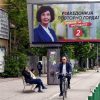
North Macedonia Turns Back the Clock
The old guard is back in North Macedonia, as the former ruling party – the Internal Macedonian Revolutionary Organization – Democratic Party for Macedonian National Unity (VMRO-DPMNE) – returns to parliamentary and presidential power.
Panama’s Elections: Has Impunity Prevailed?
Regional experts called it Panama’s most important election since the 1989 US invasion that deposed de facto president General Manuel Noriega. Panamanians went to the polls amid high inflation and unemployment, with a stagnating economy. Endemic corruption was also high on their long list of concerns, along with access to water, education and a collapsing social security system.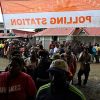
Solomon Islands: A Change More in Style than Substance
There’s change at the top in Solomon Islands – but civil society will be watching closely to see whether that means a government that’s grown hostile will start doing things differently.
Civil Society Scores LGBTQI+ Rights Victory in Dominica
On 22 April, Dominica’s High Court struck down two sections of the country’s Sexual Offences Act that criminalised consensual same-sex relations, finding them unconstitutional. This made Dominica the sixth country in the Commonwealth Caribbean – and the fourth in the Eastern Caribbean – to decriminalise same-sex relations through the courts, and the first in 2024.
Another Climate Victory in Europe… and Counting
A group of senior Swiss women recently won a powerful victory offering renewed hope for tackling climate change. Earlier this month, the European Court of Human Rights ruled that the government of Switzerland is violating human rights because it isn’t doing enough to cut greenhouse gas emissions.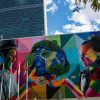
The Summit of the Future Is a Rare Chance to Fix a Broken System: Civil Society Must Be Included
Today, the spectre of a major regional conflict, and even a possible nuclear conflagration, looms large in the Middle East. Despite stark warnings issued by the UN Secretary-General, António Guterres, the multilateral system is struggling to resolve the very challenges it was supposed to address: conflict, impoverishment and oppression. In a deeply divided world, this September’s Summit of the Future offers a rare chance to fix international cooperation and make good on gaps in global governance.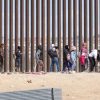
Migration in the Americas: A Dream That Can Turn Deadly
The Darién Gap is a stretch of jungle spanning the border between Colombia and Panama, the only missing section of the Pan-American Highway that stretches from Alaska to southern Argentina. For good reason, it used to be considered impenetrable. But in 2023, a record 520,000 people crossed it heading northwards, including many children. Many have lost their lives trying to cross it.
The Climate Alarm Is Ringing – It’s Time to Stop Silencing It
The heat records keep tumbling – 2023 was the hottest year in recorded history. Extreme weather events keep mounting up. And yet the voices most strongly calling for action to prevent climate catastrophe are increasingly being silenced.
Senegal’s Democracy Passes Crucial Test
The fact that Senegal’s election took place on 24 March was in itself a triumph for civil society. That an opposition candidate, campaigning on an anti-establishment and anti-corruption agenda, emerged from jail to become the continent’s youngest leader offered fresh hope for democracy.« Previous Page — Next Page »


The Week with IPS

NEXT STOP - SDGs
Tracking global progress towards a sustainable world
Tracking global progress towards a sustainable world
