Languages
Thursday, October 1, 2026



News and Views from the Global South
CIVICUS 2023
Global Governance: Time for Reform
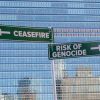
At last the UN Security Council has passed a resolution calling for an immediate ceasefire in Gaza. While stopping short of demanding a permanent end to the violence, it goes further than the world’s peak peace and security body had so far managed since the start of the current brutal phase of conflict in October. But the time it’s taken to get to this point signals an ongoing failure of global institutions to uphold human rights.
Democracy’s Contested Territory
This year more than half the world’s population has the chance to go to the polls. That might make it look like the most democratic year ever, but the reality is more troubling. Too many of those elections won’t give people a real say and won’t offer any opportunity for change.
Gender Rights: Resistance Against Regression
Global progress on gender rights has slowed almost to a halt. After decades of steady progress, demands for the rights of women and LGBTQI+ people now play out on bitterly contested territory. Over the course of several decades, global movements for rights won profound changes in consciences, customs and institutions. They elevated over half of humanity, excluded for centuries, to the status of holders of rights.
International Women’s Day, 2024
Progress Hinges on Feminist Leadership
Investing in inclusion requires more than electing and initiating women leaders. It requires a coordinated effort to change mindsets and systematically increase investments. This will allow feminist leaders, individually and collectively, to fully exercise their agency and counter targeted attacks on their safety and legitimacy.

Greece: Another First for LGBTQI+ Rights
After almost two decades of civil society campaigning, Greece’s parliament has passed a law enabling same-sex couples to marry and adopt children. It’s the first majority-Orthodox Christian country to realise marriage equality.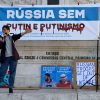
Russia: Moments of Dissent after Two Years of War
Russia’s full-scale invasion of Ukraine marked its second anniversary on 24 February. And while civil society is offering an immense voluntary effort in Ukraine, in Russia activists have faced intense constraints. The suspicious death of opposition leader Alexei Navalny is part of a great wave of repression. He’s the latest in a long list of people who’ve come to a sudden end after falling out with Vladmir Putin.
Pakistan’s Election Outcomes Leave Many Unhappy
Pakistan’s 8 February election has resulted in an uneasy compromise that few wanted or expected. There’s little indication the outcome is going to reverse recent regression in civic freedoms.
Myanmar’s Military Catastrophe: Three Years and Counting
The military must have expected an easier ride. Three years ago, it ousted Myanmar’s democratically elected government. But the coup has been met with fierce resistance, unleashing a bloody conflict with no end in sight.
Serbia’s Suspicious Election
Serbia’s December 2023 elections saw the ruling party retain power – but amid a great deal of controversy. Civil society has cried foul about irregularities in the parliamentary election, but particularly the municipal election in the capital, Belgrade. In recent times Belgrade has been a hotbed of anti-government protests. That’s one of the reasons it’s suspicious that the ruling Serbian Progressive Party (SNS) came first in the city election.
Guatemala’s Chance for a New Beginning
Guatemala’s new president, Bernardo Arévalo, was expected to be sworn in on 14 January at 2pm –the 14th at 14:00, as people repeated in anticipation for months. It was a momentous event – but it wasn’t guaranteed to happen.
Iran, Back to the Grim Normal
Iran’s time of public rebellion has ended. The protesters marching, chanting, and dancing under the ‘Woman, Life, Freedom’ banner have long stopped. And shifting regional dynamics may play to the regime’s favour.
Bangladesh: Election with a Foregone Conclusion
Bangladesh just held an election. But it was far from an exercise in democracy. Sheikh Hasina won her fourth consecutive term, and fifth overall, as prime minister in the general election held on 7 January. The result was never in doubt, with the main opposition party, the Bangladesh National Party (BNP), boycotting the vote over the ruling Awami League’s refusal to let a caretaker government oversee the election. This practice, abolished by the Awami League government in 2011, was, the BNP asserted, the only way to ensure a free and fair vote.
Sudan’s Conflict Needs Civil Society Solutions
It’s recently been reported that the two main protagonists of Sudan’s current conflict – leaders of the armed forces and militia at war since April – have agreed to face-to-face talks. The Intergovernmental Authority on Development (IGAD), an East African body, announced the potential breakthrough – although Sudan’s foreign ministry has since claimed IGAD’s statement is inaccurate, creating further uncertainty.
Latvia: A Vital First Step Towards Marriage Equality
Last month the Saeima, Latvia’s parliament, passed a package of eight laws recognising same-sex civil unions and associated rights. The new legislation came in response to a 2020 Constitutional Court ruling that established that same-sex couples have a constitutional right to the benefits and legal protections afforded to married opposite-sex couples.
Netherlands Latest Country to Tilt to the Right
The Netherlands is the latest country to lurch to the right amid the global cost of living crisis. Its November election saw maverick far-right populist Geert Wilders and his Party for Freedom (PVV) come first. A hardline Islamophobe who’s called for the Quran to be banned could be the next prime minister.
Argentina Plunges into the Unknown
For many of Argentina’s voters the choice on 19 November was between the lesser of two evils: Sergio Massa, the minister overseeing an economy with the world’s third-highest inflation rate, or Javier Milei, an erratic far-right libertarian outsider promising to shut down the Central Bank, adopt the US dollar as the currency, cut taxes and privatise public services.
Australia: Reconciliation Back to Square One?
Australia had the chance to take a step forward in redressing the exclusion of its Indigenous people – and chose not to. In a referendum held in October, voters rejected a constitutional amendment to establish an institution for Indigenous people to have a say on matters that concern them.
COP28: Climate Summit in Closed Civic Space
The need to act on the climate crisis has never been clearer. In 2023, heat records have been shattered around the world. Seemingly every day brings news of extreme weather, imperilling lives. In July, UN Secretary-General António Guterres grimly announced that ‘the era of global boiling has arrived’.
Argentina: Unpalatable Choices in Election Plagued with Uncertainty
For many of Argentina’s voters the choice in the 19 November presidential runoff is between the lesser of two evils: Sergio Massa, economy minister of a government that’s presiding over a once-in-a-generation economic meltdown with a whopping 140-per cent inflation rate, or Javier Milei, a far-right libertarian who admires Donald Trump, wants to shut down the Central Bank and wields a chainsaw in public as a symbol of his willingness to slash the state. Many will rue that it ever came to this.
Mauritius Begins to Correct a Historic Wrong Towards LGBTQI+ People
In response to lawsuits brought by LGBTQI+ activists, the Mauritius Supreme Court has issued two landmark judgments striking down the criminalisation of consensual sex between adult men as unconstitutional. Its reasoning turned upside down the argument used by anti-rights forces to attack LGBTQI+ activists in many African countries: it acknowledged that criminalisation is the foreign import rather than gay sex, and a relic of colonialism it’s high time to shake off.
Brazil: A Step Forward for Indigenous Peoples’ Rights
Brazil’s Supreme Court has delivered a long-awaited ruling upholding Brazilian Indigenous peoples’ claims to their traditional land. It did so by rejecting the ‘Temporal Framework’ principle, which only allowed for the demarcation and titling of lands physically occupied by the Indigenous groups who claimed them by 5 October 1988, when the current constitution was adopted. This excluded the numerous Indigenous communities who’d been violently expelled from their ancestral lands before then, including under military dictatorship between 1964 and 1985.« Previous Page — Next Page »


The Week with IPS

NEXT STOP - SDGs
Tracking global progress towards a sustainable world
Tracking global progress towards a sustainable world
