Languages
Tuesday, September 29, 2026



News and Views from the Global South
CIVICUS 2023

‘Australia Must Turn Its Climate Rhetoric into Action’
CIVICUS discusses the recent Pacific Islands Forum (PIF) meeting in Tonga with Jacynta Fa’amau, Pacific Campaigner at 350.org, a global civil society organisation campaigning for climate action.
Georgia’s Dangerous Anti-LGBTQI+ Law
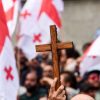
Georgia’s ruling party has put LGBTQI+ people firmly in the firing line ahead of next month’s election. On 17 September, parliament gave final approval to a highly discriminatory law that empowers the authorities to censor books and films with LGBTQI+ content, stop discussion of LGBTQI+ issues in schools, ban people from flying rainbow flags and prevent Pride events. The law excludes LGBTQI+ people from adopting children, bans gender affirmation surgery and refuses to recognise same-sex marriages of Georgians conducted abroad.
‘We Need Competitive Elections so Only Truly Committed States Are Elected to the UN Human Rights Council’
CIVICUS discusses the upcoming election of new members of the United Nations (UN) Human Rights Council with Madeleine Sinclair, New York Office Director and Legal Counsel at the International Service for Human Rights (ISHR).
A UN 2.0 Needs Robust People’s Civil Society Participation
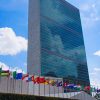
A cascade of crises endangers our world. Wars conducted without rules, governance devoid of democratic principles, surge in discrimination against women and excluded groups, accelerating climate change, greed-induced environmental degradation and unconscionable economic deprivation in an age of excess are threatening to roll back decades of human progress made by the international community.
TOGO: ‘The International Community Must Send a Clear Message That Power Grabs Won’t Be Tolerated’
CIVICUS discusses the crackdown on civil society in Togo with a human rights defender who asked to stay anonymous for security reasons.

INDIA: ‘Civil Society Organisations Are at the Forefront of the Fight Against Gender-based Violence’
CIVICUS discusses the recent wave of protests against gender-based violence (GBV) in India with Dr Kavitha Ravi, a member of the Indian Medical Association (IMA).

New Zealand: Māori Rights in the Firing Line
A New Zealand bill that would roll back Indigenous rights is unlikely to pass – but it’s emblematic of a growing climate of hostility from governing politicians. A recent survey shows that almost half of New Zealanders believe racial tensions have worsened under the right-wing government in power since December 2023.
VIETNAM: ‘Human Rights Conditions Will Likely Worsen as the Country Descends into a Police State’
CIVICUS discusses recent leadership changes in Vietnam with David Tran, coordinator of the Alliance for Vietnam’s Democracy, a civil society platform that promotes democracy in Vietnam and the region through international cooperation and the strengthening of local civil society.

Climate Activists Target Culture Greenwashing
Civil society is working on all fronts to tackle the climate crisis. Activists are protesting in numbers to pressure governments and corporations to cut greenhouse gas emissions. They’re using non-violent direct action and high-profile stunts, paying a heavy price as numerous states criminalise climate protest.
UK: ‘Many in the Climate Justice Movement Are Finding Creative and Imaginative Ways to Protest’
CIVICUS speaks with Chris Garrard, co-founder and co-director of Culture Unstained, about the campaign to end fossil fuel sponsorship of cultural institutions, which oil companies use to try to present a positive public image.

Venezuela Struggles to Hold on to Hope
There was an unusual sense of hope going into Venezuela’s 28 July presidential election. Democracy seemed on the horizon. María Corina Machado, the opposition’s rallying figure, had inspired a rare level of enthusiasm, promising millions of exiles they’d soon be able to return to a new Venezuela.
ECUADOR: ‘We demand that the violation of the rights of nature be recognised and reversed’
CIVICUS speaks with Darío Iza Pilaquinga, president of the Kitu Kara People of the Kichwa nationality of Ecuador, about a historic court ruling that applied a constitutional provision recognising the rights of nature.
Cambodia’s Young Environmental Activists Pay a Heavy Price
It’s risky to try to protect the environment in authoritarian Cambodia. Ten young activists from the Mother Nature environmental group have recently been given long jail sentences. Two were sentenced to eight years on charges of plotting and insulting the king. Another seven were sentenced to six years for plotting, while one, a Spanish national banned from entering Cambodia, was sentenced in absentia.
SUMMIT OF THE FUTURE: ‘The UN Secretary-General Underestimated the Difficulty of Reaching Consensus’
CIVICUS discusses the upcoming Summit of the Future with Renzo Pomi, who represents Amnesty International at the United Nations (UN) in New York.

Eswatini: Jailing of Politicians the Latest Act of Repression
Two politicians have just been sentenced to long prison terms in Eswatini. Their crime? Calling for democracy. Mthandeni Dube and Bacede Mabuza, both members of parliament (MP) at the time, were arrested in July 2021 for taking part in a wave of pro-democracy protests that swept the southern African country. A third MP, Mduduzi Simelane, remains subject to an arrest warrant after going into hiding.
USA: ‘The Stakes in the 2024 Election Are Incredibly High for the Fate of US Democracy’
CIVICUS discusses the recent US Supreme Court ruling on presidential immunity and its potential impact on the 5 November presidential election with Ciara Torres-Spelliscy, a professor of Law at Stetson University College of Law.

Kenya’s Protests: More than a Question of Tax
Kenya’s President William Ruto has withdrawn the tax-increasing Finance Bill that sparked mass protests. He has sacked his cabinet and the head of the police has resigned. But the anger many feel hasn’t gone away, and protests continue. The protests have brought Kenya’s Gen Z onto the political stage, with young people – over 65 per cent of the population – at the forefront. Since the protests began, they’ve made full use of social media to share views, explain the impact of proposed changes, organise protests and raise funds to help those injured or arrested.
BRAZIL: ‘The Law Should Protect Women and Girls, Not Criminalise Them’
CIVICUS discusses abortion rights in Brazil with Guacira Oliveira, director of the Feminist Centre for Studies and Advice (CFEMEA). CFEMEA is an anti-racist feminist organisation that defends women’s rights, collective care and self-care and monitors developments in Brazil’s National Congress.

The UK’s Chance for Change
The political tide has turned in the UK – and civil society will be hoping for an end to government hostility. The 4 July general election ended 14 years of rule by the right-wing Conservative party. The centre-left Labour party has returned to power, winning 411 out of 650 parliamentary seats.
HLPF 2024: Protecting Civic Space Critical for SDGs Success
Each year the international community comes together at the UN’s headquarters in New York to take stock of progress on sustainable development. This year’s High-Level Political Forum (HLPF) is being held between 8 and 18 July. Representatives from 36 countries, as per the UN HLPF website, will showcase their achievements on commitments outlined in the 2030 Agenda for Sustainable Development, presenting their Voluntary National Reviews (VNRs).
UAE Complicit in Sudan Slaughter
Sudan is the scene of unimaginable suffering. As war between army and militia continues, civilians are paying the highest price. Both sides are killing non-combatants and committing gross human rights crimes.« Previous Page — Next Page »


The Week with IPS

NEXT STOP - SDGs
Tracking global progress towards a sustainable world
Tracking global progress towards a sustainable world
