Languages
Monday, September 28, 2026



News and Views from the Global South
CIVICUS 2023

‘Areas Essential to the Global Climate Are Being Threatened by Economic Projects’
CIVICUS discusses activism against oil auctions in the Democratic Republic of the Congo (DRC) with François Kamate, founder and coordinator of the young environmental volunteer movement Extinction Rebellion Rutshuru.
Kenya’s Shadow War on Activism
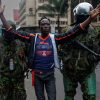
Kenya’s young protesters are paying a high price for speaking out. Last June, a protest movement led by first-time activists from Generation Z emerged in response to the government’s Finance Bill, which would have introduced sweeping tax increases. The government quickly withdrew its plans, but protests continued, articulating anger at economic strife, elite corruption and out-of-touch politicians. The government’s response has been violent. Police have used batons, teargas and water cannon against protesters. On the worst day of violence, 25 June, when some protesters attempted to storm parliament, police fired live ammunition. Over 60 people were reported killed during the protests. At least 1,200 were reportedly arrested.
‘The Closure of Meta’s US Fact-Checking Programme Is a Major Setback in the Fight Against Disinformation’
CIVICUS speaks with Olivia Sohr about the challenges of disinformation and the consequences of the closure of Meta’s fact-checking programme in the USA. Olivia is the Director of Impact and New Initiatives at Chequeado, an Argentine civil society organisation working since 2010 to improve the quality of public debate through fact-checking, combating disinformation, promoting access to information and open data.

Colombia’s Historic Child Marriage Ban
Colombia has just marked a historic milestone in the global campaign against child marriage, with the Senate passing one of Latin America and the Caribbean’s most comprehensive bans on child marriage and early unions. In a country where one in five girls under 18 and one in 10 under 14 are married or live in marriage-like conditions, the new law raises the minimum age to 18 with no exceptions, eliminating a 137-year-old Civil Code provision that allowed children over 14 to marry with parental consent. This achievement aligns with goal 5 of the Sustainable Development Goals (SDGs), which has a target of eliminating harmful practices like child marriage by 2030. The new law now awaits the signature of President Gustavo Petro to come into effect.
‘Digital platforms amplify the Israeli narrative while systematically silencing Palestinian voices’
CIVICUS discusses the challenges Palestinian civil society faces in resisting digital suppression and advocating for justice with Palestinian lawyer and researcher Dima Samaro.

Civil Society Trends for 2025: Nine Global Challenges, One Reason for Hope
It's been a tumultuous year, and a tough one for struggles for human rights. Civil society’s work to seek social justice and hold the powerful to account has been tested at every turn. Civil society has kept holding the line, resisting power grabs and regressive legislation, calling out injustice and claiming some victories, often at great cost. And things aren’t about to get any easier, as key challenges identified in 2024 are likely to intensify in 2025.
‘The Election Is Just Another Tool to Keep Lukashenko in Power for as Long as Possible’
CIVICUS discusses the ongoing crackdown on civil society in Belarus with Natallia Satsunkevich, human rights defender and interim board member of the Viasna Human Rights Centre.

South Korea’s Democracy Defended
Democracy is alive and well in South Korea. When President Yoon Suk Yeol tried to impose martial law, the public and parliamentarians united to defend it. Now Yoon must face justice for his power grab.
‘My Father Was Arbitrarily Arrested and Convicted for Denouncing Government Corruption’
CIVICUS speaks with Ramón Zamora, son of Guatemalan journalist José Rubén Zamora, about restrictions on press freedom and the challenges of defending human rights in Guatemala.

‘Quilombola Communities Live in Fear Because the Laws That Are Supposed to Protect Them Are Ignored’
CIVICUS discusses threats to the security, rights and ancestral lands of Brazil’s quilombola communities with Wellington Gabriel de Jesus dos Santos, leader and activist of the Pitanga dos Palmares Quilombola community in Bahia state.

COP29 Falls Short on Finance
COP29, the latest annual climate summit, had one job: to strike a deal to provide the money needed to respond to climate change. It failed. This was the first climate summit dedicated to finance. Global south countries estimate they need a combined US$1.3 trillion a year to transition to low-carbon economies and adapt to the impacts of climate change. But the last-minute offer made by global north states was for only US$300 billion a year.
‘AI-powered Weapons Depersonalise the Violence, Making It Easier for the Military to Approve More Destruction’
CIVICUS discusses the dangers arising from military uses of artificial intelligence (AI) with Sophia Goodfriend, Post-Doctoral Fellow at Harvard Kennedy School’s Middle East Initiative.

‘The International Community Must Stop Turning a Blind Eye to the Suffering of Sudanese Women’
CIVICUS discusses Sudan’s civil war and its impact on women with Sulaima Elkhalifa, a Sudanese human rights defender and expert on gender-based violence.

‘Ending impunity for violations of Palestinians’ rights would strengthen global norms that protect all humanity’
CIVICUS discusses the gender dimensions of genocide in Gaza with Kifaya Khraim, International Advocacy Coordinator at the Women’s Centre for Legal Aid and Counselling (WCLAC). Founded in 1991, WCLAC is a feminist organisation that documents Israeli violations against Palestinian women and uses this evidence for international advocacy.
When the truth becomes a lie: What Trump’s election means for the world as we know it
On the day following the US election, UN Secretary General, Antonio Guterres issued a brief statement commending the people of the United States for their active participation in the democratic process. He wisely omitted mention that the election of Donald J. Trump – who attempted to overturn the people’s mandate by inciting an insurrection in 2021 - is a major setback for the UN’s worldwide quest to advance human rights and the rule of law. Trump is a self-avowed admirer of authoritarian strongmen like Russia’s Vladimir Putin and Hungary’s Viktor Orban who disdain international norms that the UN seeks to uphold.
Honduras: Environmental Defenders Still under Siege
Juan López was gunned down on 14 September. An environmental activist, community leader and member of the Municipal Committee in Defence of the Commons and Public Goods of Tocoa, he was the latest victim of extractive greed in Honduras. Communities protecting the rivers that flow through the Bajo Aguán region have seen several of their leaders assassinated.
‘The new law’s purpose is to increase government control over civil society’
CIVICUS discusses a recently passed law regulating civil society organisations (CSOs) in Paraguay with Marta Ferrara and Olga Caballero, executive directors of Semillas para la Democracia (Seeds for Democracy) and Alma Cívica (Civic Soul), two of the organisations leading the civil society response to the closing of civic space.

‘We Continue Working to Make Sure Afghan Girls and Women Are Heard and Not Forgotten’
CIVICUS discusses Afghanistan’s system of gender apartheid with Shaharzad Akbar, Executive Director of Rawadari, a human rights organisation founded by Afghans in exile.

The Future of Civic Freedoms: Lessons from My Time at CIVICUS
When I joined CIVICUS in 2019, I came in with two decades of work on influencing and monitoring public policies through grassroots and global activism. Joining CIVICUS as Secretary-General felt familiar, like returning home after a period of separation. My first international role in 2006 – as Campaign Director of the Global Call to Action against Poverty – was initially hosted by CIVICUS. One of my most memorable campaign endeavours, The World We Want 2015, was conceptualised in the basement of CIVICUS House in 2011.
‘The Focus Should Be on Holding Social Media Companies Accountable, Not Punishing Individual Users’
CIVICUS discusses the recent Twitter/X ban in Brazil with Iná Jost, lawyer and head of research at InternetLab, an independent Brazilian think tank focused on human rights and digital technologies.

The UN Cybercrime Convention: A New Repressive Tool in Disguise?
The UN Office on Drugs and Crime hailed the recently agreed Cybercrime Convention as a ‘landmark step’ in cooperating to tackle online dangers. But human rights organisations aren’t so sure.« Previous Page — Next Page »


The Week with IPS

NEXT STOP - SDGs
Tracking global progress towards a sustainable world
Tracking global progress towards a sustainable world
