Languages
Monday, September 28, 2026



News and Views from the Global South
CIVICUS 2023

From Grief to Action: Demands for Democratic Renewal in the Balkans
Three catastrophic events in the Balkans have sparked powerful movements for systemic change. A train collision that killed 57 people in Greece, a nightclub fire that claimed 59 young lives in North Macedonia and a collapsed railway station roof that left 15 dead in Serbia have ignited sustained anti-corruption protests in all three countries. These weren’t random tragedies but the culmination of systemic failure – neglected safety regulations, illegally issued permits and compromised oversight – with corruption the common denominator.
‘Our Weak and Corrupt Institutions Acted Too Late to Address Manipulation That Destabilised Democracy’
CIVICUS discusses Romania’s presidential election with Anda Serban, Executive Director of Resource Center for Public Participation (CERE), a civil society organisation (CSO) that focuses on public participation and transparency in decision-making processes.
Rights with No Age Limit: Hopes for a Convention on the Rights of Older People
The world’s population is ageing. Global life expectancy has leapt to 73.3 years, up from under 65 in 1995. Around the world, there are now 1.1 billion people aged 60-plus, expected to rise to 1.4 billion by 2030 and 2.1 billion by 2050. This demographic shift is a triumph, reflecting public health successes, medical advances and better nutrition. But it brings human rights challenges.
‘Trump Is Advancing a 21st-century US Variant of Fascism, Backed by a White Nationalist Ideology’
CIVICUS speaks about democratic decline in the USA with humanitarian and civil society activist Samuel Worthington, former president of the US civil society alliance InterAction and author of a new book, Prisoners of Hope: Global Action and the Evolving Roles of US NGOs.
A Feminist Future for the UN: Why the Next Secretary-General Must Champion Civil Society
Climate change is threatening to engulf small island states such as Maldives and the Marshall Islands. Gender apartheid is still practiced in theocratic states such as Afghanistan and Saudi Arabia. War crimes and genocide are taking place in the Occupied Palestinian Territories and Sudan.
‘The International Response Should Follow the Principle of ‘Nothing about Us, Without Us’’
CIVICUS speaks with Ukrainian gender rights activist Maryna Rudenko about the gendered impacts of the war in Ukraine and the importance of including women in peacebuilding efforts. Russia’s full-scale invasion of Ukraine has profoundly impacted on women and girls. Many have been displaced and are struggling with poverty and unemployment. Those who’ve stayed endure daily missile attacks, damaged infrastructure, lack of basic services and sexual violence from Russian forces if they live in occupied territories. Women activists, caregivers and journalists are particularly vulnerable. The international community must increase support to ensure justice for victims and women’s inclusion in peace efforts.
The Disappeared: Mexico’s Industrial-Scale Human Rights Crisis
They found shoes, hundreds of them, scattered across the dirt floor of an extermination camp in Jalisco state. These abandoned shoes, once belonging to someone’s child, parent or spouse, stand as silent witnesses to Mexico’s deepest national trauma. Alongside charred human remains and makeshift crematoria meant to erase all evidence of humanity, they tell the story of a crisis that has reached industrial-scale proportions.
‘Noboa Did Not Receive a Blank Cheque: He Will Have to Show Tangible Results’
CIVICUS discusses Ecuador’s presidential election with Jorge Tapia de los Reyes, Coordinator of the Democracy and Politics Department and the Political Funding Observatory of the Citizenship and Development Foundation (FCD). FCD is an Ecuadorian civil society organisation that promotes participation, citizen monitoring and open government.
Standing Firm: Civil Society at the Forefront of the Climate Resistance
The recent US court case that ordered three Greenpeace organisations to pay damages of over US$660 million to an oil and gas company was a stunning blow against civil society’s efforts to stop runaway climate change and environmental degradation. The verdict, following a trial independent witnesses assessed to be grossly unfair, came in reaction to Indigenous-led anti-pipeline protests. It’s vital for any prospects of tackling the climate crisis that Greenpeace’s appeal succeeds, because without civil society pressure, there’s simply no hope of governments and corporations taking the action required.
Turkey’s Democratic Uprising: A Generation Takes a Stand
In the heart of Istanbul, a remarkable transformation is underway. What began as student protests following the politically motivated arrest of Mayor Ekrem İmamoğlu has evolved into Turkey’s most significant pro-democracy mobilisation in years. The streets that once pulsed with the routine of daily life now throb with the energy of millions demanding a return to democratic governance.
Digital Democracy at a Crossroads. Key Takeaways from RigthsCon2025
In an increasingly digital world, democratic practices are evolving to encompass new forms of participation. Digital democracy – the use of technology to enhance civic action, movement building and access to information – has become a crucial force in shaping local and global political landscapes.
‘Energy Transfer’s Lawsuit Against Greenpeace Is an Attempt to Drain Our Resources and Silence Dissent’
CIVICUS speaks with Daniel Simons, Senior Legal Counsel Strategic Defence for Greenpeace International, about the lawsuit brought by an oil and gas company against Greenpeace and its broader implications for civil society. Greenpeace is a global network of environmental organisations campaigning on issues such as climate change, disarmament, forests, organic farming and peace.

Civil Society’s Reform Vision Gains Urgency as the USA Abandons UN Institutions
Today’s multiple and connected crises – including conflicts, climate breakdown and democratic regression – are overwhelming the capabilities of the international institutions designed to address problems states can’t or won’t solve. Now US withdrawal from global bodies threatens to worsen a crisis in international cooperation.
‘Student Protests Have Sparked Solidarity, Empathy and a Renewed Belief in Collective Action’
CIVICUS discusses recent protests in Serbia with Alma Mustajbašić, researcher at Civic Initiatives, a Serbian civil society organisation that advocates for democracy, human rights and citizen engagement.

How to Turn the Tide: Resisting the Global Assault on Gender Rights
This year’s session of the United Nations Commission on the Status of Women (CSW69), the world’s leading forum for advancing gender equality, confronted unprecedented challenges. With Saudi Arabia in the chair and anti-rights voices growing increasingly influential in the forum, the struggle to hold onto international commitments on gender equality intensified dramatically. On 8 March, International Women’s Day mobilisations also took on added urgency, with demonstrations from Istanbul to Buenos Aires focusing on resisting the multiple manifestations of gender rights regression being felt in communities worldwide.
A Test of Humanity: Migrants’ Rights in a World Turning Inward
The United Nations Refugee Agency faces devastating cuts that may eliminate 5,000 to 6,000 jobs, with potentially catastrophic consequences for millions of people fleeing war, repression, hunger and climate disasters. This 75-year-old institution, established to help Europeans displaced by the Second World War, now confronts an unprecedented financial crisis, primarily due to the US foreign aid freeze – and the timing couldn’t be worse.
Civil Society: The Last Line of Defence in a World of Cascading Crises
In a world of overlapping crises, from brutal conflicts and democratic regression to climate breakdown and astronomic levels of economic inequality, one vital force stands as a shield and solution: civil society. This is the sobering but ultimately hopeful message of CIVICUS’s 14th annual State of Civil Society Report, which provides a wide-ranging civil society perspective on the state of the world as it stands in early 2025.
Funding Disruptions Are a Systemic Failure – Philanthropy Must Do What’s Right and Support Local Leadership
The slashing of US aid funding by Donald Trump and Elon Musk, and cuts or planned cuts in international support by several European states, threaten to cut off the oxygen supply to a civil society already in a critical condition. At CIVICUS, the global civil society alliance, activists and grassroots groups have shared with us time and again that shifting and volatile donor priorities are one of the top funding challenges they face, alongside limited resources for strategy and restricted funding.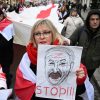
Belarus: A Sham Election That Fools No One
Alexander Lukashenko will soon begin his seventh term as president of Belarus. The official result of the 26 January election gave him 86.8 per cent of the vote, following an election held in a climate of fear. Only token opposition candidates were allowed, most of who came out in support of Lukashenko. Anyone who might have offered a credible challenge is in jail or in exile.
‘Reconciliation Will Require Robust Transitional Justice and Accountability Mechanisms’
CIVICUS discusses the ongoing conflict in Ethiopia’s Amhara region with Hone Mandefro, advocacy director at the Amhara Association of America, and Henok Ashagray, PhD candidate and project officer at the Centre for Human Rights at the University of Pretoria.
Venezuela: The Democratic Transition That Wasn’t
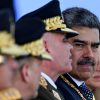
Venezuela stands at a critical juncture as Nicolás Maduro begins a controversial third term as president. His 10 January inauguration, following a post-election period marked by widespread protests against election fraud and heightened repression, represents a significant setback for democratic aspirations in a country devastated by years of economic collapse and political oppression. Maduro’s confirmation at the helm is the latest chapter in a decades-long process that has transformed Venezuela from a beacon of leftist democratic aspirations into a full-blown authoritarian regime, where the last shred of legitimacy – popular election – has now vanished.« Previous Page — Next Page »


The Week with IPS

NEXT STOP - SDGs
Tracking global progress towards a sustainable world
Tracking global progress towards a sustainable world
