Languages
Friday, October 23, 2026



News and Views from the Global South
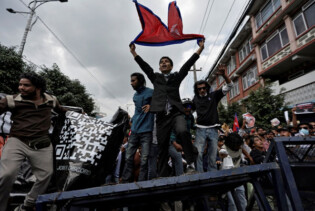
A Grim Year for Democracy and Civic Freedoms – but in Gen Z There Is Hope
2025 has been a terrible year for democracy. Just over 7 per cent of the world’s population now live in places where the rights to organise, protest and speak out are generally respected, according to the CIVICUS Monitor, a civil society research partnership that measures civic freedoms around the world. This is a sharp drop from over 14 per cent this time last year.
Mamdani’s Stand on Genocide is More Important than the Dynamics of Arresting Netanyahu
No leader responsible for mass atrocities enjoys greater impunity on the international stage than Benjamin Netanyahu. This is due to the strange stranglehold of the pro-Israel lobby on the two major political parties in the United States.
The Constitution Isn’t Optional: Why USA Belongs on the CIVICUS Monitor Watchlist
Successive United States governments have prided themselves on being governed by the Constitution of 1788. The First Amendment introduced in 1791 lays the foundations for secularism, respect for fundamental freedoms, and the right to seek redress of grievances.
A Feminist Future for the UN: Why the Next Secretary-General Must Champion Civil Society
Climate change is threatening to engulf small island states such as Maldives and the Marshall Islands. Gender apartheid is still practiced in theocratic states such as Afghanistan and Saudi Arabia. War crimes and genocide are taking place in the Occupied Palestinian Territories and Sudan.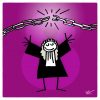
This Year Saw Most of the World Repressed – but in Civil Society there is Hope
Today is International Human Rights Day, Normally, it should be an occasion to celebrate the work of those who strive to create peaceful, just, equal and sustainable societies. But conditions for human rights defenders and their organisations to operate freely are extremely challenging around the world.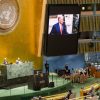
When the truth becomes a lie: What Trump’s election means for the world as we know it
On the day following the US election, UN Secretary General, Antonio Guterres issued a brief statement commending the people of the United States for their active participation in the democratic process. He wisely omitted mention that the election of Donald J. Trump – who attempted to overturn the people’s mandate by inciting an insurrection in 2021 - is a major setback for the UN’s worldwide quest to advance human rights and the rule of law. Trump is a self-avowed admirer of authoritarian strongmen like Russia’s Vladimir Putin and Hungary’s Viktor Orban who disdain international norms that the UN seeks to uphold.
The Summit of the Future Is a Rare Chance to Fix a Broken System: Civil Society Must Be Included
Today, the spectre of a major regional conflict, and even a possible nuclear conflagration, looms large in the Middle East. Despite stark warnings issued by the UN Secretary-General, António Guterres, the multilateral system is struggling to resolve the very challenges it was supposed to address: conflict, impoverishment and oppression. In a deeply divided world, this September’s Summit of the Future offers a rare chance to fix international cooperation and make good on gaps in global governance.
The UN’s Own Relevance Is at Stake at This Year’s General Assembly
This September, world leaders and public policy advocates from around the world will descend on New York for the UN General Assembly. Alongside conversations on peace and security, global development and climate change, progress – or the lack of it – on the Sustainable Development Goals (SDGs) is expected to take centre-stage. A major SDG Summit will be held on 18 and 19 September. The UN hopes that it will serve as a ‘rallying cry to recharge momentum for world leaders to come together to reflect on where we stand and resolve to do more’. But are the world’s leaders in a mood to uphold the UN’s purpose, and can the UN’s leadership rise to the occasion by resolutely addressing destructive behaviours?
Civic Space – the Bedrock of Democracy – is Scarce & Contested
On 29 and 30 March, the US government, in partnership with Costa Rica, Netherlands, South Korea and Zambia, will co-host the second virtual Summit for Democracy. Several elected leaders and state representatives will come together to highlight achievements in advancing democratic principles.
Uyghur Violations a Litmus Test for Global Governance & Rules-based International Order
This week is a momentous one for the world’s premier human rights body. At stake is a resolution to decide whether the UN Human Rights Council in Geneva can hold a debate on a recently released UN report.
Cherish Not Vilify Indian Civil Society
Civil society has been described as the oxygen of democracy by no less than UN Secretary General, Ban Ki-moon. As the world’s largest democracy, India has a proud history of inspiring people’s movements and non-profit organisations looked up to by social change advocates across the globe.
OPINION: Why South Africa Must Not Lose Plot on Civil Society
South Africa celebrated human rights month this March with President Zuma recalling the “heroism of our people who stood up for their rights.” However, this same month which commemorates the sacrifices of those who took part in the struggle against apartheid and those who died in the Sharpeville Massacre of 21 March 1960 was not a happy one for today’s civil society activists and organisations engaged in defending human rights. Two shocking incidents raise troubling questions for the future of civil society in the country.
Opinion: Why Are Threats to Civil Society Growing Around the World?
Whistle-blowers like Edward Snowden and Julian Assange are hounded – not by autocratic but by democratic governments – for revealing the truth about grave human rights violations. Nobel peace prize winner, writer and political activist Liu Xiaobo is currently languishing in a Chinese prison while the killing of Egyptian protestor, poet and mother Shaimaa al-Sabbagh, apparently by a masked policeman, in January this year continues to haunt us.
Opinion: Measurement Matters – Civic Space and the Post-2015 Framework
For those of us interested in a vibrant civil society, it seems to be best of times and the worst of times.
Civil Society Freedoms Merit Role in Post-2015 Development Agenda
Nabeel Rajab, president of the Bahrain Centre for Human Rights, an advocacy NGO, is facing criminal charges for sending a tweet that said: “many Bahrain men who joined terrorism and ISIS have come from the security institutions and those institutions were the first ideological incubator”.
Why Principle Matters at UN Human Rights Council
The killings of hundreds of civilians, including scores of children, in Gaza – whose only fault was to have been born on the wrong side of the wall – was a major point of contention at the United Nations Human Rights Council at the end of July.
Civil Society Under Attack Around the World
In December 2011, 159 governments and major international organisations recognised the central role of civil society in development and promised to create an “enabling” operating environment for the non-profit sector.CAN BUSAN FORGE A NEW DEAL FOR AFRICA?
In the hope for a fairer deal on aid for the continent, African leaders are planning to present a unified position at the Fourth High Level Forum on Aid Effectiveness (HLF4) in Busan, South Korea. Currently, discussions are underway between the African Union, New Partnership for Africa's Development (NEPAD), and private sector and civil society representatives on how to improve the impact of aid for the most vulnerable and marginalised. The outcome of these discussions will then be taken to Busan in November this year as the 'African Consensus and Position on Development Effectiveness'.CAN EMERGING DEMOCRACIES CHALLENGE THE MORAL HEGEMONY OF WESTERN POWERS?
Interestingly, the website of the North Atlantic Treaty Organization proudly proclaims "NATO Allies decided on March 27 to take on the whole military operation in Libya under UN Security Council Resolution 1973." This sole claim of ownership over a UN-sponsored mandate by a military alliance is indeed worrying and begs the question whether international precedents are being established here to conflate a multi-lateral UN force with a NATO force.





The Week with IPS

NEXT STOP - SDGs
Tracking global progress towards a sustainable world
Tracking global progress towards a sustainable world
