Languages
Thursday, November 19, 2026



News and Views from the Global South
CIVICUS 2023

Senegal: Democracy in the Balance?
Civic space is deteriorating in Senegal ahead of next February’s presidential election. Recent protests have been met with lethal violence and internet and social media restrictions. Senegal’s democracy will soon face a key test, and whether it passes will depend largely on whether civic space is respected.
Kenya: Cost of Living Protests Met with Police Repression
Protests against the high cost of living in Kenya have been met with police violence. Talks are currently underway between government and opposition – but whatever results will fall short unless it brings accountability for the catalogue of human rights violations committed in response to protests.
Cambodia’s Election a Blatant Farce
The title shouldn’t fool you: Cambodian Prime Minister Hun Sen is one of the world’s longest-ruling autocrats. A political survivor, this former military commander had been bolted to his chair since 1985, presiding over what he turned into a de facto one-party system – and now apparently a dynastic regime.
Civil Society Space in Southern Africa Shrinking as Government Repression Rises
Freedom of expression is under threat as governments in Southern Africa have enacted laws restricting civil society organizations, says global rights advocacy organisation, CIVICUS, warning that human rights violations are on the increase globally.
Nepal’s Same-Sex Marriage Breakthrough
Nepal is the latest country to join the global wave of marriage equality. On 28 June, its Supreme Court ruled that the government must immediately offer temporary registration of same-sex marriages, pending a change in the law. Around 200 couples reportedly sought to register as soon as the court judgment was made.
Brazil Back on the Green Track
At a meeting with European and Latin American leaders in Brussels this July, Brazil’s President Lula da Silva reiterated the bold commitment he had made in his first international speech as president-elect, when he attended the COP27 climate summit in November 2022: bringing Amazon deforestation down to zero by 2030.
Eswatini: Election with No Democracy on the Horizon
Eswatini heads to the polls soon, with elections scheduled for September. But there’s nothing remotely democratic in prospect. The country remains ruled by King Mswati III, Africa’s last absolute monarch, who presides over Eswatini with an iron fist. Mswati dissolved parliament on 11 July, confident there’s little chance of people who disagree with him winning representation.
Mandela Day Reminder to Stand Witness to Human Rights Defenders
As human rights increasingly deteriorate, rights defenders are being violently suppressed. Abducted, detained, tortured, and humiliated, many now live one day at a time. They have been told, in no uncertain times, that anything could happen. They are now asking the global community to stand as a witness.
Cloud Lingers over Sierra Leone’s Election
People went to the polls in Sierra Leone on 24 June to pick a president, parliament and municipal representatives. Results were quickly announced and the president sworn in for a second term. But a cloud of doubt lingers.
Guatemala Clings to Democratic Promise
When Guatemalans went to the polls on 25 June, distrust and disillusionment were rife. First place in the presidential contest was claimed by none of the candidates: it went to invalid votes, at 17 per cent. Many didn’t bother, resulting in an abstention rate over 40 per cent.
Myanmar: Military Junta Gets a Free Pass
The violence keeps coming in Myanmar, under military rule since February 2021. The junta stands accused of war crimes and crimes against humanity, with evidence of systematic use of killings, rape, torture and other gross human rights violations in its attempt to suppress forces demanding a return to democracy.
Human Rights Defenders in Exile Safety Imperiled by Host Countries’ Declining Civil Rights
While leaving one’s country and becoming a refugee is a last resort, it is a decision that many, like Steve Kitsa, have had to make. As conflict becomes increasingly protracted in many African countries, many others will take this step.
UN Cybercrime Convention: Could the Cure Be Worse than the Disease?
If you’ve never heard of the Cybercrime Convention, you’re not alone. And if you’re wondering whether an international treaty to tackle cybercrime is a good idea, you’re in good company too.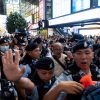
Hong Kong’s Lights of Freedom Extinguished
Nothing was more predictable than repression. Merely for holding candles and flowers, people were taken away by Hong Kong’s police. The occasion was the anniversary of the Tiananmen Square Massacre, 4 June 1989. Hong Kong was until recently home to mass annual vigils where thousands gathered to keep alive the memory of that day. But that’s all gone now in the crackdown that followed large-scale protests for democracy that erupted in 2019.
Hopes for Renewal Dashed in Turkey
Turkey’s election hasn’t produced the change many thought was on the cards. Now women’s groups, LGBTQI+ people and independent journalists are among those fearing the worse. Recep Tayyip Erdoğan, who has led the country for two decades, first as prime minister and then as president, prevailed in the 28 May runoff poll, taking around 52.2 per cent of the vote, with his opponent, Kemal Kılıçdaroğlu, on 47.8 per cent.
Climate Change Gets Its Day in Court
As a matter of global justice, the climate crisis has rightfully made its way to the world’s highest court. On 29 March 2023, the United Nations General Assembly (UNGA) unanimously adopted a resolution asking the International Court of Justice (ICJ) to issue an advisory opinion on the obligations of states on climate change. The initiative was led by the Pacific Island state of Vanuatu, one of several at risk of disappearing under rising sea levels. It was co-sponsored by 132 states and actively supported by networks of grassroots youth groups from the Pacific and around the world.
How Wagner Group, Mercenaries With a Wider Agenda, Impact Civil Society
The Wagner Group, a shadowy mercenary group that has been operating for many years in African countries such as Sudan, Mali, the Central African Republic, and other mainly Francophone countries, has again been thrust into the limelight due to its involvement in the Ukraine war on behalf of Russia.
Thailand: Time for Democracy
Thailand’s voters have spoken. In the 14 May general election, they overwhelmingly backed change. Two major opposition parties won 293 seats in the 500-member House of Representatives.
Chile: New Constitution in the Hands of the Far Right
On 7 May, Chileans went to the polls to choose a Constitutional Council that will produce a new constitution to replace the one bequeathed by the Pinochet dictatorship – and handed control to a far-right party that never wanted a constitution-making process in the first place.
Uzbekistan: A President for Life?
Where will you be in 2040? For Uzbekistan’s President Shavkat Mirziyoyev, the answer is: in the Kuksaroy Presidential Palace. That’s the chief consequence of the referendum held in the Central Asian country on 30 April. With dissent tightly controlled in conditions of closed civic space, there was no prospect of genuine debate, a campaign against, or a no vote.
Fiji: Deeper Democracy or Continuing Danger?
It’s been a time of significant change in Fiji following the country’s December 2022 election. A close vote was followed by the formation of a new coalition government. Frank Bainimarama was out as prime minister after 16 years, replaced by Sitiveni Rabuka.« Previous Page — Next Page »


The Week with IPS

NEXT STOP - SDGs
Tracking global progress towards a sustainable world
Tracking global progress towards a sustainable world
