Languages
Friday, September 25, 2026



News and Views from the Global South
CIVICUS 2023

‘Angola produces large quantities of oil and diamonds, yet most people don’t see the benefits’
CIVICUS discusses recent protests in Angola with Florindo Chivucute, founder and executive director of Friends of Angola, a US-based civil society organisation established in 2014 that works to promote democracy, human rights and good governance in Angola.

Togo’s Young Generation Challenges Six Decades of Dynastic Rule
In late June, thousands flooded the streets of Lomé, Togo’s capital, presenting the ruling dynasty with its biggest challenge in decades. The catalyst was constitutional manoeuvring by President Faure Gnassingbé to maintain his grip on power. In March 2024, his government pushed through constitutional amendments that transformed Togo from a presidential to a parliamentary system. This created a new position, the President of the Council of Ministers – effectively Togo’s chief executive – elected by parliament rather than by popular vote, and with no term limits. Gnassingbé assumed this new role in May, making it abundantly clear the changes were only about keeping him in power indefinitely.
‘Who Will Take the Mic at the United Nations When Doing so Might Cost Them Their Freedom?’
CIVICUS discusses civil society’s challenges in engaging with United Nations (UN) processes with an activist from a Salvadoran queer-led organisation who asked to remain anonymous for security reasons.

The Right to Care: A Feminist Legal Victory That Could Change the Americas
On 7 August, the Inter-American Court of Human Rights delivered a groundbreaking decision that could transform women’s lives across the Americas. For the first time in international law, an international tribunal recognised care as an autonomous human right. Advisory Opinion 31/25, issued in response to a request from Argentina, elevates care – long invisible and relegated to the private sphere – to the level of a universal enforceable entitlement.
‘The Surge in Executions Shouldn’t Be Mistaken for Strength – It’s a Desperate Act of a Collapsing Dictatorship’
CIVICUS speaks about the Iranian regime’s execution of political prisoners with Safora Sadidi, a human rights activist with the Women’s Committee and Foreign Affairs Committee of the National Council of Resistance of Iran. Safora lost her father and six family members to the theocratic regime, and has dedicated over two decades to the Iranian Resistance’s international efforts.
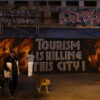
Overtourism: Civil Society Mobilising
It’s peak holiday season across Europe and North America, and people are hitting the beaches and crowding into city centres in ever-increasing numbers. They’re part of a huge industry: last year, travel and tourism’s share of the global economy stood at US$10.9 trillion, around 10 per cent of the world’s GDP.
‘Life in Gaza’s Shelters Is Marked by Deprivation – but Also by the Endurance of Human Dignity’
CIVICUS speaks with a West Bank-based Palestinian activist about her family members currently enduring the war in Gaza. She has asked to remain anonymous for security reasons.
From the Margins to the Courts: St Lucia Joins Caribbean Fight to Dismantle Anti-LGBTQI+ Colonial Laws
When Kenita Placide co-founded United and Strong, St Lucia’s first LGBTQI+ organisation in 2001, death threats were routine. Over the years, several friends were murdered for being gay. But 24 years on, Kenita’s Caribbean island nation has become the latest to overturn a colonial legacy that criminalised LGBTQI+ people.
‘We Must Build Healthier Digital Environments Where Reliable Information Plays a Leading Role’
CIVICUS discusses Bolivia’s upcoming presidential election with Juan Carlos Uribe and Lucas Illanes from ChequeaBolivia, an initiative that monitors and verifies social media content.
Japan’s Right-wing Populist Rise
Rice queues – something once unthinkable – began appearing around May. As the country’s staple food hit record prices, frustrated shoppers found themselves breaking a cultural taboo by switching to rice from South Korea. It was a symbol of how far Japan’s economic certainties had crumbled, creating fertile ground for a political shift.
The Constitution Isn’t Optional: Why USA Belongs on the CIVICUS Monitor Watchlist
Successive United States governments have prided themselves on being governed by the Constitution of 1788. The First Amendment introduced in 1791 lays the foundations for secularism, respect for fundamental freedoms, and the right to seek redress of grievances.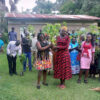
Why Locally Led Development Works and How Funders Can Get It Right
In Uganda, local communities are routinely sidelined in development processes, despite knowing most about their own needs. When a Moroto District officer remarked, ‘This is the first time local leaders were truly heard’, it offered a powerful reminder of what so often goes wrong: development fails when communities are excluded.
‘After Decades of Making Huge Profits, Companies Shouldn’t Be Allowed to Leave Behind a Toxic Legacy’
CIVICUS speaks with Matthew Renshaw, a partner at a UK law firm that represents Nigerian communities taking legal action against Shell over environmental damage caused by its operations in the Niger Delta.

‘The Lesson from Gaza Is Clear: When Ai-powered Machines Control Who Lives, Human Rights Die’
CIVICUS discusses the military use of artificial intelligence (AI) in Gaza with Dima Samaro, a Palestinian lawyer and researcher, and director of Skyline International for Human Rights, a civil society organisation (CSO) that defends digital freedoms and human rights in the Middle East and North Africa. Dima serves on multiple boards focused on civic space and surveillance issues, including Innovation for Change’s MENA Hub, the Surveillance in the Majority World Network and the VUKA! Solidarity Coalition, and volunteers with Resilience Pathways to help Palestinian CSOs counter Israeli efforts to restrict civic space and manipulate public narratives.

Intersectional Feminist Leadership Needed to Realise Global Goals
In its 80-year history the UN has never once been led by a woman. As the international community convenes for the 2025 High-Level Political Forum (HLPF) to review progress on gender equality and other Sustainable Development Goals (SDGs), this remains a fundamental hypocrisy at the heart of global governance. How can an institution that has systematically excluded women from its highest office credibly champion gender justice worldwide?
From Gaza to Georgia, Human Rights Defenders Pay a High Price for Change. Here’s How You Can Help
Across the globe—from Gaza’s rubble to the streets of Tbilisi—people are standing up for justice, dignity, and basic rights. But far too often, they are paying with their freedom, their safety, even their lives.
‘International Demand for Coltan Is Linked to Violence in the DRC’
CIVICUS speaks with Claude Iguma, a mining governance expert with a PhD in Social Sciences, who is based in Bukavu, South Kivu province, eastern Democratic Republic of the Congo (DRC).

NATO’s Trillion-dollar Gamble: The Dangers of Defence Without Accountability
Donald Trump’s bullying tactics ahead of NATO’s annual summit, held in The Hague in June, worked spectacularly. By threatening to redefine NATO’s article 5 – the collective defence provision that has anchored western security since 1949 – Trump won commitments from NATO allies to almost triple their defence spending to five per cent of GDP by 2035. European defence budgets will balloon from around US$500 billion to over US$1 trillion annually, essentially matching US spending levels.
‘Only a Handful of Environmental Organisations Still Dare Challenge Corporate Projects in Court’
CIVICUS speaks to Cristinel Buzatu, regional legal advisor for Central and Eastern Europe at Greenpeace, about how Romania’s state gas company is weaponising the courts to silence environmental opposition.
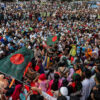
Bangladesh’s Democratic Promise Hangs in the Balance
When Bangladesh’s streets erupted in protest in mid-2024, few could have predicted how swiftly Sheikh Hasina’s regime would crumble. The ousting of the prime minister last August, after years of mounting authoritarianism and growing discontent, was heralded as a historic opportunity for democratic renewal. Almost a year on, the question remains whether Bangladesh is genuinely evolving towards democracy, or if one form of repression is replacing another.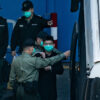
The Silencing of Hong Kong
Joshua Wong sits in a maximum-security prison cell, knowing the Hong Kong authorities are determined to silence him forever. On 6 June, police arrived at Stanley Prison bringing fresh charges that could see the high-profile democracy campaigner imprisoned for life. This is the reality of Hong Kong: even when behind bars, activists can be considered too dangerous ever to be freed.« Previous Page — Next Page »


The Week with IPS

NEXT STOP - SDGs
Tracking global progress towards a sustainable world
Tracking global progress towards a sustainable world
