Languages
Tuesday, October 13, 2026



News and Views from the Global South
CIVICUS 2023

‘This Anti-LGBTQI+ Bill Can Still Be Blocked – but Only With Sustained International Pressure’
CIVICUS discusses Kazakhstan’s anti-LGBTQI+ bill with Temirlan Baimash, activist and co-founder of QUEER KZ youth initiative, a Kazakhstani LGBTQI+ organisation.
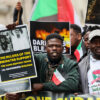
Sudan’s Crisis: Mass Killings Continue While the World Looks Away
Satellite images show corpses piled high in El Fasher, North Darfur, awaiting mass burial or cremation as the Rapid Support Forces (RSF) militia tries to cover up the scale of its crimes. Up to 150,000 El Fasher residents remain missing from the city, seized by the RSF in November. The lowest estimate is that 60,000 are dead. The Arab militia has ethnically cleansed the city of its non-Arab residents. The slaughter is the latest horrific episode in the war between the RSF and the Sudan Armed Forces, sparked by a power battle between military leaders in April 2023.
‘Zambia Has Environmental Laws and Standards on Paper – the Problem Is Their Implementation’
CIVICUS discusses environmental accountability in Zambia with Christian-Geraud Neema, Africa editor at the China Global South Project, an independent journalism initiative that covers and follows China’s activities in global south countries.
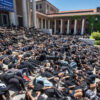
The Fight Against Femicide: Victories and Setbacks in 2025
Hours before world leaders gathered in Johannesburg for the 2025 G20 summit in November, hundreds of South African women wearing black lay down in a city park for 15 minutes — one for each woman who loses her life every day to gender-based violence in the country. The striking visual protest was organised by a civil society organisation, Women for Change, which also gathered over a million signatures demanding the government declare gender-based violence (GBV) a national disaster. Hours later, the government acquiesced.
‘People Reacted to a System of Governance Shaped by Informal Powers and Personal Interests’
CIVICUS discusses Generation Z-led protests in Bulgaria with Zahari Iankov, senior legal expert at the Bulgarian Centre for Not-for-Profit Law, a civil society organisation that advocates for participation and human rights.
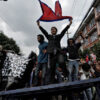
A Grim Year for Democracy and Civic Freedoms – but in Gen Z There Is Hope
2025 has been a terrible year for democracy. Just over 7 per cent of the world’s population now live in places where the rights to organise, protest and speak out are generally respected, according to the CIVICUS Monitor, a civil society research partnership that measures civic freedoms around the world. This is a sharp drop from over 14 per cent this time last year.
‘From the Moment They Enter Libya, Migrants Risk Being Arbitrarily Arrested, Tortured and Killed’
CIVICUS discusses migrants’ rights in Libya with Sarra Zidi, political scientist and researcher for HuMENA, an international civil society organisation (CSO) that advances democracy, human rights and social justice across the Middle East and North Africa.
Myanmar’s Sham Election: Trump Legitimises Murderous Military Dictatorship
Myanmar is heading for an election, beginning on 28 December, that’s ostensibly an exercise in democracy – but it has clearly been designed with the aim of conferring more legitimacy on its military junta.
‘We Need a New Global Legal Framework That Rethinks Sovereignty in the Context of Climate Displacement’
CIVICUS discusses climate displacement and Tuvalu’s future with Kiali Molu, a former civil servant at Tuvalu’s Ministry of Foreign Affairs and currently a PhD candidate at the University of the South Pacific in Fiji and the University of Bergen in Norway. His research focuses on state sovereignty and climate change in the Pacific.

Killer Robots: The Terrifying Rise of Algorithmic Warfare
Machines with no conscience are making split-second decisions about who lives and who dies. This isn’t dystopian fiction; it’s today’s reality. In Gaza, algorithms have generated kill lists of up to 37,000 targets.
As Attacks on Women Defenders Intensify, so Must Our Support
A global crackdown on civic freedoms is intensifying – and women are on the frontlines of the attack. CIVICUS’s 2025 People Power Under Attack report analyses the extent to which freedoms of association, expression and peaceful assembly are being respected or violated. The report reveals that people in 83 countries now live in conditions where their freedoms are routinely denied, compared to 67 in 2020. In 2020, 13 per cent of the world’s population lived in countries where civic freedoms were broadly respected; now it’s more like 7 per cent. Among the most documented violations in 2025 were detention of human rights defenders, journalists and protesters, and women human rights defenders (WHRDs) were among the most affected.
‘Once Conversations about Democracy and Equality Begin, They Are Very Hard to Silence’
CIVICUS discusses restrictions on civic space in Thailand and the detention of activist and human rights lawyer Arnon Nampa with Akarachai Chaimaneekarakate, Advocacy Lead at Thai Lawyers for Human Rights (TLHR).
‘Seven Million People Have Taken to the Streets to Stand up for Democracy’
CIVICUS discusses US civil society action under the second Trump administration with Bridget Moix, General Secretary of the Friends Committee on National Legislation, the oldest faith-based lobbying organisation in the USA, advocating for peace, justice and environmental stewardship. Bridget has participated in the No Kings movement, a nationwide grassroots response to democratic backsliding and attacks on rights.
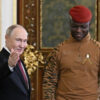
Burkina Faso: Three Years of Broken Promises
Three years ago, Captain Ibrahim Traoré seized power in Burkina Faso with two promises that have proved hollow: to address the country’s deepening security crisis and restore civilian rule. Now he has postponed elections until 2029, dissolved the independent electoral commission and pulled the country out of the Economic Community of West African States (ECOWAS) and the International Criminal Court (ICC). Burkina Faso has become a military dictatorship.
‘Turkmen Authorities Are Carrying out a Systematic Campaign to Eliminate Independent Voices’
CIVICUS speaks about the disappearance of Turkmen activists Abdulla Orusov and Alisher Sahatov with human rights defender Diana Dadasheva from the civil movement DAYANÇ/Turkmenistan and with Gülala Hasanova, wife of Alisher Sahatov.
Foreign Agent Laws: The Latest Authoritarian Weapon Against Civil Society
When thousands of Georgians filled the streets of Tbilisi in 2023 to protest against their government’s proposed ‘foreign agents’ law, they understood what their leaders were trying to do: this wasn’t about transparency or accountability; it was about silencing dissent. Though the government was forced to withdraw the legislation, it returned with renewed determination in 2024, passing a renamed version despite even bigger protests. The law has effectively frozen Georgia’s hopes of joining the European Union.
‘No Solution Will Work If the Institutions Responsible for Abuses Remain in Charge of Implementing It’
CIVICUS discusses enforced disappearances in Mexico with a member of the International Network of Associations of Missing Persons. The crisis of disappearances in Mexico has reached alarming proportions, with over 52,000 unidentified bodies in morgues and mass graves. On 1 July, the Mexican Congress approved controversial changes to the General Law on Disappearances, which promise to modernise the search process through a national biometric system, but which human rights organisations and victims’ groups claim could establish an unprecedented system of mass surveillance.

Moldova’s Democratic Defiance
Democracy was the winner and Russia the loser in Moldova’s 28 September election. The incumbent pro-Europe Party of Action and Solidarity (PAS) won a parliamentary majority on just over half of the vote, while support for a pro-Russia coalition collapsed to a record low. The result came in the face of Russia’s most intense attempt yet to influence an election, with a propaganda and disinformation operation allegedly orchestrated by Ilan Shor, a disgraced Moldovan oligarch who fled to Russia to escape jail time for his role in a massive fraud.
‘The Government Was Corrupt and Willing to Kill Its Own People to Stay in Power’
CIVICUS discusses recent protests that led to a change of government in Nepal with Dikpal Khatri Chhetri, co-founder of Youth in Federal Discourse (YFD). YFD is a youth-led organisation that advocates for democracy, civic engagement and young people’s empowerment.

Mali’s Blocked Transition: Five Years of Deepening Authoritarianism
When Mali’s former Prime Minister Moussa Mara stood trial in Bamako’s cybercrime court on 29 September, charged with undermining state authority for expressing solidarity with political prisoners on social media, his prosecution represented far more than one person’s fate. It epitomised how thoroughly the military junta has dismantled Mali’s democratic foundations, five years after seizing power with promises of swift reform.
‘The North Korean Human Rights Movement Is Facing Its Greatest Crisis since It Began in the 1990s’
CIVICUS discusses North Korea’s closed civic space with Hanna Song, Executive Director of the Database Center for North Korean Human Rights (NKDB). Based in Seoul, South Korea, NKDB documents systematic human rights violations in North Korea through testimonies from escapees, and has built the world’s largest private database of such abuses.
« Previous Page — Next Page »





The Week with IPS

NEXT STOP - SDGs
Tracking global progress towards a sustainable world
Tracking global progress towards a sustainable world
