Languages
Monday, October 12, 2026



News and Views from the Global South
CIVICUS 2023
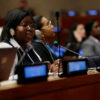
CSW70: Women’s Equality under Siege
On 19 March, the Commission on the Status of Women (CSW) did something unprecedented in its eight-decade history: it held a vote. The Trump administration, having spent two weeks attempting to defer, amend and ultimately block the session’s main outcome document, known as the agreed conclusions, cast the only vote against its adoption. That dissenting vote said a lot, as it came from the world’s most powerful government, backed by financial leverage, bilateral reach and a network of anti-rights states and organisations that are making inroads at many levels.
PORTUGAL: ‘The Far Right’s Electoral Legitimacy Can Eventually Become Governmental Power’
CIVICUS discusses Portugal’s presidential runoff election and the rise of the far-right Chega (Enough) party with Jonni Lopes, Executive Director of Academia Cidadã (Citizen Academy) and a Steering Committee member of the European Civic Forum, an organisation working on civic engagement, democratic participation and the protection of civic space at national, regional and international levels.
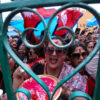
Nepal’s Gen Z Electoral Revolution
Less than six months after Nepal’s Generation Z rose up in protest, the country has a new prime minister. A 35-year-old former rapper who soundtracked the protests swept to power in a landslide in the 5 March election.
‘The Political System Only Moves When Threatened Directly’
CIVICUS discusses Nepal’s upcoming election with youth activist Anusha Khanal of the Gen Z Movement Alliance, a youth-led civil society coalition mobilising for democratic accountability and governance reform in Nepal.

International Tensions Spark New Nuclear Threat
When German Chancellor Friedrich Merz opened the 62nd Munich Security Conference by declaring that the post-war rules-based order ‘no longer exists’, there was plenty of evidence to back his claim. Israel is committing genocide in Gaza in defiance of international law, Russia is four years into its illegal invasion of Ukraine, the last nuclear arms control treaty between Russia and the USA has just expired and the USA has withdrawn from 66 international bodies and commitments. Since the conference, Israel and the USA have launched another war on Iran, threatening to spark a broader regional conflict. Meanwhile the UN is undergoing a funding crisis, cutting staff and programmes, and civil society organisations that relied on US Agency for International Development funding are facing closure.
CHINA: ‘The State Is Using Generative AI to Engineer Reality Through Informational Gaslighting’
CIVICUS discusses China’s tech-enabled repression with Fergus Ryan, a Senior Analyst at the Australian Strategic Policy Institute (ASPI), where he specialises in how the Chinese Communist Party shapes global information environments through censorship, propaganda and platform governance. His research includes a major study on China’s AI ecosystem and its human rights impacts, as well as investigations into China’s use of foreign influencers.

Oil Shocks, Political Upheaval and the One Solution Governments Keep Ignoring
Once again, global oil prices are spiking, driven by the Israeli-US war against Iran. With Iran retaliating by attacking infrastructure and transport hubs and blocking the Strait of Hormuz, through which one-fifth of the world’s oil passes, oil supplies from the region are being choked, pushing up prices. The cost of a barrel of Brent crude – the international benchmark for oil prices – stood at US$73 before the conflict but has surged beyond US$100 since. It could go higher still as war continues.
VENEZUELA: ‘An Economically Stable Authoritarian Model Could Become Entrenched’
CIVICUS discusses the situation in Venezuela following US intervention and the ousting of President Nicolás Maduro with Verónica Zubillaga, a Venezuelan sociologist who specialises in urban violence, state repression and community responses to armed violence.
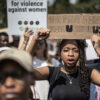
International Women’s Day 2026: A Resistance Stronger than the Backlash
Consider what International Women’s Day looked like a few years ago, and what it looks like now: the same date, the same global moment of reflection, but a vastly changed global landscape. Gender rights are facing the most coordinated and wide-ranging attack in decades. Anti-rights forces are dismantling protections secured after generations of struggle, destroying infrastructure built to address gender-based violence and realise reproductive rights and rewriting legal frameworks to roll back rights, with a specific focus on excluding transgender people. This is the result of a deliberate, carefully crafted, handsomely funded and globally coordinated strategy.
Philippines: ‘Preventing Similar Cases Requires Dismantling the Mechanisms That Treat Dissent as Crime’
CIVICUS discusses the criminalisation of dissent in the Philippines with Kyle A Domequil, spokesperson of the Free Tacloban 5 Network, a campaign supporting journalist Frenchie Mae Cumpio, human rights defender Marielle Domequil and their co-accused and advocating for their release.
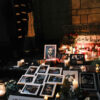
Iran: A Regime with Nothing Left but Force
The Islamic Republic of Iran has put down another uprising, with a ferocity that makes previous crackdowns seem restrained. The theocratic regime has survived, but it has done so by substituting violence for the economic security it cannot provide and the political legitimacy it no longer has. Its show of force is also an admission of weakness.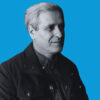
IRAN: ‘Sustainable Change Will Depend on Domestic Organisational Capacity, Not External Force’
CIVICUS discusses the recent protests in Iran with Sohrab Razaghi, executive director of Volunteer Activists, a Netherlands-based diaspora organisation empowering Iranian civil society.

Multilateralism Reaching Breaking Point
The latest World Economic Forum made clear the current crisis of multilateralism. Over 60 heads of state and 800 corporate executives assembled in Davos under a ‘Spirit of Dialogue’ theme aimed at strengthening global cooperation, but it was preceded by a series of events pointing to a further unravelling of the international system.
‘After Decades of Denial and Silence, the Suffering of Rohingya People Is Being Heard at the World’s Highest Court’
CIVICUS discusses the genocide case against Myanmar at the International Court of Justice (ICJ) with Mohammed Nowkhim of the Arakan Rohingya Society for Peace & Human Rights (ARSPHR), a civil society organisation led by Rohingya people born out of refugee camps in Bangladesh to document atrocities, preserve survivor testimony and advocate for accountability and justice.

UN Security Council: Reform or Irrelevance
In early January, an emergency UN Security Council meeting on Venezuela followed a familiar path of paralysis. Members clashed over the US government’s abduction of Nicolás Maduro, with many warning it set a dangerous precedent, but no resolution came.
‘We Are Seeing an Economic Transition, but No Democratic Transition’
CIVICUS discusses the situation following the US intervention in Venezuela with Guillermo Miguelena Palacios, director of the Venezuelan Progressive Institute, a think tank that promotes spaces for dialogue and democratic leadership.

Venezuela at a Crossroads
When US special forces seized Nicolás Maduro and his wife from the presidential residence in Caracas on 3 January, killing at least 24 Venezuelan security officers and 32 Cuban intelligence operatives in the process, many in the Venezuelan opposition briefly dared hope.
‘Since the Coup, Factory Employers Have Increasingly Worked with the Military to Restrict Organising and Silence Workers’
CIVICUS speaks to the Business and Human Rights Centre (BHRC) about labour rights abuses in Myanmar’s garment industry since the 2021 military coup.
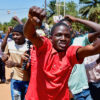
Uganda: Democracy in Name Only
When Ugandans went to the polls on 15 January, the outcome was never in doubt. As voting began, mobile internet services ground to a halt, ensuring minimal scrutiny as President Yoweri Museveni secured his seventh consecutive term. Far from offering democratic choice, the vote reinforced one of Africa’s longest-running presidencies, providing a veneer of democratic legitimacy while stifling competition.
‘Freedom Always Returns – but Only If We Hold Fast to Our Values and Sustain the Struggle’
CIVICUS speaks with Belarusian activist, blogger and journalist Mikola Dziadok about his experiences as a two-time political prisoner and the repression of dissent in Belarus. Mikola was jailed following mass protests in 2020.

Guinea’s Path to Electoral Autocracy
In December, the dust settled on Guinea’s first presidential election since the military took control in a 2021 coup. General Mamady Doumbouya stayed in power after receiving 87 per cent of the vote. But the outcome was never in doubt: this was no a democratic milestone; it was the culmination of Guinea’s denied transition to civilian rule.« Previous Page — Next Page »





The Week with IPS

NEXT STOP - SDGs
Tracking global progress towards a sustainable world
Tracking global progress towards a sustainable world
