Languages
Sunday, October 11, 2026



News and Views from the Global South
CIVICUS 2023
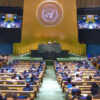
UN Climate Resolution: Time to Protect Activists
Ahead of World Environment Day, the UN General Assembly made a vital commitment to protect people from climate impacts, adopting a resolution on the climate change obligations of states. The resolution follows up on the International Court of Justice (ICJ) advisory opinion issued last year, which found that states have a legal duty to prevent activities that cause environmental harm. Most states voted for the resolution despite a concerted campaign by the Trump administration to block it.
PERU: ‘For 20 Years, Voters Have Had to Choose the Lesser of Two Evils’
CIVICUS discusses the outlook ahead of Peru’s runoff presidential election with David Hidalgo, journalist and executive director of OjoPúblico, a Peruvian digital investigative journalism outlet.
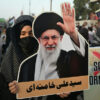
Iran War Deepens Activist Dangers
Narges Mohammadi, awarded the Nobel Peace Prize for her human rights activism in Iran, has been allowed to go home. After guards found her unconscious in her cell, the apparent victim of a heart attack, she was granted temporary release from prison and transferred to a hospital. However, she still faces the threat of being taken back to jail once her condition has improved.
TRANSNATIONAL REPRESSION: ‘China Feels Emboldened to Globalise Its Political Red Lines’
CIVICUS discusses the cancellation of RightsCon 2026 with Barbora Bukovská, Senior Director for Law and Policy at ARTICLE 19, a human rights organisation that works on freedom of expression and information around the world.
Stop the Madness: Civil Society Cannot Thrive on Burnout
In an era when civil society funding is in decline, it’s time to rebel against a broken system.
DIGITAL RIGHTS: ‘The Priority Should Be Holding Tech Companies Accountable, Not Banning Children from the Digital World’
CIVICUS discusses the rising trend of social media bans for children with Marie-Ève Nadeau, Head of International Affairs of the 5Rights Foundation, an organisation that promotes children’s rights in the digital environment.

PHILIPPINES: ‘A Protest Is One Day, but Organising Is the Thousands of Conversations That Make That Day Possible’
CIVICUS discusses Gen Z-led protests in the Philippines with Charles Zander, a 17-year-old climate justice activist from Bohol and youth campaigner for Greenpeace Philippines.
Hungary’s Long Road Back
When Péter Magyar took the stage in Budapest on the night of 12 April, he told the crowd they had ‘liberated Hungary’. The hyperbole seemed justified. His party, Tisza, had won a parliamentary supermajority on the highest turnout since Hungary’s first free election in 1990, ending 16 years of increasingly autocratic rule.
VENEZUELA: ‘The Credit Goes to Detainees’ Families, Human Rights Organisations and the International Community’
CIVICUS discusses the status of political prisoners in Venezuela with Manuel Virgüez, director of Movimiento Vinotinto, a Venezuelan human rights organisation that works for citizen empowerment, democracy and justice.
The UN NGO Committee: Civil Society’s Gatekeeper in Hostile Hands
In January, the government of Algeria succeeded in locking two civil society groups out of access to the United Nations (UN). It raised questions at the UN Committee on Non-Governmental Organizations, known as the NGO Committee, about two civil society groups with accreditation. It alleged that Italian organisation Il Cenacolo was making politically motivated statements at the UN Human Rights Council and the Geneva-based International Committee for the Respect and Implementation of the African Charter on Human and Peoples’ Rights (CIRAC) was selling UN grounds passes. Four days later, it called a vote to revoke their status. Other states urged delay, but the no-action motion failed, and 11 of the body’s 19 members voted to recommend that the UN’s Economic and Social Council (ECOSOC) revoke Il Cenacolo’s accreditation and suspend CIRAC’s for a year.
BULGARIA: ‘We Protested Against a Whole System of Corrupt Governance and State Capture’
CIVICUS discusses Bulgaria’s Gen Z-led protests with Aleksandar Tanev, founder of Students Against the Mafia, an informal student organisation that took part in mass protests against corruption and state capture.
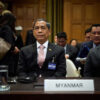
Indonesia’s Genocide Case Shines the Spotlight on Myanmar Atrocities
Yasmin Ullah, from Myanmar’s persecuted Rohingya minority, is determined to see justice. On 13 April, she filed a complaint alleging genocide against Myanmar’s president, Min Aung Hlaing, to Indonesia’s Attorney General’s Office. Min Aung Hlaing led the 2021 coup that ousted a democratically elected government and this month was named president following a sham election held amid intense repression, rubber stamping the army’s continuing grip on power. However secure he appears in his position, Yasmin Ullah’s legal action offers hope his impunity may not be guaranteed.
NEPAL: ‘Voting on Discord Was a Very Gen Z Way of Doing Politics’
CIVICUS discusses Gen Z-led protests in Nepal with Abhijeet Adhikari (Abhi), a lawyer and political activist who took part in the protests.
The Ballot Box Illusion: How Authoritarians Repackaged the African Ballot
In many countries across Africa, people have recently lined up to vote. But in country after country, there has been no real choice on offer. As CIVICUS’s 2026 State of Civil Society Report documents, what has frequently been on display is a procedural ceremony of democracy, orderly enough to satisfy observers, but hollow enough to leave those who hold the reins of power untroubled. Laws and structures that were supposed to promote democratic decisions have been manipulated into compliance checks, ticking all procedural requirements while lacking democratic substance. In too many cases, the ballot box has become a public relations exercise.
Russia’s African Cannon Fodder
On 7 April, the government of Cameroon published a list of 16 of its citizens confirmed killed fighting for Russia against Ukraine. That means the number of Cameroon citizens killed in this distant war has likely surpassed a hundred, making the country the biggest victim of a Russian recruitment drive increasingly focused on Africa.
AI: ‘African Governments Are Using “smart City” Systems to Monitor Dissent and Consolidate State Control’
CIVICUS discusses the spread of AI-powered surveillance in Africa with Wairagala Wakabi, executive director of the Collaboration on International ICT Policy for East and Southern Africa (CIPESA) and co-editor of Smart City Surveillance in Africa: Mapping Chinese AI Surveillance Across 11 Countries, the latest report by the African Digital Rights Network (ADRN) and the Institute of Development Studies (IDS).

Denmark’s Warning
When Danish Prime Minister Mette Frederiksen addressed her supporters on election night on 24 March, she chose her words carefully. Losing four percentage points after almost seven years in power, she suggested, wasn’t so bad given there’s been a pandemic, a war in Europe and a confrontation with Donald Trump over Greenland. The reality was the Social Democrats had recorded their worst general election result since 1903. Meanwhile, the far-right Danish People’s Party (DPP) tripled its seat count, despite years of the Social Democrats leading a systematic crackdown on immigration to try to prevent it gaining support.
ARGENTINA: ‘Under the New Law, Workers Have No Real Scope to Defend Their Rights’
CIVICUS discusses recent regressive changes to Argentina’s labour laws with Facundo Merlán Rey, an activist with the Coordination Against Police and Institutional Repression (CORREPI), an organisation that defends workers’ rights and resists state repression.

Post-Protest Bangladesh: Restoration More than Renewal
Bangladesh’s first credible election in nearly two decades delivered a landslide win for the Bangladesh Nationalist Party (BNP) and its leader Tarique Rahman, son of a former prime minister, just back from 17 years of self-imposed exile.
ITALY: ‘White Supremacist Concepts Are Entering Mainstream Political Discourse on Migration’
CIVICUS discusses Italy’s restrictive immigration policies with Eleonora Celoria, a researcher at FIERI (Forum Internazionale ed Europeo di Ricerche sull’Immigrazione), a research centre on migration, and a member of the Association for Legal Studies on Immigration (ASGI), an Italian legal organisation that defends migrants’ and asylum seekers’ rights through advocacy, public awareness and strategic litigation.

CONGO: ‘The Result Was Already Decided Before Polling Stations Opened’
CIVICUS discusses the presidential election in the Republic of the Congo with Ivan Kibangou Ngoy, executive director of Global Participe, a civil society action-research organisation focused on democratic governance based in Pointe-Noire.
« Previous Page — Next Page »





The Week with IPS

NEXT STOP - SDGs
Tracking global progress towards a sustainable world
Tracking global progress towards a sustainable world
