Languages
Wednesday, September 30, 2026



News and Views from the Global South
Colombia
RIGHTS-COLOMBIA: Extrajudicial Killings Under Scrutiny
The dismissal of 20 officers and seven noncommissioned officers for extrajudicial executions of civilians presented as battlefield casualties "is a triumph for human rights organisations and for Colombian society as a whole," said Reynaldo Villalba of the José Alvear Restrepo Lawyers Collective.
COLOMBIA: Where Dialogue Seems Impossible
Dialogue - or, more accurately, the lack thereof - was the common denominator in two high-profile events Sunday in the western Colombian city of Cali, demonstrating to what extent this vehicle of mutual understanding is missing in this civil war-torn South American country.
Q&A: "We Are not Subversives, and We Demand Respect"
Colombian President Álvaro Uribe admitted that the security forces opened fire on indigenous protesters in the southwestern province of Cauca, but denies that they were responsible for the deaths of three demonstrators, said Daniel Piñacué, a leader of the Nasa community.
COLOMBIA: Uribe Agrees to Talks with Indigenous Protesters
"The police did fire" on indigenous protesters, said Colombian President Álvaro Uribe, who yielded to pressure to meet next Sunday with the leaders of a two-week-long demonstration by native groups.
COLOMBIA: Brutal Crackdown on Indigenous Protest
More than 75 people were injured and at least one was killed in a crackdown on indigenous protests being held in different areas of Colombia.COLOMBIA: Indigenous People Protest in Face of Threats
At the top of the list of demands of some 7,000 people mobilising in the Cauca municipality of Piendamó is the clarification of the deaths of 13 indigenous people killed over the past two weeks in different parts of Colombia.COLOMBIA: Court Workers’ Strike Continues Despite Ultimatum
Colombian President Álvaro Uribe has invoked emergency powers to break up a 42-day strike by the country’s court workers, announcing that as of Tuesday, any judge, prosecutor or other judicial employee who does not show up at work may be dismissed.COLOMBIA: Sugar Workers Strike for Basic Rights
"We sugar cane cutters are neither delinquents nor terrorists; we are honest workers demanding respect for our rights," say Colombia’s cane harvesters, who have been on strike since Sept. 15, demanding basic rights.POLITICS-US: Bush Seen as Out of Touch on Latin America
The policies of the George W. Bush administration lag behind public opinion on a host of issues relating to Latin America, according to a new poll of likely voters across the U.S.
COLOMBIA: Oil Palms, Right Abuses Hand in Hand in Northwest
As of this week, there is one less human rights defender in the northwestern Colombian region of Bajo Atrato. Jimmy Jansasoy of the Inter-Church Justice and Peace Commission was forced to flee the area, where oil palm plantations have encroached on the collectively-owned jungle territories of traditional black communities.COLOMBIA: Justice on Strike
Some 34,000 judicial sector employees in Colombia began an indefinite strike Wednesday, demanding labour stability, the enforcement of a new salary scheme, and guarantees of independence for the courts.COLOMBIA: International Criminal Court Scrutinises Paramilitary Crimes
The International Criminal Court’s (ICC) chief prosecutor ended a three-day visit to Colombia Wednesday, where he has been investigating who is ultimately responsible for the human rights crimes committed in this civil war-torn country.
COLOMBIA: Video Raises Numerous Questions About Rescue Mission
"It is a serious matter that members of the armed forces clandestinely leaked news without coordination with their superiors," says a presidential communiqué issued in Colombia after a local TV station broadcast a video on the operation in which Ingrid Betancourt and 14 other hostages held by the FARC guerrillas were rescued last month.COLOMBIA: Women Working Abroad Keep Provincial Economy Alive
The so-called Coffee Belt region accounts for 60 percent of Colombians who leave the country, and the majority of those leaving are female. Once they are abroad, these women become the breadwinners of their families, with the resulting impact on household income extending to the provincial economy.COLOMBIA: Indigenous Groups in Danger of Disappearing
The Permanent People’s Tribunal warned in its final statement on Colombia of "the imminent danger of physical and cultural extinction faced by 28 indigenous groups," adding that 18 of the communities have less than 100 members, "and are suspended between life and death."RIGHTS-COLOMBIA: US-Based Lawyers to Defend Victims of Paramilitaries
Two human rights lawyers from the United States announced in the Colombian capital that they will defend the victims of paramilitary chiefs who were recently extradited to the United States.COLOMBIA: Torture as a ‘Side Effect’ of Forced Disappearance, Killings
The body of trade unionist Guillermo Rivera, who was missing since April, was finally found after 84 days of desperate searching by his family and friends.
COLOMBIA: Hostage Rescue, According to Captured Guerrilla Leader
"Occupation: Guerrilla. Address: Colombian mountains. Distinguishing marks: Combat scars." That is how Gerardo Aguilar, alias "César" and Alexander Farfán, "Enrique Gafas," answered questions on forms for their extradition to the United States.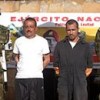
COLOMBIA: Did the Army ‘Steal’ FARC’s Hostage Release?
A source close to the insurgent Revolutionary Armed Forces of Colombia (FARC) told IPS that the Jul. 2 rescue of Ingrid Betancourt and 14 other hostages by the Colombian military "intercepted their liberation, planned for this weekend (Jul. 5-6) or the next," by the FARC rebels.COLOMBIA: Questions Surround Foreign Role in Hostage Rescue
Among the many questions raised by Operation Check, which ended with the Jul. 2 release of Revolutionary Armed Forces of Colombia (FARC) hostages Ingrid Betancourt, three U.S. contractors and 11 members of the Colombian army and police, is the role played by the United States, France and Switzerland.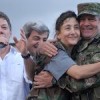
COLOMBIA: The General Ingrid Hugged
General Mario Montoya Uribe, the national commander of the Colombian army, whom Ingrid Betancourt thanked on Wednesday for rescuing her from captivity, has a controversial service record.« Previous Page — Next Page »


The Week with IPS

NEXT STOP - SDGs
Tracking global progress towards a sustainable world
Tracking global progress towards a sustainable world
