Languages
Saturday, October 3, 2026



News and Views from the Global South
Cuba
RIGHTS: Cuba Passes U.N. Review with Flying Colours
The United Nations Human Rights Council report on the status of human rights in Cuba reflected solid support for Havana from an ample majority of countries, but also took note of objections raised by a smaller number of governments.RIGHTS: Cuba Proudly Presents Its Credentials Abroad
The European Union is considering a proposal from Cuba that could add human rights issues to the political dialogue formally resumed three months ago between Havana and Brussels, diplomatic sources confirmed following an announcement by Foreign Minister Felipe Pérez Roque.CUBA-US: Whose “Opportunity?”
The new U.S. administration headed by Democratic President Barack Obama is creating hope in Cuba for an easing of tensions in relations between the two countries, although there is scepticism in this regard in some academic circles.US-CUBA: Obama Urged to Take Bold Steps Toward Normalisation
A broad spectrum of groups and individuals is urging President-elect Barack Obama to go beyond his campaign pledge to lift curbs on travel and remittances to their homeland by Cuban Americans and launch a much broader process of normalisation with Havana.CUBA-US: After Deadlock, How to Resist the ‘Siren Songs?’
In spite of shortcomings, unfulfilled dreams and doubts, one of the unquestioned merits of the Cuban revolution, which has just celebrated its 50th anniversary, is the sense of independence and sovereignty in this small island state, geographically so close to the most powerful nation in the world.CUBA: Racism – “Taboo, Complicated and Thorny” Issue
The persistence of racism in Cuba is disturbing to some of the island's thinkers, who are calling for a debate on the problem in this country, where equal rights have not guaranteed equal opportunities for all social groups.CUBA: Golden Anniversary in Tough Times
The Cuban Revolution's 50th anniversary on Jan. 1 finds the country facing the challenge of sorting out the economy and improving living conditions, in the context of a complex international situation that may make reaching those goals particularly difficult.CUBA-LATAM: From Isolation to Reinsertion
Cuba’s reintegration into Latin America means that the government of Raúl Castro will be celebrating the 50th anniversary of the Revolution in a wholly different regional context than the one that prevailed in the 1960s, when this Caribbean island nation was marginalised by practically all of Latin America.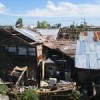
CUBA: Close Encounter with a Hurricane
Coffee was ready, documents and files had been removed to a safe place, communications equipment was switched off and the optical system was secured. With nothing left to do but wait, Cuban lighthouse keeper Miguel Chacón climbed the 218 stairs to the tower of the Cape Lucrecia lighthouse and looked out to sea.CUBA: Even the Coral Reefs Shook
The years will pass and their children’s children will ask how much truth there was in their grandparents’ stories.CULTURE-CUBA: Rock n’ Roll Fanzine Fights Prejudice
For eight years, Michel and Alexander Sánchez have been publishing Scriptorium, a fanzine (fan magazine) dedicated to rock music produced within Cuba and abroad, in a society that resists accepting this genre and its fans as part of the national culture.US-CUBA: Business Support for Dismantling Embargo
If U.S. President-elect Barack Obama wants to begin dismantling Washington’s nearly 50-year-old trade embargo against Cuba, it appears he will have widespread support for doing so.U.S.: Hemispheric Group Calls for Major Changes in Americas Policy
An elite inter-American commission sponsored by a think tank that is considered close to likely key policy-makers in the administration of President-elect Barack Obama is calling for sharp break in U.S. policy toward Latin America, a substantial opening toward Cuba, greater diplomatic engagement with Venezuela, and a major reassessment of its war on drugs.CUBA-CHINA: Strengthening Friendly Ties
Cuba and China strengthened their political and economic alliance this week, at a time when the EU and Cuba have formally restored relations and the government of Raúl Castro is forging closer ties with the rest of Latin America and with Moscow.CUBA: Cultural Prejudice Still Lingers
Political convenience, generation gap or Stalinist influence? Nearly 50 years after the triumph of the Cuban Revolution, it is still hard to discern why this country decided that rock, fashion, long hair for men and homosexuality were counter-revolutionary.CUBA-US: Obama Awakens Hopes for a Thaw
U.S. President-elect Barack Obama has a positive image among most Cubans, who are hopeful regarding his promises of loosening some restrictions towards the island, although the government-controlled media here have refrained from commenting on the future of relations between the two countries.CUBA-US: A Thaw Fuelled by Oil?
The discovery of a significant offshore oilfield in Cuban waters in the Gulf of Mexico could persuade the United States to modify its policy towards the Caribbean island nation, experts say, while warning that this possibility could also entail risks.CUBA-EU: One Step Closer
Cuba and the European Union have agreed to reestablish development cooperation, interrupted five years ago, in another step towards overcoming differences, following the resumption of political dialogue in Paris last week.ECONOMY-CUBA: “Impossible to Escape Impact” of Crisis – Experts
After three years of high growth, uncertainty is hovering over the Cuban economy once again, although experts are not yet ready to predict exactly what impact the current global financial turmoil will have on the island.POLITICS-US: New Cuba Policy in Sight?
If elected, Democratic candidate Barack Obama could become the first United States president to engage in talks with Cuba after almost five decades of severed relations, but it will all depend on his refraining from trying to "control" a process that involves two sides, say academics from this Caribbean island nation.CUBA: Emerging Community of Bloggers?
Blogging has finally hit Cuba, despite the challenge of gaining access to the Internet and the limited number of home computers on the island, and the emergence of a Cuban community of bloggers may soon be more than just wishful thinking.« Previous Page — Next Page »


The Week with IPS

NEXT STOP - SDGs
Tracking global progress towards a sustainable world
Tracking global progress towards a sustainable world
