Languages
Sunday, October 11, 2026



News and Views from the Global South
G8 Plus More
G8-RUSSIA: Dissent Within, Confrontation Without
As if the summit of the eight most industrialised countries did not have enough problems in fulfilling its own agenda this week, the group's members are also aligning in a confrontation along international borders and actions that recall those of the Cold War.INDIA/BRAZIL: New Power Alliance
Brazil and India are together sending out a clear message to the rest of the world - do not ignore us when it comes to discussing and resolving important issues such as global warming, peaceful uses of nuclear energy, bio-fuels, farm subsidies and United Nations reforms.RUSSIA-AFRICA: Debt Write-Off Boosts Closer Trade Ties
Long seen as funding the continent's wars and doing little other than seeking out petroleum and mineral resources, Russia is now looking to kick-start better trade relations with Africa, and has made its first move by writing off the majority of the continent's debt.G8: Legislators Detail Their Hopes for a Climate Accord
Legislators from the G8 countries - Britain, France, Germany, Italy, Japan, Canada, United States and Russia - are hoping against hope that an historic breakthrough on climate change will be achieved at the Heiligendamm summit this week.
G8: Bush Struggles to Regain Leadership at Summit
An ever-deteriorating situation in Iraq, a hostile Democratic Congress and a changing of the guard in some key allies may all combine to bring about a more cooperative, and perhaps more subdued, President George W. Bush at the summit of the Group of Eight most industrialised nations.G8: Facing Summit Failure, Germany Braces Itself
Facing the probability that this year's G8 summit will be a failure - mainly due to U.S. opposition to an international consensus on environmental, financial, and African cooperation issues - the German government, host of the event, is scaling down the expectations that it helped to stir in the first place.G8: Despite Germany’s Tight Controls, Violence
Over the last several weeks the German government tightened controls on civil society groups and leftist anti-globalisation activists in order to prevent, as the official lines goes, "violent disruptions" of the G8 summit of industrialised countries that Germany is hosting this week.DEVELOPMENT: G8 Makes Room at Table for Emerging Five
The five strongest developing countries - Brazil, China, India, Mexico, and South Africa - will have a place at the Group of Eight summit of the richest countries Jun. 6-8 in Heiligendamm, Germany, both as partners and as competitors of the industrialised world.ENVIRONMENT: Toward a Green Economy
Humanity is facing historic and truly unprecedented challenges from climate change and the rapid decline of ecosystems that sustain life.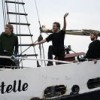
G8: Sailing Against Ecological Debt
As leaders of the world's eight richest countries prepare to meet in Germany's Baltic resort of Heiligendamm next week, a Fair Trade ship has left the shores of Finland and is on the high seas heading towards the summit venue.G8-AFRICA: Farm Subsidies a Taboo Subject?
In the preparations for this year's summit of the Group of Eight most industrialised countries, to take place Jun. 6-8 in the Baltic seaside resort of Heiligendamm, Germany, aid for Africa has topped the agenda. But the farm subsidy factor is likely to be avoided in the debate.CLIMATE CHANGE: Europe and Asia Seek Differentiated Goals
Developing countries led by China and India insist on "differentiated" commitments in any future arrangements to address climate change, arguing that the rich countries bear a "bigger responsibility" to make deeper cuts in greenhouse gas emissions.G8: Demonstrators’ Rights and Africa at Heart of Summit
With two weeks to go to this year's summit of heads of state and government of the world's eight most industrialised countries (G8), respect for demonstrators' rights and the fulfilment of the group's economic aid promises for Africa are at the heart of the preparations.EUROPE: For Big Business, Accountability Still a Foreign Word
On Mar. 15, 2006, Noel Forgeard, at the time chief executive officer of the European aerospace corporation EADS, sold, apparently without any reason, some 170,000 shares he owned of the company, making an instantaneous profit of almost three million U.S. dollars.G8: U.S. Cooling Off to Summit
The United States appears to be cooling off to some key concerns at the G8 heads of state summit next month.G8: Activists Feel the Hammer
A nationwide raid on left-wing activists in Germany Wednesday on charges of terrorism and planning to disturb the G8 summit next month follows a long official campaign to stifle protest at the meet.AFRICA: G8 Asked to Keep Its Promises
With only a couple of weeks to go to this year's summit of the group of the eight most industrialised countries (G8), Africa and its immense needs are again the theme of the day.DEVELOPMENT: More Uncertain Promises of Aid
The ministers of development and international cooperation of the Group of Eight most industrialised countries (G8) have agreed again that their governments "must make...development cooperation more effective" and "keep their pledges to increase official development assistance."DEVELOPMENT: Turning the Tide on Human Suffering
If the world's growing water crisis remains unresolved - depriving clean water to more than one billion of the world's six billion people - it will jeopardise the U.N.'s longstanding battle to reduce global poverty, hunger and disease by its targeted date of 2015, the U.N. Development Programme (UNDP) warned Thursday.DEVELOPMENT: Stand Up, to Wake Up
As protests go, this must be among the most comfortable: people will simply stand up at many places around the world to show their commitment to fighting poverty.HEALTH: Gov’ts Harshly Berated at Close of AIDS Meet
Action - not promises or pledges or more meetings - is what will bring the HIV/AIDS pandemic under control and save tens of millions of lives, concluded delegates at the wrap-up of the 16th annual International AIDS Conference in Toronto Friday.« Previous Page — Next Page »





The Week with IPS

NEXT STOP - SDGs
Tracking global progress towards a sustainable world
Tracking global progress towards a sustainable world
