Languages
Tuesday, September 29, 2026



News and Views from the Global South
George W. Bush
POLITICS: Pakistan-Based Al Qaeda Biggest U.S. Threat
With key improvements in the security situation in Iraq during 2007, al Qaeda - and particularly its central leadership based in border regions of Pakistan - continues to pose the most significant threats to the United States, both at home and abroad, according to the director of national intelligence (DNI), ret. Adm. J. Michael McConnell.POLITICS-US: He’s a Uniter, Decider, and Now, Interpreter
When George W. Bush signed the 2008 National Defence Authorisation Act into law last week, he again thumbed his nose at Congress by taking a second now-familiar step: he issued a "signing statement" - a declaration that effectively asserts his authority to ignore parts of the law he disagrees with.US/MIDEAST: Status Quo Stifling Political Reforms
In his final State of the Union speech Monday night, President George W. Bush once again reminded the U.S. public of the cornerstone of his administration's foreign policy: "We trust that people, when given a chance, will choose a future of freedom and peace."CLIMATE CHANGE: Wars Dwarf Warming in U.S. Budget
Despite growing recognition in the Pentagon and the intelligence community that global warming poses serious national security threats to the United States, Washington is spending 88 dollars on the military for every dollar it spends this year on climate-related programmes, according to a new study released here Thursday by the Institute for Policy Studies.POLITICS-US: Congress Seeks to Limit “State Secrets” Privilege
Alarmed by the George W. Bush administration's increasing use of the so-called "state secrets privilege" to keep politically embarrassing lawsuits against the government from ever coming before a judge, Congress is stepping in to help ensure that people with grievances can have their cases heard.
AFGHANISTAN: NATO Winning Battles, Losing the War
"Make no mistake," begins a new issue brief from non-partisan think tank the Atlantic Council of the United States, "NATO is not winning in Afghanistan."RIGHTS: West Gives False “Democracies” A Pass
Western governments, eager to pursue their political or economic interests, too often reward self-proclaimed and flawed "democracies" that clearly abuse the political and civil rights of their citizens, according to the latest edition of Human Rights Watch's annual "World Report" released here Thursday.U.S./CUBA: Justice Not So Blind in Politically Charged Cases
Following the terrorist attacks of Sep. 11, 2001, U.S. President George W. Bush outlined the basis for the so-called "war on terror", arguing "if you harbour a terrorist, you're just as guilty as the terrorist."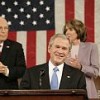
POLITICS-US: One More Year of the Same
With just less than one year left in his presidency, George W. Bush remains as focused as ever on the Middle East and Iraq and appears reluctant to take on any major new foreign policy challenges in the time that he remains in power.POLITICS-US: Bush Signs Vets Bill, Won't Ban Permanent Bases
President George W. Bush signed a 696-billion-dollar Pentagon spending bill immediately before his State of the Union address Monday night, which funds all Defence Department programmes not directly tied to the wars in Iraq and Afghanistan, expands health care for injured veterans and gives U.S. soldiers a pay raise.U.S./IRAQ: Critics Fear Pact Will Tie Next President’s Hands
As President George W. Bush seeks to deeply entrench U.S. military forces in Iraq, the Congress and foreign policy pundits are looking beyond his term and debating the future of U.S. foreign policy there.POLITICS-US: Religious Leaders Assail Bush Agenda
Describing George W. Bush as "an explicitly evangelical president" with a "sadly truncated" moral vision, a group of religious leaders is calling on the U.S. president to use his State of the Union message to Congress Monday evening to salvage his legacy by "changing course on the most pressing moral issues of our time".IRAQ: Al Qaeda Records Shed Light on Foreign Recruits
Twenty-six-year-old Muhammad 'Abd-al-Qadir bil-Qasim began his journey in Darnah, Libya. He traveled to Egypt and arrived in Syria, where he paid a man named Abu Umar 2,000 Syrian pounds to smuggle him across the Iraqi border.POLITICS-US: Neocons Shaken, But Not Deterred
Almost exactly five years after it reached its zenith with the invasion of Iraq, the influence of neo-conservatives has waned sharply in Washington, as their nemeses, the "realists" in the national security bureaucracy, have increasingly asserted control over U.S. foreign policy.
Q&A: “We Are Haunted By a War Begun Under False Pretences”
Eight key players in the George W. Bush administration, including the president himself, made at least 935 false statements in the run-up to and aftermath of the invasion of Iraq in 2003.POLITICS-US: Contractor Abuses Rarely Punished, Groups Say
Out of the dozens upon dozens of reports of abuses by private contractors as part of the U.S. wars in Iraq and Afghanistan, only one prosecution of a contractor has taken place.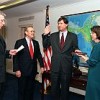
POLITICS-US: Pentagon and Contractors One Happy Family?
A Pentagon office that claims to monitor terrorist threats to U.S. military bases in North America has just awarded a multi-million-dollar contract to a company that employs a top aide to former U.S. Secretary of Defence Donald Rumsfeld. That aide, Stephen Cambone, helped create the very office that issued the contract.POLITICS-US: Pentagon’s Islam “Expert” Hoisted by His Own Jihad
Neoconservative hawks lamented the latest casualty in the war on terror last Friday, as the axe fell on Stephen Coughlin's job. The Pentagon decided not to renew the contract of its "foremost" specialist on Islamic law and Islamic extremism when it ends in March, citing budget cuts.
POLITICS-US: War on Terror Moves East
The Pentagon's announcement here Tuesday that it is dispatching some 3,200 marines to Afghanistan underlines both Washington's mounting concern about the strength of the Taliban insurgency and the growing sense here that the central front in its nearly six-and-a-half-year-old "war on terror" has moved back to its South Asian roots.POLITICS-US: How the Pentagon Planted a False Hormuz Story
Senior Pentagon officials, evidently reflecting a broader administration policy decision, used an off-the-record Pentagon briefing to turn the Jan. 6 U.S.-Iranian incident in the Strait of Hormuz into a sensational story demonstrating Iran's military aggressiveness, a reconstruction of the events following the incident shows.
CHALLENGES 2007-2008: Wounded Vets Trade One Hell for Another
Last year, the United States woke up to the reality of hundreds of thousands of soldiers wounded in Iraq and Afghanistan - and began to grapple with what to do about it.« Previous Page — Next Page »


The Week with IPS

NEXT STOP - SDGs
Tracking global progress towards a sustainable world
Tracking global progress towards a sustainable world
