Languages
Monday, October 19, 2026



News and Views from the Global South
Haiti
HAITI: U.S. Lawmakers, NGOs Call for Debt Cancellation
Three weeks after Haiti's devastating earthquake, nearly 100 U.S. lawmakers joined with key civil society groups here Thursday to urge the Group of Seven (G7) leading western nations to commit to cancelling all of the Caribbean country's multilateral debt.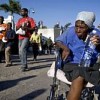
HAITI: Displaced Women Face Double Jeopardy
Women's rights and development activists working in Haiti say that greater attention must be paid to the immediate needs of women and girls, as well as their role in the long-term reconstruction of the devastated country.HAITI: Universities Feel Strain After Earthquake
Astride Auguste was late for an exam at Quiskeya University on that fateful Tuesday, Jan. 12, when the earthquake - or "the event", as Haitians have come to call it - struck this capital city.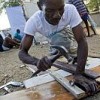
HAITI: Time to Build a Just Society, Rights Groups Urge
In the wake of last month's catastrophic earthquake in Haiti, prominent advocacy groups are calling on the U.S. and the international community to reverse decades of racial and political discrimination and build relief and reconstruction efforts on human rights principles, transparency, and respect for the dignity of all Haitians.
HAITI: Local Leaders Shut Out of Military-Run Relief Efforts
Two gray 23-million-dollar hovercrafts sitting in the middle of a sandy tropical beach look like they are from another world. A pair of 15-foot-wide propeller fans sticks out from the back of each behemoth.MIGRATION: Haitians in U.S. See Chance for Better Life
More than a decade ago, Marie Elisemonde left Haiti, fleeing threats of rape and murder by thugs, or zengledo in Creole, who could only be appeased with money. She paid 700 dollars for her seat on a boat to the United States, without any guarantees of a safe arrival or entry.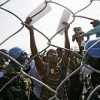
HAITI: Military Playing Large Role in Relief Efforts
As international attention turns to the long-term reconstruction of earthquake-stricken Haiti, U.N. officials pledged that the Haitian government would have full involvement and authority over the process.
HAITI: Sending Hope over the Airwaves
Throughout the earthquake's aftermath, the voices of many Port-Au-Prince radio stations have been loud and clear.HAITI: ‘Adoption Not the Best Choice for Quake Orphans’
Thirty-three children from Haiti arrived in France to adoptive parents Friday evening, as charities and international organisations differed on whether adoptions should be speeded up or halted while the search for relatives continues.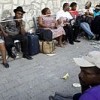
MIGRATION-US: Haitians Welcome TPS Status
Throughout the New York region, but especially in Brooklyn and Queens, there is measured relief that the U.S. is finally addressing a longstanding issue: that of thousands of Haitians who have been living and – in so many cases – working and paying taxes, but are undocumented.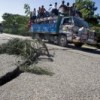
HAITI: Desperate Residents Flee Capital, But with Hopes of Return
Marjorie Louis and her two small children are sleeping in the street. Their home is in complete ruins. And Louis has no way to let her mother in Les Cayes know that she survived the deadliest natural disaster to hit this country.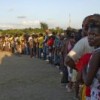
HAITI: With Aid Slow to Arrive, Food Prices Skyrocket
Last week, the price of a small can of rice was two dollars. On Tuesday, it cost Haitians 3.50 dollars. A gallon of cooking oil that cost 10 dollars only days ago now fetches 20 dollars.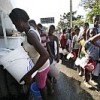
POLITICS: U.N. Defends Relief Efforts in Haiti
The United Nations, which has come under heavy fire for its relatively slow relief efforts in earthquake-devastated Haiti, hit back at the international news media for "sensational" reporting.
HAITI: Social Networks Offer News, and Comfort
On Tuesday, Jan. 12, a small story from the Associated Press came across the wires that an earthquake had hit Haiti. Almost instantly, phones began to ring as Haitian Americans started calling each other to find out if there was more to this story.
HAITI: U.S. Opens Airport to More Humanitarian Flights
Amid criticism that the U.S. Defence Department was prioritising military and rescue air traffic to earthquake-stricken Haiti, U.S. officials controlling the country's main airport have agreed to guarantee landing slots for planes carrying humanitarian aid, U.N. officials say.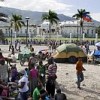
HAITI: No One Expected the “Big One”
Marjorie Louis was sitting in her kitchen eating dinner when she felt the house shaking, but she didn't get up.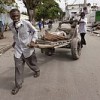
HAITI: On Sunday, Mass Was About the Dead
Rosemarie Tintin's black hat and veil barely concealed the sorrow on her face. She recently lost her entire family in Haiti's devastating earthquake and the only place she could find solace was at her church.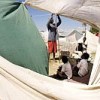
HAITI: A Night on Rue Berne – Living in the Streets
The sun had barely set and already, the residents of Rue Berne were making their beds. These bedrooms were makeshifts arranged neatly on one side of the street, away from shaky walls and fragile home frames that remain so dangerous.
HAITI: Sharing Meagre Supplies, as Graves Multiply
Millions of dollars in aid are pouring into Haiti. Another head of state visits each day. The misery in Port-Au-Prince dominates the news nearly a week after the 7.0 earthquake struck the heart of this island country.FRANCE: Time to Pay Back Haiti
As thousands of people filled Notre Dame Cathedral here Saturday evening in a special mass for victims of the earthquake in Haiti, the solidarity and sadness reflected the historical ties that bind France to the Caribbean nation.
HAITI-DOMINICAN REPUBLIC: Sisters in Catastrophe
The Dominican Republic, which has historically regarded its Haitian neighbour with suspicion, has turned toward Haiti with a tremendous outpouring of aid and love since a devastating earthquake rocked Port-au-Prince on Tuesday.« Previous Page — Next Page »





The Week with IPS

NEXT STOP - SDGs
Tracking global progress towards a sustainable world
Tracking global progress towards a sustainable world
